












XCPC SI-63×100-S Pneumatic Cylinder — ISO 15552 Standard, ⌀63 mm, 100 mm Stroke, with Magnet
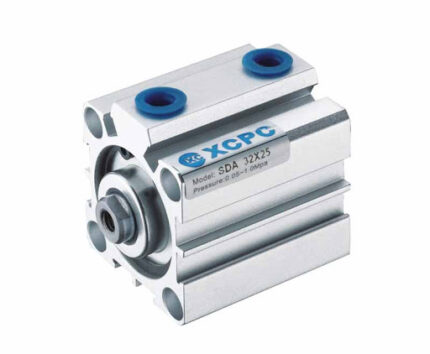
The XCPC SI-63×100-S pneumatic cylinder is engineered to convert the energy of compressed air into linear reciprocating mechanical motion and actuation force. Built in strict accordance with the international ISO 15552 standard, it provides direct dimensional interchangeability with former ISO 6431 and VDMA 24562 specifications.
The cylinder operates on a double-acting principle: pressurized air is alternately supplied to the piston side (extension stroke) and the rod side (retraction stroke). Both directions are fully powered, ensuring predictable, high-precision force delivery and symmetrical speed control during forward and return movements.
1. Purpose and Operating Principle
Featuring a 63 mm piston bore and a 100 mm working stroke, this model generates significant thrust (over 180 kgf at 6 bar working pressure) within a compact axial envelope. It is ideal for clamping, pressing, punching, component positioning on conveyor lines, pick-and-place systems, and actuating industrial knife gate valves or flue dampers.
The cylinder comes equipped with a built-in permanent magnetic ring on the piston (indicated by the -S suffix), allowing contactless position feedback via standard reed or solid-state electronic proximity sensors (such as CS1-F or D-M9B series) inserted directly into the integrated profile slots. Adjustable pneumatic end-position cushioning on both front and rear end caps absorbs kinetic energy smoothly, eliminating harsh metal-to-metal impact at high operational speeds.
2. Technical Specifications
| Parameter | Value |
|---|---|
| Manufacturer | XCPC Pneumatic (Ningbo Xinchao Automatization Component Co., Ltd.) |
| Series | SI Series Standard Cylinder |
| Standard | ISO 15552 / ISO 6431 / VDMA 24562 |
| Action Type | Double-acting |
| Piston Bore | 63 mm |
| Stroke Length | 100 mm |
| Piston Rod Diameter | 20 mm |
| Rod End Thread | M16×1.5 (male metric thread with locknut) |
| Pneumatic Port Size | G 3/8″ (BSPP, parallel female thread) |
| Magnetic Piston | Yes («-S» suffix, permanent integrated magnetic ring) |
| Cushioning | Adjustable pneumatic cushioning at both ends |
| Cushioning Stroke Length | 24 mm |
| Operating Medium | Filtered compressed air (filtration grade ≤\le 40 µm) |
| Operating Pressure Range | 0.1 – 1.0 MPa (1 – 10 bar / 14.5 – 145 psi) |
| Proof (Test) Pressure | 1.35 MPa (13.5 bar / 195 psi) |
| Operating Temperature Range | −5 to +70 °C (23 to 158 °F, without moisture freezing) |
| Operating Speed Range | 50 – 800 mm/s |
| Theoretical Thrust at 6 bar (Extension) | 1,835 N (≈ 187.0 kgf / 412.5 lbf) |
| Theoretical Pull at 6 bar (Retraction) | 1,650 N (≈ 168.2 kgf / 370.9 lbf) |
| Effective Piston Area (Push) | 31.17 cm² |
| Effective Piston Area (Pull) | 28.03 cm² (minus rod cross-section ⌀20 mm) |
| End Cap Mounting Threads | 4×M8 (24 mm thread depth, 56.5 mm center distance) |
| Lubrication | Not required (pre-lubricated with lifetime grease) |
⚠️ Unconfirmed Parameters:
- Assembled cylinder net weight for 100 mm stroke is derived from the manufacturer’s base weight formula and is approximately 1.75–1.85 kg.
- Default seal material is NBR/Polyurethane; high-temperature FKM (Viton) seals are available upon request — contact Acvatron SRL technical sales.
Note: Stated forces are theoretical values (F=P×AF = P \times A). For mechanical sizing, always apply a safety factor of 1.5–1.7 for horizontal travel and 2.0 for vertical hoisting loads.
3. Design and Construction Features
Part Number Breakdown SI-63×100-S:
| Code Segment | Value | Description |
|---|---|---|
| SI | Series | Standard double-acting cylinder conforming to ISO 15552 / ISO 6431 |
| 63 | Cylinder Bore | 63 mm |
| ×100 | Working Stroke | 100 mm |
| S | Magnet Code | Integrated magnetic piston ring (blank = non-magnetic) |
Engineering Highlights & Materials:
- Barrel Tube: Extruded heavy-duty anodized aluminum alloy with integral dovetail sensor grooves for flush magnetic sensor mounting.
- End Covers: Die-cast corrosion-resistant aluminum alloy secured via internal high-tensile M8 tie-bolts.
- Piston Rod: Precision ground and hard-chrome plated carbon steel, ensuring minimal surface friction and prolonged rod seal longevity.
- Rod Bushing: Self-lubricating sintered bronze/metal-polymer guide bushing in the front cap providing high radial load resistance.
- Cushioning Needles: Stainless steel needle throttling screws on both end caps for sensitive, micro-adjustable deceleration damping.
4. Installation and Mounting Guidelines
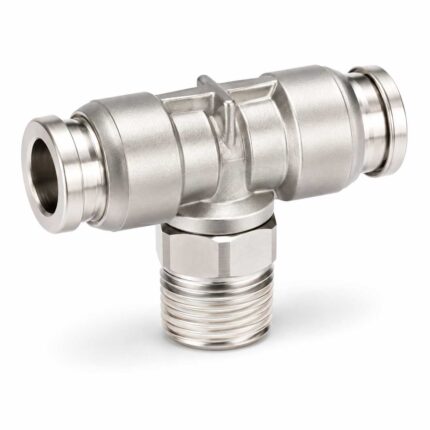
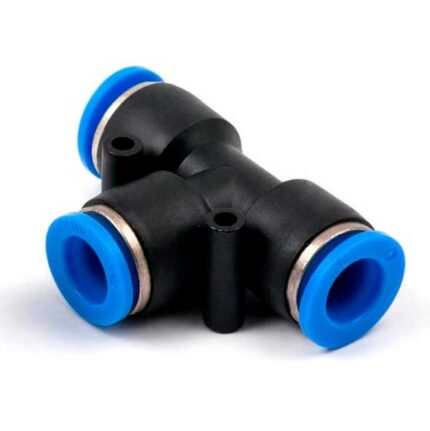
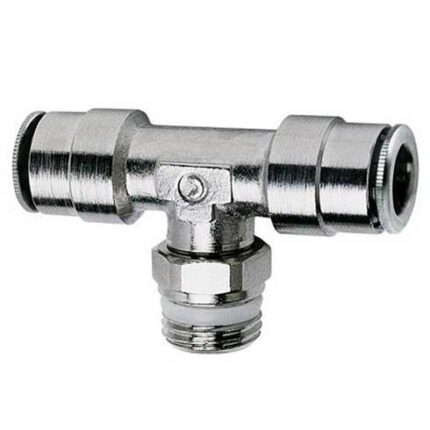
- Pneumatic Ports G 3/8″: Parallel cylindrical thread standard (BSPP). Sealing is achieved solely by the flat elastomeric washer or face O-ring of the pneumatic push-in fitting.
❗ Never use Teflon (PTFE) tape: loose tape shreds break off during threading, enter cushioning needle ports, and jam directional control valve spools.
- Rod Thread M16×1.5: Metric cylindrical thread. Fastening of rod accessories (clevises, spherical rod ends, alignment couplers) must be locked firmly against the factory-supplied jam nut. Permanent anaerobic locking compounds and thread tape are not required.
- Axial Alignment: Loads must be applied strictly concentric to the piston rod axis. Radial or bending side-loads cause accelerated wear on the front guide bushing and rod seals, inducing premature air leakage. If misalignment is unavoidable, incorporate a self-aligning floating coupler or spherical rod end.
- Cushioning Calibration: Prior to machine commissioning, screw in both cushion adjustment needles completely, apply working system pressure, and cycle the cylinder while backing out each needle by 1/4-turn increments until the piston decelerates smoothly without mechanical bounce.
- Air Filtration & Treatment: Maintain clean, dry air using a pre-filter/dryer assembly (filtration ≤\le 40 µm, 5 µm recommended). Moisture and abrasive pipeline scale cause premature seal degradation.
- FRL Units without Lubricator: The cylinder is factory pre-lubricated. If your pneumatic system supplies lubricating mist for air tools, install a separate dedicated in-line lubricator for those tools only. Once lubricated with oil mist, continuous lubrication with ISO VG32 turbine oil must be maintained.
- Speed Regulation: Always regulate cylinder speed using one-way flow control exhaust restrictors (meter-out) installed in the ports, rather than throttling inlet air.
5. Cross-References and Model Comparison
ISO 15552 Interchangeability Table (⌀63 mm, 100 mm stroke, magnetic):
| Brand | Part Number / Model | Series | Compatibility Remarks |
|---|---|---|---|
| Festo | DSBC-63-100-PPVA-N3 (1376483) | DSBC | Direct ISO 15552 drop-in: M16×1.5 rod, G 3/8″ ports, PPV cushioning, magnet |
| Festo | DNC-63-100-PPV-A (163375) | DNC | Classic tie-rod line, identical mounting dimensions |
| SMC | CP96SDB63-100C / C96SDB63-100C | CP96 / C96 | Fully compliant: profile barrel with sensor slots, magnetic piston |
| Camozzi | 60M2L063A0100 | Series 60 | Standard ISO 15552, M16×1.5 rod thread, G 3/8″ ports, magnetic |
| Airtac | SE63X100S / SI63X100S | SE / SI | Profile cylinder with magnetic piston |
Note: ISO 15552 standardizes end cap hole centers (56.5 mm square pattern for M8 bolts), stroke length, M16×1.5 rod thread, and G 3/8″ port locations, ensuring 100% mechanical interchangeability. Verify existing sensor specifications prior to replacement.
Comparison with Neighboring XCPC Models:
| Model | Bore | Stroke | Ports | Thrust at 6 bar | Application Context |
|---|---|---|---|---|---|
| SI-50×100-S | 50 mm | 100 mm | G 1/4″ | 1,178 N (≈120 kgf) | When physical space is tight and loads are moderate |
| SI-63×100-S | 63 mm | 100 mm | G 3/8″ | 1,835 N (≈187 kgf) | Workhorse choice: high clamping and pressing thrust on a short stroke |
| SI-63×300-S | 63 mm | 300 mm | G 3/8″ | 1,835 N (≈187 kgf) | Equal force output across an extended displacement distance |
| SI-80×100-S | 80 mm | 100 mm | G 3/8″ | 3,016 N (≈307 kgf) | Heavy-duty industrial forming and punching (M20×1.5 rod) |
6. Common Selection and Operation Errors
- Ordering Non-Magnetic Units for Sensorized Machines: Omitting the «-S» suffix when automated cycle control requires reed or inductive position sensing. Non-magnetic units will not trigger external sensors.
- Applying Teflon Tape to G 3/8″ Ports: Flakes sheared by port threads migrate into the cushioning passages and spool valve seats.
- Uncompensated Side-Loading: Rigidly coupling the rod to misaligned machine slides without a self-aligning floating joint, causing oval bushing wear and rod seal blow-by.
- Running with Cushioning Screws Wide Open: High-speed travel (>300>300 mm/s) without deceleration causes severe impact shock, cracking aluminum end caps and loosening fasteners.
- Inlet Throttling (Meter-In): Controlling speed on the pressure supply rather than the exhaust leads to stick-slip, jerking motion under load.
- Operating on Wet, Unfiltered Air: Water wash-out strips internal factory grease, accelerating seal degradation and winter freeze-ups.
7. Applications
- Mechanical Engineering & Tooling: Pneumatic clamping fixtures, jigs, welding tables, sheet metal blank holding.
- Woodworking & Furniture Production: Pressing beams on edge banders, panel saws, clamping frames, and guillotine stops.
- Packaging & Material Handling: Automated carton pushers, package transfer stations, diverters, and palletizing gates.
- Process Automation & Bulk Handling: Actuating knife gate valves, slide gates, and silo dampers for cement, grain, and powder.
- General Assembly Automation: Indexing stops, lifters, and pneumatic presses.
8. Expert Opinion
«The XCPC SI series cylinders conforming to ISO 15552 offer industrial enterprises in Moldova a highly robust and cost-effective alternative to Tier-1 European pneumatic brands. Operating at standard 6-bar shop air pressure, the SI-63×100-S delivers over 180 kgf of thrust, which covers the majority of heavy clamping and mechanical pressing applications. The defining advantage is strict dimensional standardization: it retrofits seamlessly onto existing Festo, Camozzi, or SMC mounting brackets without fabrication rework. To ensure trouble-free multi-year service life, observe two golden rules: never apply Teflon tape to G 3/8″ parallel ports (rely on captive seal washers) and maintain adequate air filtration and condensation drainage».
Vitali Boluchevski, Lead Engineer, Acvatron SRL, 18 years of experience
9. Frequently Asked Questions (FAQ)
1. Is the XCPC SI-63×100-S directly interchangeable with Festo DSBC-63-100 and Camozzi 60?
Yes, it is 100% mechanically interchangeable. End cap mounting bolt patterns (56.5 mm square for M8 screws), M16×1.5 male rod thread, and G 3/8″ pneumatic port centers are strictly governed by ISO 15552.
2. What is the real working thrust delivered by a 63 mm cylinder at 6 bar?
Theoretical force is 1,835 N (~187 kgf) pushing and 1,650 N (~168 kgf) pulling. Accounting for dynamic friction losses, practical continuous operating load capacity is approximately 120–130 kgf.
3. Which position sensors fit the «-S» model?
Standard 2-wire reed switches and 3-wire PNP/NPN solid-state electronic sensors (such as XCPC CS1-F or SMC D-M9B style) slide directly into the integrated dovetail slots along the cylinder barrel.
4. Is thread sealant tape needed on G 3/8″ port fittings?
No. G 3/8″ is a parallel BSPP thread sealed via the fitting’s built-in O-ring or sealing washer. Using Teflon tape risks contaminating internal flow channels.
5. Does the cylinder require an in-line oil lubricator?
No, the cylinder is pre-lubricated with lifetime grease. If an oil mist lubricator is introduced to the line, it must be continuously supplied with dedicated ISO VG32 pneumatic turbine oil.










Reviews
Clear filtersThere are no reviews yet.