











Piston Compressor Block 2090 (MZB): In-Line, 2 Cylinders Ø90 mm, 600 L/min, 8 bar
4.970,00 MDL
The 2090 piston block is an in-line compressor head (pump) with two cast-iron cylinders of 90 mm diameter. The block is single-stage: air is compressed to the 8 bar working pressure in a single compression stroke. It is belt-driven (V-belt transmission) from an electric motor; the recommended motor power is 4.0 kW (5.5 HP).
1. Purpose and operating principle
The large cylinder diameter (2 × Ø90 mm) delivers an intake flow of 600 L/min at a moderate shaft speed. The lower the speed for the same flow, the lower the heating and wear of the friction pairs, which is why such blocks are chosen for intensive duty. The piston group is oil-lubricated, and the crankcase is part of the cast-iron block body.
The block is used in belt-driven piston compressors, and to replace a worn head on an existing 100–200 liter receiver.
2. Technical specifications
| Parameter | Value |
|---|---|
| Model | 2090 |
| Brand | MZB COMPRESSOR |
| Block type | In-line, single-stage, piston |
| Number of cylinders | 2 (Ø90 mm each) |
| Flow (intake) | 600 L/min |
| Operating pressure | 8 bar |
| Recommended motor power | 4.0 kW (5.5 HP) |
| Drive | Belt (V-belt transmission) |
| Lubrication | Oil |
| Body material | Cast iron |
| Scope of supply | Block (per the product page) |
⚠️ Not confirmed, check with a manager, the nameplate or the manual: shaft or pulley speed; pulley diameter, number of grooves and belt profile; piston stroke; crankcase oil capacity; direction of rotation; dimensions and weight; diameter and thread type of the discharge port; cooling type (usually air, finned); whether the pulley, air filter and other items are included (the product title says “complete” while the table lists the set as “Block”); warranty period and service life. For reference: the page of the related VA-2090 block lists 860–1200 rpm, belt profile B, 2 L of oil, dimensions 470 × 390 × 470 mm and a weight of 31 kg, but the identity of these blocks is not confirmed, so these figures are not given as facts for the 2090. Claims of compliance with ISO 9001 and CE directives have not been included in this card: they are not supported by documents for this product.
3. Design features
Designation breakdown:
| Code part | Meaning |
|---|---|
| 2090 | 2 cylinders × Ø90 mm (per the usual marking of Italian-type blocks) ⚠️ |
| In-line | Cylinders are arranged in a single row |
Design solutions:
- Two Ø90 mm cylinders — high flow (600 L/min) without running the block at limit speeds, lower heating and wear.
- In-line layout — easier access to the valve plates and the oil filler, simpler oil changes and maintenance.
- Cast-iron block and enlarged crankcase — stable cooling and lubrication of the friction pairs in long continuous operation.
- Oil lubrication — the standard solution for blocks of this type; it requires oil level checks and timely oil changes.
4. Installation recommendations
- Match the drive. Choose the motor and block pulley diameters so that the block shaft turns at the rated speed ⚠️ (per the manufacturer’s data). Do not run the block above its rated speed: heating increases and wear accelerates.
- Motor. 4.0 kW (5.5 HP) is recommended. A motor weaker than recommended will be overloaded.
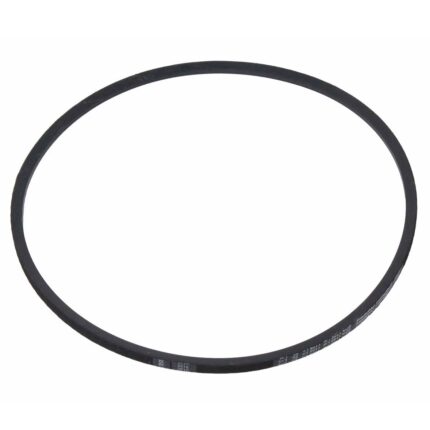
- Belts and pulleys. The pulleys must be in the same plane and the belts tensioned without misalignment. Check belt tension every 100 hours of operation (per the product page).
- Oil. Fill with oil to the mark before the first start. According to the product page, compressor oil of ISO 100 viscosity is suitable, and the first change is after 50 hours of break-in ⚠️ (confirm in the manual). Check the oil level after stopping.
- Filter. Fit an air filter on the intake; running without a filter quickly wears the cylinders and valve plates.
- Discharge. Take the hot air from the block through a metal tube or a hose rated for high temperature; the line must have a check valve. Do not fit shut-off valves between the block and the safety valve.
- Pressure. Set the pressure switch and safety valve to no more than 8 bar.
- Port thread. Determine the discharge port thread type ⚠️ (per the manufacturer’s data) before connecting. If it is BSPP (G, parallel), seal with a face gasket, without PTFE tape; if it is BSPT (R, tapered), the thread is self-sealing and is sealed with PTFE tape.
- Mounting. Fix the block or the compressor frame on a rigid base, through vibration mounts if necessary; ensure airflow for cooling.
- First start. Start without load and check noise, heating and the absence of oil and air leaks.
5. Alternatives and comparison
There are no verified equivalent part numbers, so no cross-reference list is given. When selecting a replacement block, check:
| Parameter to check | What to verify |
|---|---|
| Number and diameter of cylinders | 2 × Ø90 mm |
| Mounting dimensions | Block mounting holes and center distance |
| Pulley | Diameter, number of grooves, belt profile |
| Discharge port | Diameter and thread type |
| Power and speed | 4.0 kW, rated shaft speed |
Comparison with blocks on the site (per their product pages):
| Model | Cylinders | Flow | Pressure | Notes |
|---|---|---|---|---|
| 2090 (this product) | 2 × Ø90 mm | 600 L/min | 8 bar | In-line, Italian type, 4.0 kW |
| VA-2090 | 2 × Ø90 mm | 600 L/min | 8 bar | Block for the V-2090 compressor, 4.0 kW |
| W-0,36/8 | 3 cylinders | 360 L/min | 8 bar | Oil lubrication |
| 4V-1,05/12,5 | 4 pistons, 2 stages | 1050 L/min | 12.5 bar | Two-stage |
The 2090 and VA-2090 have the same main parameters, but interchangeability in mounting dimensions and pulley is not confirmed: check before replacing.
6. Common mistakes
- Selecting by cylinder diameter only. Matching 2 × Ø90 mm does not guarantee the block fits the frame: different versions have different mounting dimensions, pulleys and ports.
- Wrong transmission ratio. Too small a pulley on the block or too large a one on the motor gives excessive speed, overheating and wear.
- Motor weaker than 4 kW. A 600 L/min block overloads a weak motor, and the thermal protection trips.
- Uncontrolled belt tension. A loose belt slips and heats up, an overtight one overloads the shaft bearings.
- Running without an air filter or with a clogged one. Dust quickly wears the cylinders, piston rings and valve plates.
- Skipping the first oil change after break-in (50 hours). Break-in particles stay in the crankcase and accelerate wear.
- Setting the pressure switch above 8 bar. The block is rated for 8 bar; excess pressure leads to overheating and bearing overload.
7. Applications
- Professional painting: supplying several spray guns at once without pressure drops.
- Pneumatic lines in medium-sized production: machine tools, actuators, air tools.
- Sandblasting with small units ⚠️ (the unit’s consumption must fit within 600 L/min).
- Upgrades and repairs: replacing a worn block on compressors with 100–200 liter receivers.
8. Expert opinion
“The 2090 block with two Ø90 mm cylinders is chosen when you need a flow reserve without spinning the shaft up: at 8 bar it delivers 600 L/min. Do not raise the pressure above the rated 8 bar, check belt tension every 100 hours and do not skip the first oil change after 50 hours of break-in. And before ordering, always compare the pulley, mounting dimensions and speed with the old block: this is where mistakes happen most often.”
Vitali Boluchevski, Lead Engineer, Acvatron SRL, 18 years of experience
9. FAQ
1. What motor does the 2090 block need? The recommended power is 4.0 kW (5.5 HP). The drive is belt-type with a V-belt transmission. Choose the pulley diameters so that the block shaft turns at the rated speed.
2. Will the block fit in place of my worn one? It will, if the number and diameter of cylinders, mounting dimensions, pulley and ports match. Send a manager a photo of the old block, its dimensions and the compressor nameplate, and we will check compatibility.
3. Which oil and how often should it be changed? According to the product page, compressor oil of ISO 100 viscosity is recommended, with the first change after 50 hours of break-in. Check the oil capacity and the next interval with a manager or in the manual.
4. What pressure is the block rated for? The operating pressure is 8 bar. Set the pressure switch and safety valve to no more than this value.
5. What is the advantage of the in-line layout? The cylinders are in a single row, so it is easier to reach the valve plates and the oil filler, and oil changes and block maintenance are simpler.