










Check Valve for Compressor (4 kW – 5.5 kW): 1″
280,00 MDL
The compressor check valve is a critical pneumatic system component designed to let compressed air pass strictly in one direction (from the piston block to the receiver/tank) and to block reverse flow when the motor stops. This model is specifically designed to work with powerful units in the 4–5.5 kW range, withstanding high thermal loads and intense pressure pulsations.
1. Purpose and Operating Principle
Unlike standard, smaller-bore household valves, the heavy-duty 1″ valve is specifically designed for the higher air flow and thermal loads typical of compressor heads rated 4 kW and above. Using a valve with the correct bore diameter prevents overheating of the piston head and wear on the valve plates.
2. Technical Specifications
| Parameter | Value |
|---|---|
| Power compatibility | 4.0 kW – 5.5 kW |
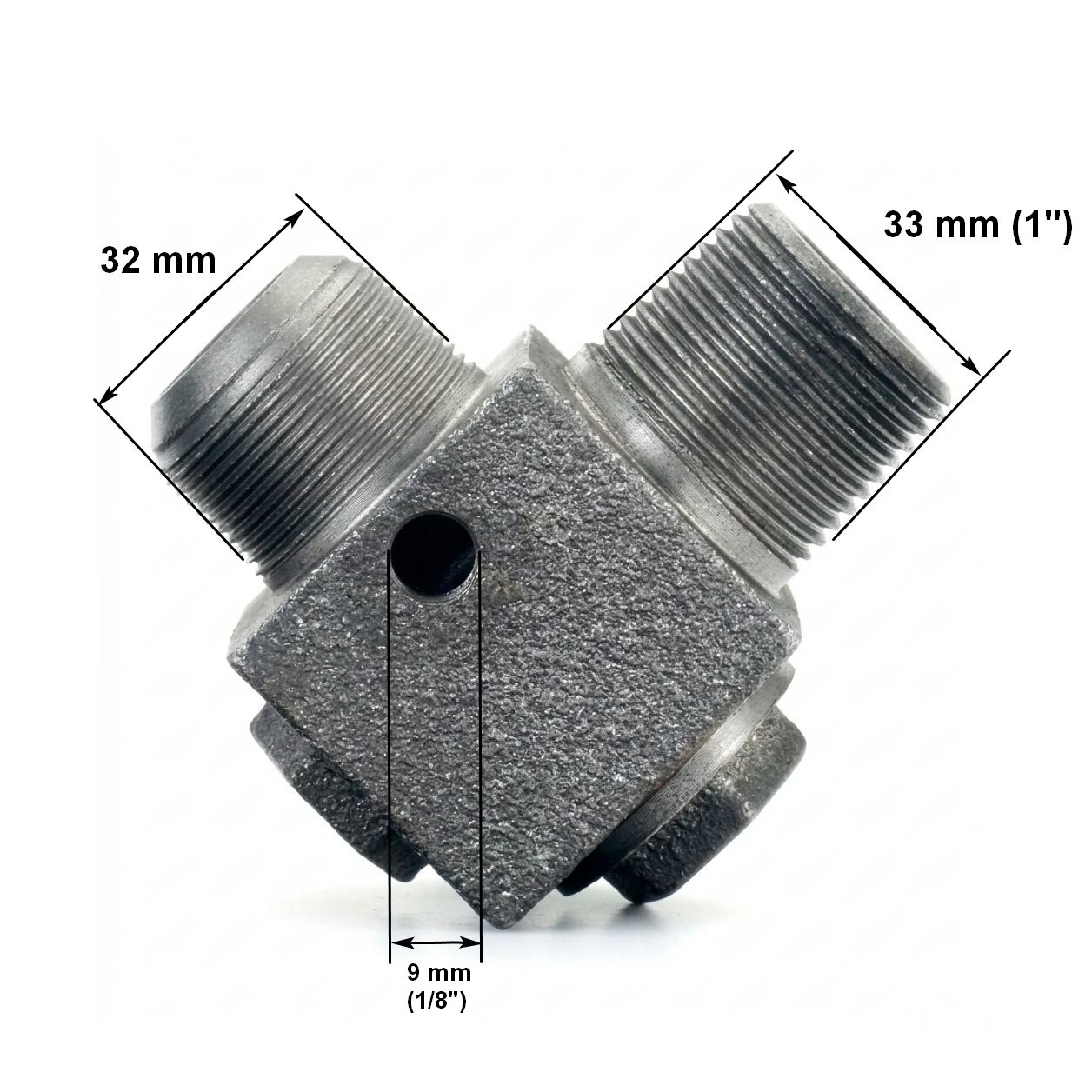
| Main thread (receiver inlet) | 1″ (33 mm) |
| Compressor connection thread | For 25–30 mm tubing (depending on fitting) |
| Unloader tube port | 1/8″ (for compressor models V-0.6, V-0.67, LB50, LB75) or 1/4″ (for the pressure switch, depending on model) |
| Body material | Forged brass (CW617N) |
| Operating temperature | up to +180°C |
| Maximum pressure | 16 bar |
| Sealing element | Fluoroelastomer (Viton) or heat-resistant PTFE |
3. Design Features (USP)
- High flow capacity (Full Flow). Unlike standard household valves, this model has an enlarged internal bore. This minimizes pneumatic resistance, preventing the compressor from being “choked” and reducing the load on a 5.5 kW motor at startup.
- Heat-resistant internal mechanism. The sealing element (piston or disc) is made of fluoroelastomer (Viton) or heat-resistant PTFE, allowing the valve to maintain a tight seal even at peak air temperatures at the compressor outlet.
- Forged brass body. The solid body resists vibration loads and condensate-related corrosion. Wall thickness is engineered for 24/7 industrial use.
- Built-in unloader port. A side port allows the unloader tube to be easily connected to the pressure switch. This guarantees an “easy start” for the motor, with no residual pressure in the discharge line.
4. Installation Recommendations
- Select by thread and power. Motors of 4 kW and above specifically require the 1″ valve — a smaller bore (1/2″ or 3/4″ via adapters) creates a bottleneck effect.
- Thread sealing. Use heat-resistant sealants only — standard PTFE tape degrades quickly under heat on powerful units (the valve’s working temperature reaches up to +180°C).
- Unloader tube connection. Use the side port (1/8″ or 1/4″, depending on model) to connect to the pressure switch — this ensures an easy motor start with no residual pressure in the discharge line.
- Periodic inspection. Check the spring and sealing disc condition once every 1,000 engine hours — the construction is disassemblable, so it’s enough to unscrew the top plug.
5. Common Mistakes
- Installing a standard 1/2″ or 3/4″ valve via adapters instead of the 1″ valve on powerful heads — the smaller bore creates a bottleneck effect: the air heats up, the block’s valve plate cokes up, and the motor runs under excessive wear.
- Using standard PTFE tape instead of a heat-resistant sealant — on powerful units, at working temperatures of up to +180°C, standard tape degrades quickly.
- Ignoring valve overheating in idle mode — if the valve heats up not only during operation but also at idle, this is a sign of seal wear, where hot air from the receiver has started leaking back through.
6. Applications
The heavy-duty check valve is required in systems based on V-0.6, V-0.67, LB50, LB75, LT100 blocks and their equivalents:
- Industrial compressor stations — ensuring safety and durability of systems with 4–5.5 kW motors.
- Automated pneumatic lines — preventing air leaks from the receiver through the piston assembly during idle periods.
- Repair and upgrades — replacing failed valves on Remeza compressors and Chinese OEM units.
7. Expert Opinion
Vitalii Boluchevski, lead engineer at Acvatron SRL (18 years of experience): “A common mistake many mechanics make is installing a standard 1/2″ or 3/4″ valve on powerful heads via adapters. Motors of 4 kW and above specifically require the 1″ valve. A smaller bore creates a bottleneck effect: the air heats up, the block’s valve plate cokes up, and the motor runs under excessive wear. My recommendation: use heat-resistant sealants only during installation, since standard PTFE tape degrades quickly under heat on powerful units.”
8. FAQ
1. Why does the check valve get hot? Heating up to 100–150°C during operation is normal, since compressed air releases a lot of heat. However, if the valve heats up while idle, it means the seal is worn and is letting hot air leak back from the receiver.
2. How do I know it’s time to replace the valve? Key signs: the compressor struggles to start (a “humming” sound at startup), a hissing sound is heard under the pressure switch after shutdown, or system performance has noticeably dropped.
3. Can this valve be disassembled and cleaned? Yes, the construction is disassemblable. Simply unscrew the top plug to check the condition of the spring and sealing disc. We recommend inspecting it once every 1,000 engine hours.