









5 Signs It Is Time to Replace Your Old Air Compressor

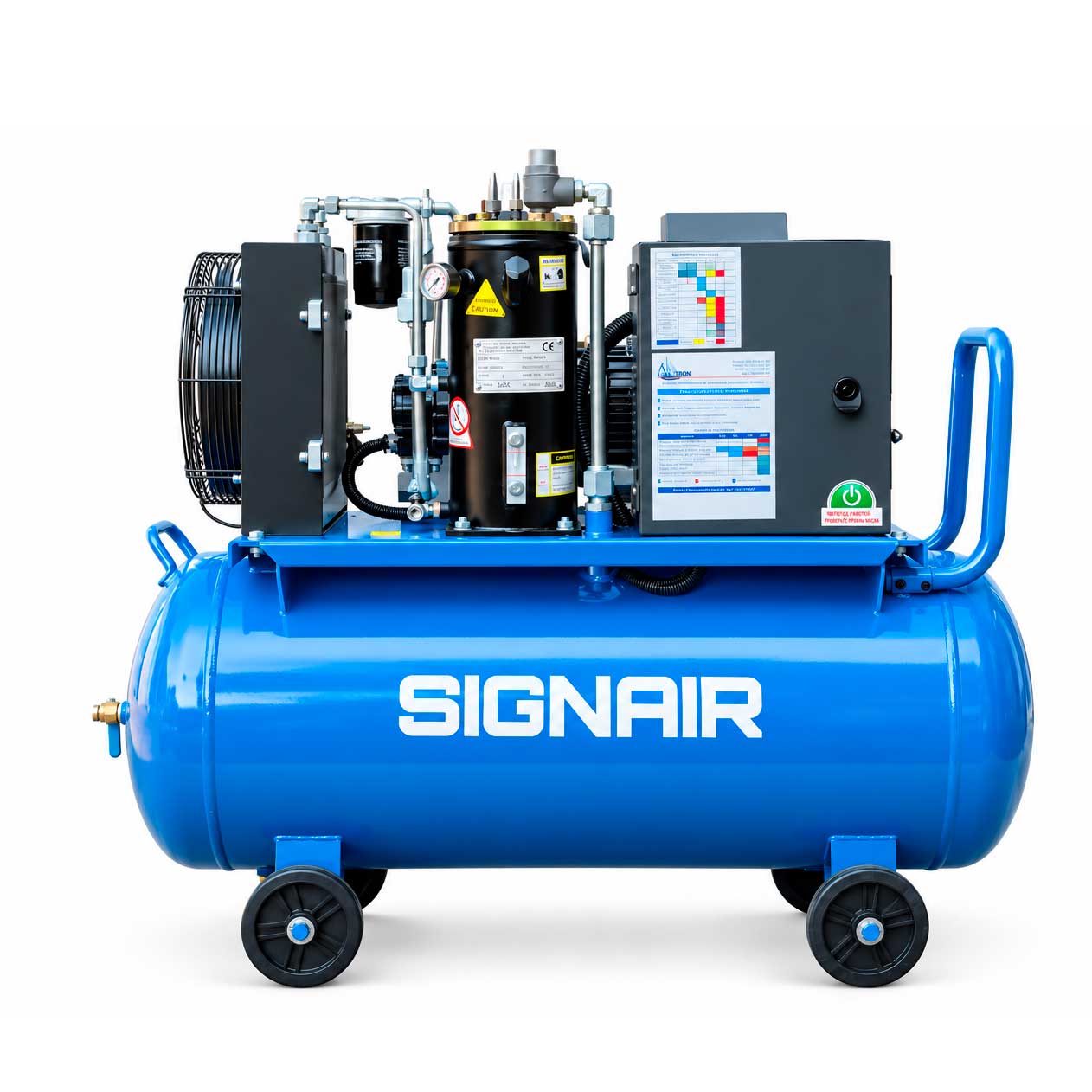
An old air compressor rarely fails without warning. In most cases, the equipment begins showing signs of wear long before a major breakdown: it takes longer to build pressure, requires repairs more frequently, consumes more electricity, overheats or becomes noticeably louder.
The problem is that many companies continue operating aging compressors because another repair appears cheaper than purchasing new equipment. However, the real cost also includes electricity consumption, production downtime, lost productivity and the risk of an unexpected shutdown.
In this article, Acvatron specialists explain 5 important signs that may indicate it is time to replace an old air compressor, as well as when repairing the existing equipment may still make economic sense.
1. The Compressor Takes Longer to Build Pressure
One of the first signs of wear is a change in the compressor’s normal operating time.
If the compressor previously reached working pressure quickly but now runs considerably longer under the same conditions, it should be inspected.
Pay attention if:
- the compressor no longer reaches its previous pressure;
- receiver filling time has increased;
- the motor runs almost continuously;
- the compressor starts more frequently;
- pressure in the pneumatic system drops;
- pneumatic tools operate inconsistently.
Possible causes include wear of the compressor head, valves, piston rings, seals or other components.
For screw compressors, reduced capacity may be related to the condition of the screw air end, separation system or sealing components.
However, reduced performance does not automatically mean that the compressor must be replaced.
The problem could also be caused by a clogged air filter, leakage in the compressed-air system, a faulty check valve or incorrect control settings.
If the obvious causes have been eliminated and the compressor still requires significantly more operating time, it is worth evaluating whether continued repairs are economically justified.
2. Repairs Are Becoming More Frequent
One repair does not necessarily mean that a compressor should be replaced.
The situation is different when the equipment repeatedly requires service intervention.
Pay attention if you have frequently had to replace:
- piston rings;
- valves;
- bearings;
- belts;
- gaskets;
- electric motors or starting components;
- oil separators;
- sensors;
- cooling system components;
- other wear parts.
It is particularly important when the same fault keeps returning.
If the same component fails repeatedly, the underlying cause should be identified. Sometimes the problem is not the component itself but general equipment wear or operating conditions.
Do not calculate only the repair cost
Suppose one repair costs €500 or the equivalent in local currency.
At first glance, this may appear much cheaper than buying a new compressor.
But if four repairs are required during the same year, the direct repair cost has already multiplied.
Additional costs may include:
- labor;
- transportation;
- production downtime;
- lost productivity;
- rental of backup equipment;
- urgent delivery of spare parts.
For this reason, the decision should be based on the total cost of ownership, not only on the price of one repair.
3. Electricity Consumption Has Increased
For a business, this can be one of the most important warning signs.
A compressor consumes electricity while producing compressed air. If worn equipment needs to run longer to produce the same amount of air, the cost of each cubic meter of compressed air increases.
For example, if a compressor previously operated for 40 minutes per hour but now needs 50–55 minutes to provide the same amount of air, production has not changed, but the compressor is running longer and consuming more electricity.
Why compressor technology matters
Modern screw compressors can use capacity-control systems and variable-speed drives to adapt operation to actual compressed-air demand.
Acvatron offers screw compressors with inverter control.
For example, the ZM-5.5-160 has a 5.5 kW motor, 10 bar working pressure and 680 l/min capacity.
When selecting replacement equipment, it is important to compare more than motor power and purchase price:
air demand → operating hours → average load → electricity consumption.
4. The Compressor Is Old and Its Operating Hours Keep Increasing
Age alone does not mean that a compressor must be replaced.
A properly maintained compressor can remain operational for many years.
However, as equipment gets older and operating hours increase, its technical condition should be evaluated more carefully.
Consider:
- operating hours;
- repair history;
- working conditions;
- maintenance frequency;
- ambient temperature;
- power supply quality;
- contamination;
- cooling system condition;
- receiver condition;
- availability of spare parts.
An old compressor may continue to operate while gradually becoming less efficient and more expensive to maintain.
When an old piston compressor is no longer enough
Piston compressors remain a practical solution for many applications with intermittent air demand, such as workshops, tire service centers and individual pneumatic tools.
However, if production requires a continuous supply of compressed air, screw compressor technology may be more appropriate.
Acvatron offers screw compressors for applications requiring continuous compressed-air supply.
Therefore, the solution may not simply be replacing an old compressor with a similar model. It may be an opportunity to choose a technology better suited to the current operating conditions.
5. Overheating, Excessive Noise, Vibration or Air Leaks Have Appeared
These signs should not be ignored.
If a compressor has become significantly louder, vibrates more strongly or overheats, it should be inspected.
Pay attention to:
- unusual metallic noises;
- increased vibration;
- overheating;
- smell of overheated oil;
- oil leaks;
- continuous hissing;
- excessive moisture in the compressed-air system;
- frequent motor protection trips;
- oil around connections.
Air leaks
Leaks do not necessarily originate inside the compressor.
They may occur at:
- fittings;
- hoses;
- pipe connections;
- quick couplers;
- valves;
- filters;
- pressure regulators;
- pneumatic equipment.
For this reason, the entire compressed-air system should be checked before replacing the compressor.
Sometimes a compressor appears to be undersized when a significant portion of its output is actually being lost through leaks downstream.
Check the Air Receiver as Well
The air receiver is another important component to inspect when replacing an old compressor.
Condensate accumulates inside the receiver and can contribute to corrosion over time.
If significant corrosion or damage is found, the receiver should be technically inspected according to the applicable safety requirements.
A damaged receiver should never remain in service simply because the compressor itself is still operating.
When modernizing an old compressed-air system, it is worth checking the receiver, piping, filters, dryer and condensate drainage system at the same time.
Should You Repair or Buy a New Compressor?
This is the main question for any equipment owner.
There is no universal rule saying that a compressor must be replaced after a specific number of years.
The decision should be based on technical condition and operating economics.
Repair may still make sense when:
- the fault is localized;
- the compressor is not excessively old;
- spare parts are available;
- repair cost is reasonable;
- capacity meets current requirements;
- the compressor operates in a suitable duty cycle;
- a good remaining service life is expected after repair.
Replacement should be seriously considered when:
- failures occur frequently;
- repair costs keep increasing;
- capacity has decreased;
- the compressor no longer meets air demand;
- electricity consumption has increased;
- the equipment frequently overheats;
- spare parts are becoming difficult to obtain;
- production downtime is expensive;
- the existing compressor no longer matches the current operating conditions.
Do Not Compare Only the Price of a New Compressor
A common mistake is comparing:
the repair cost of the old compressor
with
the purchase price of a new compressor.
It is more accurate to compare the total cost of ownership.
For old equipment:
repairs + electricity + maintenance + downtime + productivity losses + spare parts
For new equipment:
purchase price + installation + maintenance + electricity + consumables
This type of calculation can show that a more expensive compressor can have a lower long-term operating cost.
Does an Old Piston Compressor Have to Be Replaced with Another Piston Compressor?
Not necessarily.
If the company’s compressed-air demand has increased, the entire system should be reassessed.
Piston compressors are suitable for intermittent operation and smaller workshops. For high demand and long operating periods, a screw compressor may be more appropriate.
Acvatron offers both technologies for different operating conditions.
What Should You Check Before Buying a New Compressor?
Do not simply buy a compressor with the same motor power as the old one.
First determine the actual requirements of the compressed-air system.
1. Air Demand
Calculate the demand of the main pneumatic consumers.
Consider not only the nominal consumption of each tool, but also how many devices operate simultaneously.
2. Working Pressure
Determine the minimum pressure required by the equipment.
There is usually no benefit in selecting a significantly higher pressure than necessary.
3. Operating Schedule
Determine:
- how many hours per day the compressor operates;
- how many days per week;
- how many shifts;
- how frequently it starts;
- what the average air demand is.
4. Air Quality
Depending on the application, the system may require:
- filtration;
- moisture separation;
- air drying;
- oil removal;
- dew-point control.
5. Air Receiver
The receiver volume should be selected according to compressor capacity and the characteristics of air demand.
6. Compressed-Air Piping
Even a new compressor can operate inefficiently if the existing pneumatic network has significant leaks or undersized piping.
5 Signs That You Should Consider Replacing Your Compressor
For a quick assessment, check the following:
1. Capacity has decreased
The compressor takes longer to build pressure or no longer provides the required airflow.
2. Repairs have become frequent
Components need to be replaced more and more often.
3. Energy consumption has increased
The compressor runs longer to produce the same amount of air.
4. The equipment is old and heavily used
The compressor no longer matches the current operating conditions.
5. Physical signs of wear have appeared
Overheating, vibration, unusual noise, oil or air leaks, or cooling problems.
If several of these signs are present, it is worth carrying out a technical and economic assessment before the next major breakdown.
What Should Be Checked or Replaced Along with the Compressor?
Depending on the condition of the system, inspect:
- air filters;
- oil filters;
- oil separators;
- line filters;
- air dryer;
- automatic condensate drains;
- hoses and fittings;
- piping;
- valves;
- receiver.
Installing a new compressor into an old system with significant leaks can eliminate part of the expected benefit of the new equipment.
How to Choose a Replacement Compressor
Acvatron offers compressor solutions for different operating conditions and compressed-air requirements.
View Acvatron compressors available in Moldova
When requesting a compressor recommendation, it is useful to provide:
- required pressure, bar;
- required airflow, l/min or m³/min;
- number of pneumatic consumers;
- operating hours per day;
- number of shifts;
- electrical supply;
- required receiver volume;
- compressed-air quality requirements;
- current compressor model.
This information makes it possible to compare the existing installation with suitable replacement options.
Conclusion
An old air compressor does not necessarily need to be replaced simply because it has been in service for many years.
The most important factors are technical condition, performance and total operating cost.
If the compressor takes longer to build pressure, requires frequent repairs, consumes more electricity, overheats or shows clear signs of physical wear, it is time to evaluate the cost of continued operation.
In some cases, a repair or component replacement may be enough. In others, continuing to operate aging equipment can lead to higher costs and an increased risk of unplanned downtime.
When replacing a compressor, do not automatically select another unit with the same motor power. Your company’s air demand may have changed, and a screw compressor or complete compressed-air treatment system may now be more appropriate.
If you are planning to replace an old compressor, Acvatron specialists can help select equipment based on actual airflow requirements, working pressure and operating conditions.