











How to Check and Replace a Piston Air Compressor Check Valve: Fault Symptoms, Diagnosis and Replacement

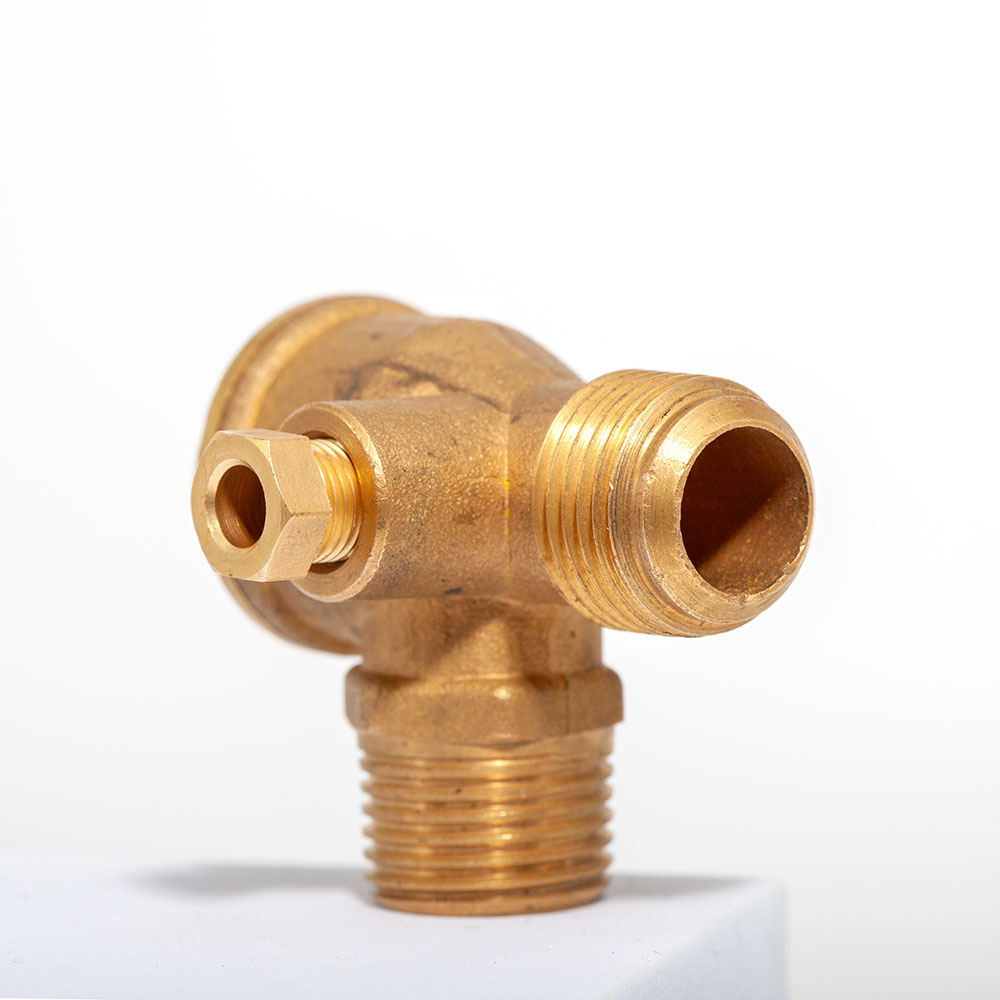
A check valve is a small but critical component of a piston air compressor. It allows compressed air to flow from the compressor pump into the receiver and prevents air from flowing back from the receiver to the compressor head after shutdown.
When the valve no longer seals properly, the compressor may have difficulty starting, continuously release air through the pressure switch unloader valve, and experience increased wear.
This guide explains how a compressor check valve works, how to identify a faulty valve, how to test it and how to replace it correctly.
What Is a Compressor Check Valve and What Does It Do?
In a piston compressor, compressed air travels from the compressor head to the air receiver. A check valve is installed between the discharge line and the receiver.
Its purpose is to allow air to flow in only one direction:
compressor pump → check valve → air receiver.
After the compressor stops, the valve must close and retain pressure inside the receiver. This prevents compressed air from flowing back toward the cylinders.
The check valve works together with the pressure switch unloader valve. After the compressor stops, the unloader releases the remaining pressure from the discharge line, while the check valve keeps the compressed air inside the receiver.
Where Is the Check Valve Installed?
On most piston compressors, the check valve is installed directly at the receiver inlet.
Depending on the compressor design, it may be connected to:
- the discharge pipe from the compressor pump;
- the pressure switch unloader tube;
- the receiver connection.
The exact design depends on the compressor model.
Acvatron offers check valves with different connection sizes, including 1″×3/4″, 1/2″×1/2″, 1/2″×3/8″ and 3/8″×M14.
Therefore, a replacement valve should not be selected by appearance alone. The thread sizes and compressor configuration must be checked.
Main Signs of a Faulty Compressor Check Valve
1. Continuous hissing after the compressor stops
A short release of air immediately after shutdown is normally caused by the pressure switch unloader and is not necessarily a fault.
If the hissing continues continuously after shutdown, the check valve may not be sealing correctly.
Air from the receiver can flow back through the faulty check valve into the discharge line and escape through the unloader system.
2. The electric motor has difficulty starting
If the compressor starts normally with an empty receiver but struggles to start when the receiver is pressurized, a faulty check valve may be one possible cause.
However, this symptom alone does not confirm a defective check valve. The pressure switch, unloader system, motor and other components should also be checked.
3. Receiver pressure drops
If receiver pressure decreases after the compressor stops, the check valve may be one possible source of the problem.
Before replacing it, check for external leaks at:
- pipe connections;
- valves;
- fittings;
- safety valve;
- condensate drain;
- receiver connections;
- pneumatic equipment.
4. The compressor starts too frequently
If the receiver loses pressure quickly after shutdown, the pressure switch may start the compressor more frequently.
Frequent cycling increases the number of motor starts and can place additional stress on the electrical and mechanical components.
How to Test a Compressor Check Valve
Before performing any work, disconnect the compressor from the electrical supply and completely release the pressure from the receiver. Never remove a pressurized check valve.
Method 1. Listen for air leakage
Run the compressor until it reaches its cut-out pressure.
After the compressor stops, listen to the pressure switch unloader.
A short burst of air is normal.
If air continues to escape, inspect the check valve and unloader system.
Method 2. Check receiver pressure
Stop the compressor and monitor the receiver pressure gauge.
If pressure drops quickly, first check for external air leaks.
If no external leaks are found, inspect the check valve and other components that may allow air to escape.
Method 3. Test the removed valve
After completely depressurizing the system, the valve can be removed and tested separately.
A functioning check valve should allow air to pass in the intended direction and block reverse flow.
If air passes freely in both directions, there may be a problem with the valve seat, seal, spring or internal mechanism.
In some cases, contamination on the valve seat can cause leakage. Cleaning may restore proper operation, but damaged or worn components should be replaced.
Why Does a Compressor Check Valve Fail?
Common causes include:
- dirt on the valve seat;
- deposits or particles;
- worn seals;
- damaged internal components;
- weak or damaged spring;
- corrosion;
- mechanical damage;
- incorrect valve selection;
- incorrect installation.
How to Replace a Compressor Check Valve
Step 1. Switch off the compressor
Disconnect the electrical power and prevent accidental starting.
Step 2. Fully release the pressure
The receiver must be completely depressurized.
Step 3. Disconnect the tubes
Remove the discharge pipe and the pressure switch unloader tube, if fitted.
Taking a photo of the original connections before disassembly is recommended.
Step 4. Remove the old valve
Use the correct wrench and avoid applying excessive force to the receiver fittings.
Step 5. Check the replacement valve
Make sure that:
- the thread type is correct;
- the connection sizes match;
- the flow direction is correct;
- the working pressure is suitable;
- the valve is compatible with the compressor;
- the unloader connection is present if required.
Step 6. Install the valve
Use a suitable thread-sealing material.
Do not apply excessive sealant, as it may enter the valve and interfere with the internal mechanism.
Step 7. Reconnect the tubes
Reconnect the discharge pipe and unloader tube.
Step 8. Test the compressor
After installation, check that:
- the receiver builds pressure normally;
- the motor stops at the correct pressure;
- the unloader operates after shutdown;
- there is no continuous hissing;
- the motor starts normally;
- there are no leaks around the connections.
How to Choose a Check Valve for a Compressor
One of the most common mistakes is selecting a check valve based only on compressor power.
Before ordering, check:
- receiver-side thread;
- discharge-side thread;
- unloader connection;
- working pressure;
- valve construction;
- body dimensions;
- compatibility with the compressor model.
1″×3/4″ Compressor Check Valve
1″×3/4″ Compressor Check Valve – Acvatron
This version has a 1″ receiver connection and a 3/4″ connection toward the compressor pump, plus an additional G1/8″ connection for the pressure switch unloader tube.
1/2″×3/8″ Compressor Check Valve
1/2″×3/8″ Compressor Check Valve – Acvatron
Designed for compressors using this particular combination of connections. Always verify compatibility before ordering.
3/8″×M14 Compressor Check Valve
3/8″×M14 Compressor Check Valve – Acvatron
Another check valve configuration available from Acvatron for compressors using the corresponding connections.
All Acvatron Compressor Check Valves
View all compressor check valves – Acvatron
Check Valve vs. Pressure Switch Unloader Valve
These two components are often confused.
The check valve keeps pressure inside the receiver and prevents compressed air from flowing back toward the compressor pump.
The pressure switch unloader valve releases residual pressure from the discharge pipe after the compressor stops.
They work together.
Therefore, continuous hissing after shutdown does not automatically mean that the pressure switch is faulty. The check valve should also be checked for proper sealing.
Common Replacement Mistakes
Choosing a valve only by thread diameter
Matching one thread does not guarantee complete compatibility. The second connection, unloader connection or internal design may be different.
Removing the valve without depressurizing the receiver
This is dangerous. The receiver must be completely depressurized before removing the valve.
Using too much thread sealant
Excess sealant can enter the valve and interfere with its operation.
Connecting the unloader tube incorrectly
After replacement, all connections must be restored according to the original compressor configuration.
Conclusion
The check valve plays an important role in the correct operation of a piston air compressor.
Continuous hissing after shutdown, loss of receiver pressure and difficult motor starting may indicate a check valve problem.
When selecting a replacement, check the thread sizes, connection dimensions, working pressure, valve design and compatibility with the compressor model.
Acvatron offers several check valve configurations for piston air compressors.
If you are not sure which valve you need, compare the dimensions and threads of the existing valve or provide a photo and the compressor specifications for identification.