









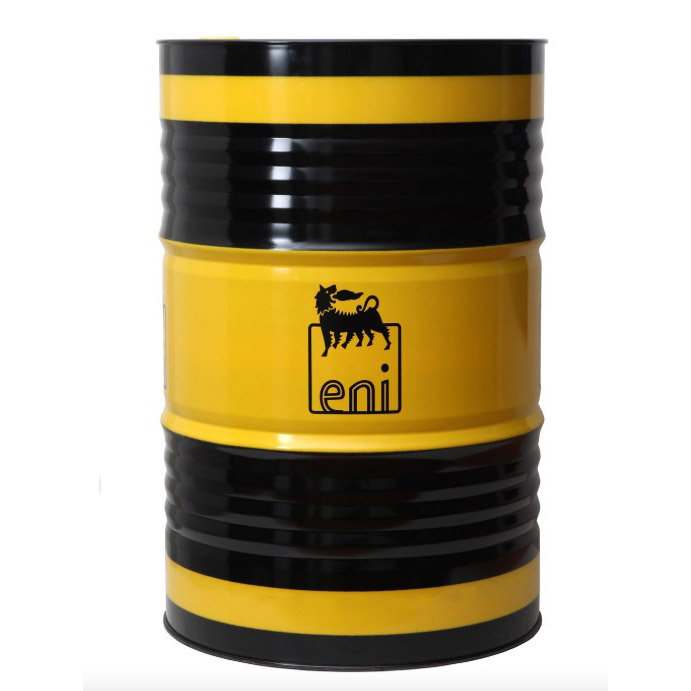

Eni Dicrea 100 – Mineral Oil for Reciprocating Air Compressors
135,00 MDL
Eni Dicrea 100 is a high-quality paraffinic-base mineral oil, developed by the Eni concern specifically for the professional lubrication of reciprocating (piston) air compressors, including those operating at air delivery temperatures above 200 °C. The oil is also suitable for lubricating vacuum pumps operating under non-severe conditions (non-aggressive gas, vacuum level from 1 to 1000 mbar).
1. Purpose and Operating Principle
The oil performs three functions simultaneously:
- maintains a stable oil film on the friction surfaces of the cylinder-piston assembly at high temperatures, preventing dry friction, scoring, and compression ring sticking;
- slows thermo-oxidative aging of the oil, reducing sludge, deposit, and carbon residue formation on hot valves and cylinder walls;
- protects the system’s metal surfaces from corrosion and rust, including in the presence of moisture in the circuit.
2. Technical Specifications
| No. | Parameter | Unit | Value |
|---|---|---|---|
| 1 | Density at 15 °C | kg/m³ | 888 |
| 2 | Viscosity at 40 °C | mm²/s | 100 |
| 3 | Viscosity index | — | 97 |
| 4 | Flash point (COC) | °C | 249 |
| 5 | Pour point | °C | −9 |
| 6 | Demulsibility at 82 °C | min | 20 |
| 7 | Foaming test | cc/cc | 100/0 |
| 8 | Rust test (ASTM D 665 A/B) | — | Pass |
| 9 | Base oil class | — | Mineral, paraffinic base |
| 10 | Viscosity class | — | ISO VG 100 |
| 11 | Standards compliance | — | ISO 6743/3 (DAB, DAG, DVA), DIN 51506-VDL |
| 12 | OEM approvals | — | Italvacuum, HATLAPA, NEA Neuman & Esser, Sulzer Burckhardt |
3. Composition and Protective Properties
- Effective thermo-oxidative stability. Thanks to its high-quality base stock, the oil prevents sludge, deposit, and residue formation on the compressor’s hot parts, improving operating conditions during prolonged use.
- High antiwear properties. The oil passes the 9th load stage test per the FZG method, which is critical for protecting the most heavily loaded friction components in reciprocating compressor units — the cylinder-piston assembly and valve mechanism.
- Effective anticorrosion protection. Meets the requirements of the ASTM D 665 A/B standard — the oil is inert toward metals and prevents rust formation inside the system.
- Full seal compatibility. The formula is engineered to work with all rubber seal types commonly used as gaskets and seals in compressor equipment.
- Recognition by leading OEM manufacturers. The oil is approved by compressor and vacuum equipment manufacturers such as Italvacuum, HATLAPA, NEA Neuman & Esser, and Sulzer Burckhardt — confirming its compliance with the strict requirements of heavily loaded components.
- Higher ISO VG 100 viscosity class. Compared to lighter oils (such as ISO VG 46), Dicrea 100 provides a thicker oil film, important for compressors with high mechanical and thermal loads on the cylinder-piston assembly.
4. Usage and Oil Change Recommendations
- Fully drain the used oil before refilling with new oil — residue from another oil (especially of a different viscosity class or brand) dilutes the additive package and reduces stated performance characteristics.
- Do not mix Eni Dicrea 100 with oils of a different viscosity class (such as ISO VG 46) without prior consultation — different viscosity classes are calculated for the specific clearances and thermal regime of a given compressor model.
- Check the oil level via dipstick or sight glass after filling and after the first hours of operation under load — the level should match the compressor manufacturer’s specifications.
- Replace the air and oil filters along with the oil, if provided by the compressor’s design — old filters contain residue from the previous oil and contaminants.
- Store the oil in sealed, airtight containers in a dry location away from direct sunlight — moisture or dust ingress reduces demulsibility and anticorrosion properties even before use.
- Dispose of used oil in accordance with local environmental regulations — do not pour it into drains or onto the ground.
5. Analogues and Comparison
Eni Dicrea 100 is comparable in viscosity class (ISO VG 100) and purpose to mineral oils for reciprocating compressors from other manufacturers, notably Mobil Rarus 429, Shell Corena S2 P 100, and Total Dacnis SH 100.
When selecting an equivalent, always verify:
- the ISO VG 100 viscosity class — matching viscosity doesn’t mean an identical additive package;
- compliance with ISO 6743/3 (DAB/DAG/DVA) and DIN 51506-VDL standards — these classifications are what confirm the oil’s suitability for reciprocating compressors with high delivery temperatures;
- FZG test results (antiwear properties) — critical for compressors with intense mechanical load on the cylinder-piston assembly;
- the compressor manufacturer’s recommendations on viscosity class and oil type — using an unsuitable viscosity class can affect warranty coverage.
If you’re planning to switch to Eni Dicrea 100 from another oil, send us the current oil brand and compressor model — we’ll help assess compatibility before the switch.
6. Common Usage Mistakes
- Using an oil with the wrong viscosity class (e.g., ISO VG 46 instead of 100, or vice versa) — leads to an insufficient or excessive oil film and accelerated wear of the cylinder-piston assembly.
- Topping up with a different oil type or brand “as needed” instead of a full change — leads to mixing different additive packages and unpredictable blend behavior.
- Extending the oil change interval beyond the recommended period, relying on the oil’s “improved characteristics” — even an oxidation-resistant oil depletes its additive reserve.
- Storing the oil in an open or damaged container — leads to oxidation and moisture ingress even before use.
- Ignoring the compressor manufacturer’s viscosity class recommendations — especially critical for compressors under warranty.
7. Practical Applications
Eni Dicrea 100 oil is an essential lubricant in the following areas:
- Reciprocating compressors — providing reliable lubrication for alternating-type assemblies, including the cylinder-piston assembly and valve mechanism.
- High-temperature systems — equipment with air delivery temperatures of 200 °C and above.
- Vacuum pumps — operating under non-severe conditions: non-aggressive gas, vacuum level from 1 to 1000 mbar.
- Industrial compressor equipment — approved by manufacturers such as Italvacuum, HATLAPA, NEA Neuman & Esser, and Sulzer Burckhardt.
- Marine vessels — shipboard reciprocating compressor installations.
8. Expert Opinion
Vitali Boluchevski, Lead Engineer at Acvatron SRL (18 years of experience):
“Dicrea 100 is the oil for reciprocating compressors where the load on the cylinder-piston assembly and delivery temperature are genuinely high. The higher viscosity class compared to ISO VG 46 provides a thicker oil film, which is critical as rings and cylinder bores wear. An important point: this oil is specifically calculated for piston machines and vacuum pumps — if you have a screw compressor, there’s no reason to fit Dicrea 100 ‘just in case’; for rotary systems, Eni offers separate products in the Dicrea line with the appropriate viscosity. Recognition from vacuum equipment manufacturers like HATLAPA and Sulzer Burckhardt is a solid indicator that this oil is genuinely calculated for demanding operating conditions, not just marketing language.”
9. Frequently Asked Questions
1. Is Eni Dicrea 100 suitable for operation at extreme temperatures? Yes, this series is specifically designed for compressors where air delivery temperature reaches or exceeds 200 °C.
2. Can this oil be used if condensate forms in the system? Yes, the oil has good demulsibility properties — water separation time at 82 °C is 20 minutes, allowing moisture to be effectively removed from the system.
3. Will the oil damage my compressor’s rubber seals? No, Eni Dicrea 100 is fully compatible with all standard rubber seals used in compressor equipment.
4. Is Dicrea 100 suitable for screw (rotary) compressors? The official product datasheet specifies Dicrea 100 for reciprocating compressors and vacuum pumps. For screw and vane compressors, Eni offers separate products in the Dicrea line — contact us to find the right option for your equipment type.
5. What’s the recommended oil change interval for Dicrea 100? ⚠️ The exact interval depends on operating conditions, delivery temperature, and compressor operating hours — we recommend following your compressor manufacturer’s schedule. Contact us to determine the interval for your operating conditions.
6. Can Eni Dicrea 100 be mixed with oil of a different viscosity class? Not recommended. ISO VG viscosity classes are selected based on a compressor’s specific clearances and thermal regime — mixing different classes can affect oil film thickness and accelerate wear.
7. How does Dicrea 100 differ from Dicrea 46? Dicrea 100 has a higher viscosity class (ISO VG 100 versus VG 46) and is intended primarily for reciprocating compressors, while Dicrea 46 is oriented toward rotary installations (screw and vane). The choice depends on your specific compressor manufacturer’s recommendations.