








Pneumatic Tubes for Compressors: Types, Materials and How to Choose the Right One

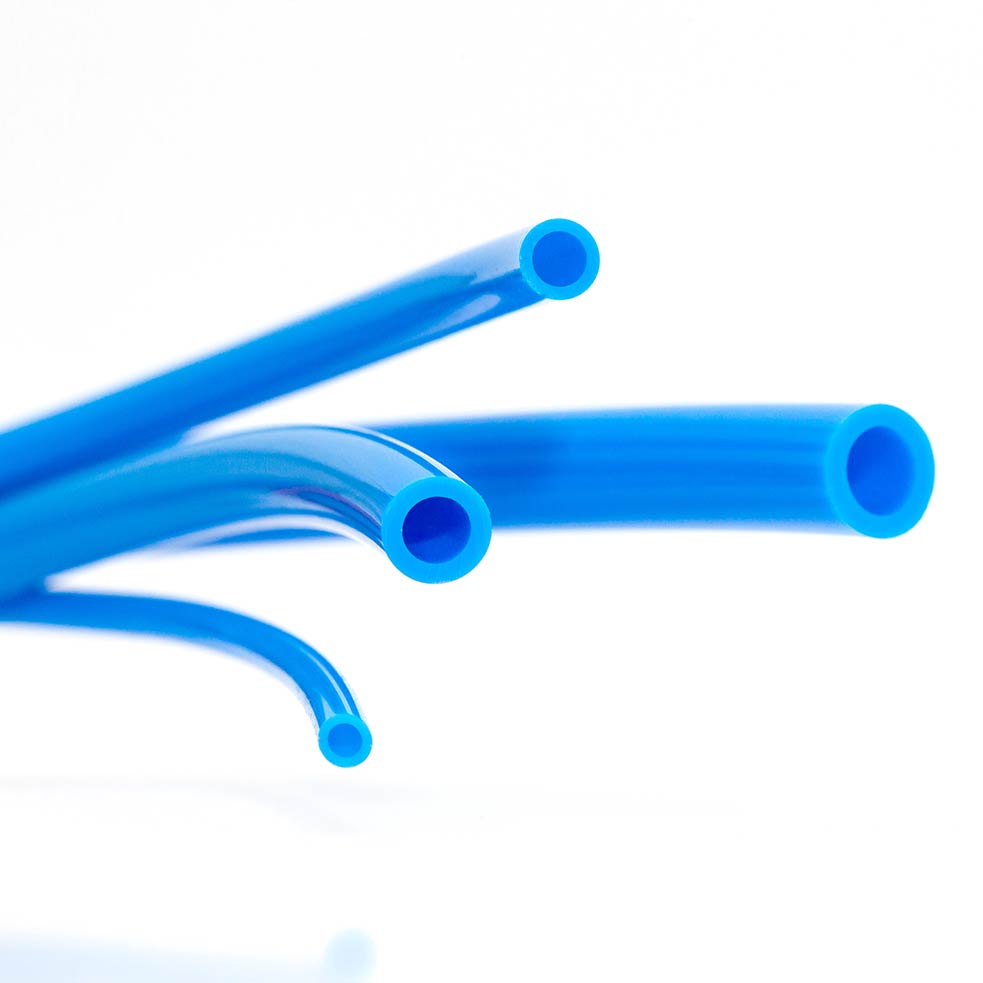
The pneumatic tube is the last link between the compressor and the tool. It determines how stable the pressure will be, how comfortable the work will feel and how long the entire pneumatic system will last. Choosing the wrong one is easy: the market offers dozens of materials, diameters and constructions. This guide covers everything you need to make the right choice — with specific models from the Acvatron SRL catalogue, available in stock at our Chișinău warehouse.
Article navigation:
- Types of tubes by material
- Polyurethane tubes (PU)
- Nylon tubes (PA / Nylon)
- PTFE tubes (Teflon)
- Reinforced hoses
- Hose reels
- How to choose: diameter, pressure, length
- Fittings and connections
- SHPI vs XCPC: which brand to choose
- Available tubes catalogue
Types of Pneumatic Tubes by Material
The tube material is not simply a matter of price. It determines flexibility, maximum pressure, resistance to oils and chemicals, the working temperature range and service life.
| Material | Flexibility | Max. Pressure | Temp. Range | Oil Resistance | Application |
|---|---|---|---|---|---|
| PU (polyurethane) | Very high | up to 10–15 bar | −20…+60 °C | Medium | Pneumatic tools, automation |
| PA (nylon) | Medium | up to 16–20 bar | −40…+100 °C | High | Industrial pipelines, transport |
| PTFE (teflon) | Low | up to 20+ bar | −60…+260 °C | Exceptional | Aggressive media, food production |
| Reinforced PU | High | up to 20 bar | −20…+60 °C | High | Heavy-duty use, auto service |
💡 Selection rule: if the task is connecting a pneumatic tool or linking a compressor to a distributor under normal conditions — choose PU. If you need to work at high pressure, in freezing temperatures or with chemicals — choose PA or PTFE.
Polyurethane Tubes (PU) — The Standard for Most Applications
Polyurethane tubes are the most widely used choice for garages, auto service shops and production facilities. Their main advantages are exceptional flexibility, light weight, abrasion resistance and competitive pricing.
Technical specifications of PU tubes:
- Working pressure: up to 10 bar (reinforced series — up to 15–20 bar)
- Burst pressure: 24–30 bar
- Temperature range: −20 °C … +60 °C
- Standard diameters (OD × ID): 4×2.5 / 6×4 / 8×5 / 10×6.5 / 12×8 mm
- Minimum bend radius: 5–6 times smaller than nylon tubes
- Colour coding: blue (air), black (vacuum), red (high pressure), transparent
Advantages of PU over PA and other materials:
- Best flexibility at low temperatures (does not stiffen down to −20 °C)
- High abrasion resistance — 4–5 times greater than PVC
- Cuts easily with a knife, no special tools required for installation
- Compatible with One-Touch push-in fittings without additional seals
Where it is used: lines to pneumatic tools (impact wrenches, spray guns, sanders), automation and robotics systems, conveyor lines, connecting a compressor to a distributor in small systems, airbrushing setups.
When it is not suitable: temperatures above +60 °C (near hot surfaces), contact with aggressive solvents, system working pressure above 10 bar — in these cases choose PA or PTFE.
In the Acvatron catalogue:
- 👉 Polyurethane PU tubes (straight, reel) — SHPI and XCPC, diameters 4–12 mm, blue/transparent/black, 100 m reels
- 👉 Spiral polyurethane PU tubes — self-retracting, for handheld pneumatic tools
Nylon Tubes PA / Nylon — For More Demanding Conditions
Nylon (polyamide) tubes are stronger and stiffer than polyurethane ones. They hold their shape better under high pressure, are more resistant to chemicals, petrol, brake fluid and abrasive wear. PA tubes are the choice for stationary industrial pipelines and transport pneumatic systems.
Technical specifications of PA tubes (SHPI):
- Working pressure: up to 16–20 bar
- Burst pressure: 40–60 bar (depending on diameter)
- Temperature range: −40 °C … +100 °C
- Resistance to oils, petrol, brake fluids: high
- Standard diameters: 6, 8, 10, 12 mm
- Certification: ISO 9001, RoHS (SHPI Taiwan)
Advantages of PA over PU:
- Withstands twice the pressure of a standard PU tube
- Working range up to +100 °C — suitable for use near hot equipment
- Frost-resistant down to −40 °C — essential for outdoor and unheated installations
- Does not absorb moisture from the air (lower hygroscopicity than PA6)
Where it is used: braking systems of heavy goods vehicles and trailers, automated production lines, food and pharmaceutical equipment, outdoor pneumatic pipelines at sub-zero temperatures.
In the Acvatron catalogue — nylon tubes by SHPI (Taiwan, Shan Hua Plastic Industrial Co.), a manufacturer with 40+ years of experience, products certified to ISO 9001 and RoHS.
👉 SHPI PA nylon tubes in catalogue
PTFE Tubes (Teflon) — For Aggressive Media
PTFE (polytetrafluoroethylene, teflon) is the material with the broadest chemical resistance range among all pneumatic tubes. It is unaffected by acids, alkalis, solvents and most aggressive liquids. PTFE tubes are used wherever PU and PA quickly degrade.
Technical specifications of PTFE tubes:
- Working pressure: up to 20 bar and above
- Temperature range: −60 °C … +260 °C
- Chemical resistance: exceptional — resistant to 95%+ of known chemicals
- Surface: non-stick (friction coefficient 0.04–0.10), product does not adhere
- Transparent or semi-transparent — visual inspection of contents
Where PTFE is indispensable:
- Chemical industry — acids, alkalis, solvents
- Food production — direct food contact (FDA-compliant)
- Pharmaceutical and medical applications — sterile pipelines
- Paint lines with aggressive solvents and lacquers
- Laboratory equipment
PTFE limitations: higher rigidity than PU and PA — larger bend radius, more difficult to install in confined spaces. Price is significantly higher than PU tubes.
👉 PTFE teflon tubes in catalogue
Reinforced Hoses — For Heavy-Duty Use
A reinforced hose is a flexible hose with internal strengthening from textile braiding, metal braid or polyester spiral. The reinforcement dramatically increases working pressure and resistance to mechanical damage while maintaining flexibility.
Technical specifications of reinforced PU hoses (20 bar):
- Working pressure: up to 20 bar
- Burst pressure: 60+ bar
- Flexibility: high — does not kink or obstruct airflow
- Resistance to abrasion, cuts and impacts: significantly higher than standard tubes
- Temperature range: −20 °C … +60 °C
Where it is used:
- Auto service and tyre fitting — constant movement with a tool in hand
- Construction sites — contact with sharp edges and impact loads
- Industrial equipment with high working pressure
- Connecting pneumatic tools where a standard tube wears through quickly
👉 Reinforced PU hoses 20 bar in catalogue
Hose Reels — A Tidy Workspace
A hose reel with reinforced hose is an ergonomic solution for auto service shops, garages and production workshops. The hose does not tangle underfoot and retracts automatically after use.
Benefits of a hose reel:
- Automatic retraction — the hose stows away with a single motion
- Protection against kinking and premature wear
- Locking in the required position (stop mechanism)
- Wall or ceiling mounting — saving floor space
- Working pressure: up to 15 bar (SHPI models)
Available model: SHPI HR12-UB6512 — professional inertia-driven hose reel
- Hose length: 12 m
- Working pressure: 15 bar
- Housing: impact-resistant ABS plastic
- Retraction type: inertia (automatic)
- Mounting: wall / ceiling
👉 SHPI hose reels in catalogue
How to Choose a Tube: Diameter, Pressure, Length, Temperature
1. Tube diameter
Diameter is one of the key parameters. Too small creates flow resistance and reduces tool performance. A simple guide:
| OD (mm) | Air flow rate | Typical application |
|---|---|---|
| 4 mm | up to 50 l/min | Airbrushes, low-power cylinders |
| 6 mm | up to 150 l/min | Automation pneumatics, small tools |
| 8 mm | up to 300 l/min | Standard pneumatic tools (impact wrench, spray gun) |
| 10 mm | up to 500 l/min | High-power tools, supply lines |
| 12–16 mm | 500+ l/min | Main pipelines, high-throughput equipment |
2. Working pressure
The tube must withstand the system’s maximum pressure with a safety margin of at least 30–50%. If the compressor delivers 8 bar — choose a tube rated from 12 bar. Standard piston compressors Remeza AirCast and MZB operate at 8–10 bar: PU tubes rated 10–15 bar are suitable for these.
3. Length and pressure drop
The longer the tube, the greater the pressure drop at the far end. The compensation rule: when pipeline length doubles, increase the tube diameter by one size step. For a home garage, 5–10 m of 8 mm tube is usually sufficient; for an auto service shop — 15–20 m and more.
4. Ambient temperature
| Conditions | Recommended material |
|---|---|
| Standard (−20…+60 °C) | PU — optimal |
| Outdoor installation, frost down to −40 °C | PA (nylon) |
| Near hot equipment, up to +100 °C | PA (nylon) |
| Extreme temperature, up to +260 °C | PTFE (teflon) |
| Aggressive chemicals, solvents | PTFE (teflon) |
5. Colour coding (SHPI/XCPC standard)
- Blue — air, standard pneumatic systems
- Black — vacuum lines, UV-resistant for outdoor installation
- Red — high pressure (up to 15–20 bar)
- Transparent — visual inspection of contents, liquids
Fittings and Connections: One-Touch or Threaded?
The right fitting is just as important as the tube itself. A leak at a connection nullifies the whole system.
One-Touch push-in fittings — push and insert the tube, done. No tools or seals needed. Ideal for flexible PU and PA tubes, frequent tool changes. Rated up to 10 bar. In the Acvatron catalogue — XCPC and SHPI fittings, compatible with all tubes in the range.
Threaded fittings — more reliable for stationary pipelines. Require sealing (PTFE tape, thread sealant). Suitable for all tube types, including reinforced hoses with end connectors.
Available model: Push-in fitting PGJ 1008 (reducer 10→8 mm) — transition from 10 mm to 8 mm, compatible with PU and PA tubes, rated up to 10 bar.
👉 All pneumatic fittings in catalogue
SHPI vs XCPC: Which Brand to Choose?
The Acvatron catalogue features tubes from two brands — the choice between them depends on the application and budget.
| Parameter | SHPI (Taiwan) | XCPC (China) |
|---|---|---|
| Manufacturer experience | 40+ years | Standard |
| Material range | PU, PA, PTFE, reinforced | PU, PA |
| Max. working pressure | up to 20 bar (PA) | up to 10 bar |
| Certification | ISO 9001, RoHS | — |
| Application | Industry, transport, automation | Garage, basic pneumatics |
| Price | Higher | Lower |
When to choose SHPI: industrial systems, vehicle braking systems, high-pressure lines (>10 bar), ISO/RoHS certification requirements, outdoor installation at low temperatures.
When to choose XCPC: garage, auto service, basic pneumatic equipment, working pressure up to 10 bar, the goal is cost-saving without sacrificing functionality under standard conditions.
👉 All SHPI and XCPC tubes in catalogue
Expert Opinion
“The most common mistake is selecting a tube based on the outer diameter alone, ignoring the inner bore. The difference between 6×4 and 6×3 mm in terms of flow cross-section is a 44% loss of bore area and a corresponding drop in tool performance. The second issue is material selection by installation location. If the tube runs along the floor of an auto service shop where a vehicle could drive over it — use a reinforced hose or rigid PA, not a standard PU. And the third point: pressure margin. Never choose a tube rated right at the compressor’s working pressure — leave a two-to-one safety margin. During a hydraulic surge (a valve snapping open quickly), system pressure momentarily spikes 1.5–2 times above the working pressure.”
Vitali Bolucevschi, Chief Engineer at Acvatron SRL, 15 years in the industry
Available Tubes and Hoses Catalogue — Moldova
Acvatron SRL offers a wide range of pneumatic tubes and hoses from trusted manufacturers, available in stock at our Chișinău warehouse. Contact our team to clarify availability and arrange collection.
Brands:
- SHPI (Taiwan) — 19 items: PA nylon, PU polyurethane, reinforced hoses, reels, fittings. ISO 9001, RoHS.
- XCPC (China) — 6 items: PU polyurethane, cost-effective option for standard systems up to 10 bar.
All available categories:
| Category | Material | Link |
|---|---|---|
| Polyurethane tubes (straight) | PU | Open catalogue |
| Spiral PU tubes | PU | Open catalogue |
| Nylon tubes | PA/Nylon | Open catalogue |
| PTFE teflon tubes | PTFE | Open catalogue |
| All tubes (SHPI + XCPC) | PU + PA | Open catalogue |
| Hose reels (reinforced) | Reinforced PU | Open catalogue |
| Push-in fittings (One-Touch) | — | Open catalogue |
Not sure what suits your application? Contact our specialists — we will select the right tube, fittings and connections for your system and budget.
👉 See also: Pneumatic tools and compressed air treatment (dryers, filters)
Pneumatic Tubes for Compressors: Types, Materials and How to Choose the Right One
The pneumatic tube is the last link between the compressor and the tool. It determines how stable the pressure will be, how comfortable the work will feel and how long the entire pneumatic system will last. Choosing the wrong one is easy: the market offers dozens of materials, diameters and constructions. This guide covers everything you need to make the right choice — with specific models from the Acvatron SRL catalogue, available in stock at our Chișinău warehouse.
Article navigation:
- Types of tubes by material
- Polyurethane tubes (PU)
- Nylon tubes (PA / Nylon)
- PTFE tubes (Teflon)
- Reinforced hoses
- Hose reels
- How to choose: diameter, pressure, length
- Fittings and connections
- SHPI vs XCPC: which brand to choose
- Available tubes catalogue
Types of Pneumatic Tubes by Material
The tube material is not simply a matter of price. It determines flexibility, maximum pressure, resistance to oils and chemicals, the working temperature range and service life.
| Material | Flexibility | Max. Pressure | Temp. Range | Oil Resistance | Application |
|---|---|---|---|---|---|
| PU (polyurethane) | Very high | up to 10–15 bar | −20…+60 °C | Medium | Pneumatic tools, automation |
| PA (nylon) | Medium | up to 16–20 bar | −40…+100 °C | High | Industrial pipelines, transport |
| PTFE (teflon) | Low | up to 20+ bar | −60…+260 °C | Exceptional | Aggressive media, food production |
| Reinforced PU | High | up to 20 bar | −20…+60 °C | High | Heavy-duty use, auto service |
💡 Selection rule: if the task is connecting a pneumatic tool or linking a compressor to a distributor under normal conditions — choose PU. If you need to work at high pressure, in freezing temperatures or with chemicals — choose PA or PTFE.
Polyurethane Tubes (PU) — The Standard for Most Applications
Polyurethane tubes are the most widely used choice for garages, auto service shops and production facilities. Their main advantages are exceptional flexibility, light weight, abrasion resistance and competitive pricing.
Technical specifications of PU tubes:
- Working pressure: up to 10 bar (reinforced series — up to 15–20 bar)
- Burst pressure: 24–30 bar
- Temperature range: −20 °C … +60 °C
- Standard diameters (OD × ID): 4×2.5 / 6×4 / 8×5 / 10×6.5 / 12×8 mm
- Minimum bend radius: 5–6 times smaller than nylon tubes
- Colour coding: blue (air), black (vacuum), red (high pressure), transparent
Advantages of PU over PA and other materials:
- Best flexibility at low temperatures (does not stiffen down to −20 °C)
- High abrasion resistance — 4–5 times greater than PVC
- Cuts easily with a knife, no special tools required for installation
- Compatible with One-Touch push-in fittings without additional seals
Where it is used: lines to pneumatic tools (impact wrenches, spray guns, sanders), automation and robotics systems, conveyor lines, connecting a compressor to a distributor in small systems, airbrushing setups.
When it is not suitable: temperatures above +60 °C (near hot surfaces), contact with aggressive solvents, system working pressure above 10 bar — in these cases choose PA or PTFE.
In the Acvatron catalogue:
- 👉 Polyurethane PU tubes (straight, reel) — SHPI and XCPC, diameters 4–12 mm, blue/transparent/black, 100 m reels
- 👉 Spiral polyurethane PU tubes — self-retracting, for handheld pneumatic tools
Nylon Tubes PA / Nylon — For More Demanding Conditions
Nylon (polyamide) tubes are stronger and stiffer than polyurethane ones. They hold their shape better under high pressure, are more resistant to chemicals, petrol, brake fluid and abrasive wear. PA tubes are the choice for stationary industrial pipelines and transport pneumatic systems.
Technical specifications of PA tubes (SHPI):
- Working pressure: up to 16–20 bar
- Burst pressure: 40–60 bar (depending on diameter)
- Temperature range: −40 °C … +100 °C
- Resistance to oils, petrol, brake fluids: high
- Standard diameters: 6, 8, 10, 12 mm
- Certification: ISO 9001, RoHS (SHPI Taiwan)
Advantages of PA over PU:
- Withstands twice the pressure of a standard PU tube
- Working range up to +100 °C — suitable for use near hot equipment
- Frost-resistant down to −40 °C — essential for outdoor and unheated installations
- Does not absorb moisture from the air (lower hygroscopicity than PA6)
Where it is used: braking systems of heavy goods vehicles and trailers, automated production lines, food and pharmaceutical equipment, outdoor pneumatic pipelines at sub-zero temperatures.
In the Acvatron catalogue — nylon tubes by SHPI (Taiwan, Shan Hua Plastic Industrial Co.), a manufacturer with 40+ years of experience, products certified to ISO 9001 and RoHS.
👉 SHPI PA nylon tubes in catalogue
PTFE Tubes (Teflon) — For Aggressive Media
PTFE (polytetrafluoroethylene, teflon) is the material with the broadest chemical resistance range among all pneumatic tubes. It is unaffected by acids, alkalis, solvents and most aggressive liquids. PTFE tubes are used wherever PU and PA quickly degrade.
Technical specifications of PTFE tubes:
- Working pressure: up to 20 bar and above
- Temperature range: −60 °C … +260 °C
- Chemical resistance: exceptional — resistant to 95%+ of known chemicals
- Surface: non-stick (friction coefficient 0.04–0.10), product does not adhere
- Transparent or semi-transparent — visual inspection of contents
Where PTFE is indispensable:
- Chemical industry — acids, alkalis, solvents
- Food production — direct food contact (FDA-compliant)
- Pharmaceutical and medical applications — sterile pipelines
- Paint lines with aggressive solvents and lacquers
- Laboratory equipment
PTFE limitations: higher rigidity than PU and PA — larger bend radius, more difficult to install in confined spaces. Price is significantly higher than PU tubes.
👉 PTFE teflon tubes in catalogue
Reinforced Hoses — For Heavy-Duty Use
A reinforced hose is a flexible hose with internal strengthening from textile braiding, metal braid or polyester spiral. The reinforcement dramatically increases working pressure and resistance to mechanical damage while maintaining flexibility.
Technical specifications of reinforced PU hoses (20 bar):
- Working pressure: up to 20 bar
- Burst pressure: 60+ bar
- Flexibility: high — does not kink or obstruct airflow
- Resistance to abrasion, cuts and impacts: significantly higher than standard tubes
- Temperature range: −20 °C … +60 °C
Where it is used:
- Auto service and tyre fitting — constant movement with a tool in hand
- Construction sites — contact with sharp edges and impact loads
- Industrial equipment with high working pressure
- Connecting pneumatic tools where a standard tube wears through quickly
👉 Reinforced PU hoses 20 bar in catalogue
Hose Reels — A Tidy Workspace
A hose reel with reinforced hose is an ergonomic solution for auto service shops, garages and production workshops. The hose does not tangle underfoot and retracts automatically after use.
Benefits of a hose reel:
- Automatic retraction — the hose stows away with a single motion
- Protection against kinking and premature wear
- Locking in the required position (stop mechanism)
- Wall or ceiling mounting — saving floor space
- Working pressure: up to 15 bar (SHPI models)
Available model: SHPI HR12-UB6512 — professional inertia-driven hose reel
- Hose length: 12 m
- Working pressure: 15 bar
- Housing: impact-resistant ABS plastic
- Retraction type: inertia (automatic)
- Mounting: wall / ceiling
👉 SHPI hose reels in catalogue
How to Choose a Tube: Diameter, Pressure, Length, Temperature
1. Tube diameter
Diameter is one of the key parameters. Too small creates flow resistance and reduces tool performance. A simple guide:
| OD (mm) | Air flow rate | Typical application |
|---|---|---|
| 4 mm | up to 50 l/min | Airbrushes, low-power cylinders |
| 6 mm | up to 150 l/min | Automation pneumatics, small tools |
| 8 mm | up to 300 l/min | Standard pneumatic tools (impact wrench, spray gun) |
| 10 mm | up to 500 l/min | High-power tools, supply lines |
| 12–16 mm | 500+ l/min | Main pipelines, high-throughput equipment |
2. Working pressure
The tube must withstand the system’s maximum pressure with a safety margin of at least 30–50%. If the compressor delivers 8 bar — choose a tube rated from 12 bar. Standard piston compressors Remeza AirCast and MZB operate at 8–10 bar: PU tubes rated 10–15 bar are suitable for these.
3. Length and pressure drop
The longer the tube, the greater the pressure drop at the far end. The compensation rule: when pipeline length doubles, increase the tube diameter by one size step. For a home garage, 5–10 m of 8 mm tube is usually sufficient; for an auto service shop — 15–20 m and more.
4. Ambient temperature
| Conditions | Recommended material |
|---|---|
| Standard (−20…+60 °C) | PU — optimal |
| Outdoor installation, frost down to −40 °C | PA (nylon) |
| Near hot equipment, up to +100 °C | PA (nylon) |
| Extreme temperature, up to +260 °C | PTFE (teflon) |
| Aggressive chemicals, solvents | PTFE (teflon) |
5. Colour coding (SHPI/XCPC standard)
- Blue — air, standard pneumatic systems
- Black — vacuum lines, UV-resistant for outdoor installation
- Red — high pressure (up to 15–20 bar)
- Transparent — visual inspection of contents, liquids
Fittings and Connections: One-Touch or Threaded?
The right fitting is just as important as the tube itself. A leak at a connection nullifies the whole system.
One-Touch push-in fittings — push and insert the tube, done. No tools or seals needed. Ideal for flexible PU and PA tubes, frequent tool changes. Rated up to 10 bar. In the Acvatron catalogue — XCPC and SHPI fittings, compatible with all tubes in the range.
Threaded fittings — more reliable for stationary pipelines. Require sealing (PTFE tape, thread sealant). Suitable for all tube types, including reinforced hoses with end connectors.
Available model: Push-in fitting PGJ 1008 (reducer 10→8 mm) — transition from 10 mm to 8 mm, compatible with PU and PA tubes, rated up to 10 bar.
👉 All pneumatic fittings in catalogue
SHPI vs XCPC: Which Brand to Choose?
The Acvatron catalogue features tubes from two brands — the choice between them depends on the application and budget.
| Parameter | SHPI (Taiwan) | XCPC (China) |
|---|---|---|
| Manufacturer experience | 40+ years | Standard |
| Material range | PU, PA, PTFE, reinforced | PU, PA |
| Max. working pressure | up to 20 bar (PA) | up to 10 bar |
| Certification | ISO 9001, RoHS | — |
| Application | Industry, transport, automation | Garage, basic pneumatics |
| Price | Higher | Lower |
When to choose SHPI: industrial systems, vehicle braking systems, high-pressure lines (>10 bar), ISO/RoHS certification requirements, outdoor installation at low temperatures.
When to choose XCPC: garage, auto service, basic pneumatic equipment, working pressure up to 10 bar, the goal is cost-saving without sacrificing functionality under standard conditions.
👉 All SHPI and XCPC tubes in catalogue
Expert Opinion
“The most common mistake is selecting a tube based on the outer diameter alone, ignoring the inner bore. The difference between 6×4 and 6×3 mm in terms of flow cross-section is a 44% loss of bore area and a corresponding drop in tool performance. The second issue is material selection by installation location. If the tube runs along the floor of an auto service shop where a vehicle could drive over it — use a reinforced hose or rigid PA, not a standard PU. And the third point: pressure margin. Never choose a tube rated right at the compressor’s working pressure — leave a two-to-one safety margin. During a hydraulic surge (a valve snapping open quickly), system pressure momentarily spikes 1.5–2 times above the working pressure.”
Vitali Bolucevschi, Chief Engineer at Acvatron SRL, 15 years in the industry
Available Tubes and Hoses Catalogue — Moldova
Acvatron SRL offers a wide range of pneumatic tubes and hoses from trusted manufacturers, available in stock at our Chișinău warehouse. Contact our team to clarify availability and arrange collection.
Brands:
- SHPI (Taiwan) — 19 items: PA nylon, PU polyurethane, reinforced hoses, reels, fittings. ISO 9001, RoHS.
- XCPC (China) — 6 items: PU polyurethane, cost-effective option for standard systems up to 10 bar.
All available categories:
| Category | Material | Link |
|---|---|---|
| Polyurethane tubes (straight) | PU | Open catalogue |
| Spiral PU tubes | PU | Open catalogue |
| Nylon tubes | PA/Nylon | Open catalogue |
| PTFE teflon tubes | PTFE | Open catalogue |
| All tubes (SHPI + XCPC) | PU + PA | Open catalogue |
| Hose reels (reinforced) | Reinforced PU | Open catalogue |
| Push-in fittings (One-Touch) | — | Open catalogue |
Not sure what suits your application? Contact our specialists — we will select the right tube, fittings and connections for your system and budget.
👉 See also: Pneumatic tools and compressed air treatment (dryers, filters)