











Screw Compressor: How It’s Built, How to Choose One, and What It’s Used For

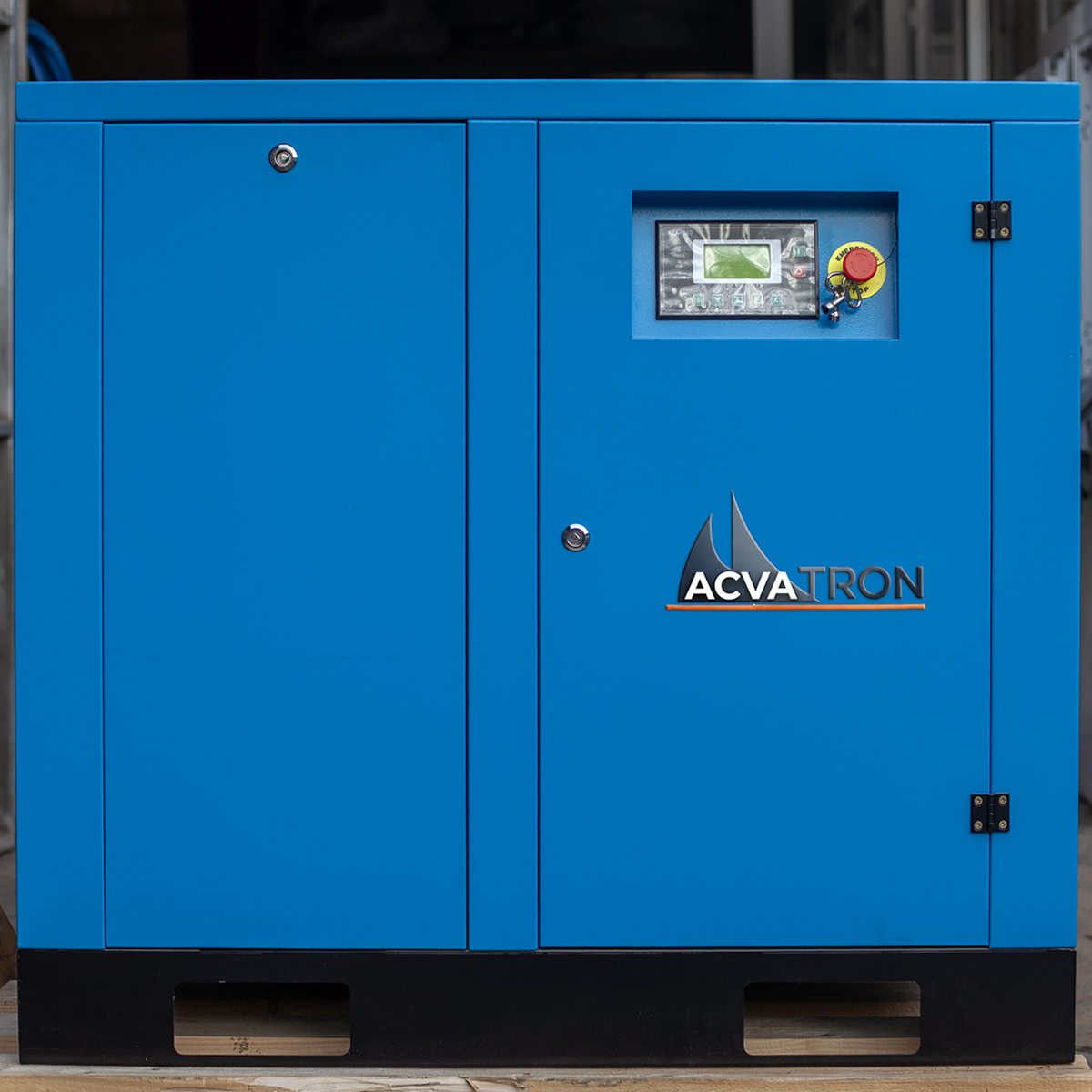
Compressed air is the “invisible” energy that powers a significant part of industrial equipment: from pneumatic tools and paint booths to automated lines and medical devices. The source of this air in most modern facilities is the screw compressor — equipment that over recent decades has largely replaced piston compressors wherever stable, continuous operation is required.
What a Screw Compressor Is and Where It’s Used
A screw compressor is a rotary, positive-displacement unit in which air is compressed by reducing the volume of compression cavities — grooves formed by the surfaces of two helical rotors in close mesh, together with the walls of the screw block housing.
The operating principle of the screw compressor was proposed almost 100 years ago — it was patented in 1932 by Swedish engineer Alf Lysholm. However, the technology for manufacturing high-quality helical elements, with the high precision requirements of a complex surface, only emerged in the second half of the 20th century. Manufacturing screw blocks is a complex technological process involving milling and grinding on high-precision machines with inspection at every stage. Only manufacturers with large production volumes can afford such equipment — including, for example, FINI (Italy), CompAir (Germany), Rotair (Italy), Atlas Copco, and several others.
Today, screw compressors are widely used wherever a stable, uninterrupted supply of high-purity compressed air is required:
- In manufacturing — to power pneumatic tools, automated systems, paint shops, and other industrial equipment.
- In the energy sector — to keep instrumentation and control equipment running at power generation facilities.
- In medicine — to support equipment that requires a supply of sterile air.
- In the food industry — on packaging lines and other equipment where strict compliance with sanitary standards is essential.
- On construction sites — to power pneumatic tools.
Unlike piston models, screw compressors deliver a more stable air flow and produce less noise and vibration — which makes them the optimal choice for continuous industrial operation.
Screw Compressor Construction: What It’s Made Of
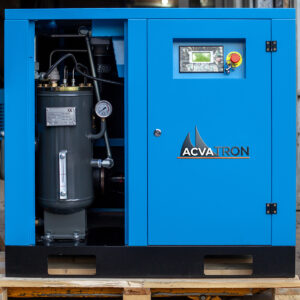
A screw compressor is more than just a pair of rotors in a housing — it’s a complex system made up of several key components:
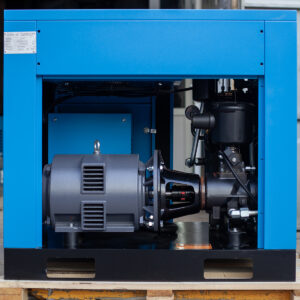
- Screw block — the core component, comprising two rotors (a main and an auxiliary rotor) that rotate in mesh with each other in a synchronised manner. This is where the actual air compression takes place.
- Electric motor — drives the screw block, providing rotor rotation.
- Lubrication system (in oil-injected models) — lubricates the moving parts of the block, removes the heat generated, and seals the clearances between the rotors.
- Cooling system — maintains the optimal operating temperature and prevents overheating.
- Filtration system — removes contaminants from the air and oil, ensuring compressed air purity and extending compressor service life.
- Intake filter — removes dust and large particles from incoming atmospheric air, preventing them from entering the screw block.
- Oil separator (in oil-injected models) — separates oil from the compressed air at the outlet.
- Receiver — a vessel that stores compressed air, smoothing out peak loads and stabilising system pressure.
- Control cabinet — houses the electronic components for monitoring parameters and controlling compressor operation, protecting against overload and fault conditions.
How a Screw Compressor Works: Operating Principle and Full Schematic
Broken down step by step, the air compression cycle looks like this:
- Atmospheric air enters the unit through the inlet filter, which removes large dust particles.
- The intake regulator switches the compressor to idle mode when needed — for example, when compressed air is temporarily not being consumed.
- Inside the working chamber are two specially profiled helical rotors that rotate in opposite directions.
- As they rotate, the rotors capture the air mass and move it along their axis, progressively reducing the space between the threads.
- As the available volume decreases, the air is compressed, accompanied by a rise in pressure.
- The compressed flow is discharged from the compression zone and routed either to the receiver or directly into the pneumatic distribution network.
Detailed Schematic of an Oil-Injected Screw Compressor
In oil-injected models, an oil circulation circuit is added to the process described above. The full technological schematic includes the following components:
- Air filter
- Intake regulator
- Screw block
- Coupling for transmitting rotation from the motor
- Motor
- Oil tank-separator
- Minimum pressure valve
- Cooling fan
- Aftercooler
- Moisture separator (optional)
- Automatic condensate drain valve
- Ball valve
- Oil cooler
- Air-oil separator
- Oil filter
- Thermostat
- Dryer (optional)
The air delivered by the screw block, saturated with oil particles, is purified in the tank-separator (item 6): large droplets settle on its walls, while fine droplets are caught by a special filter (item 14) and drawn back to the block’s inlet. A special valve on the tank (item 7) maintains a pressure of several atmospheres within it — which means that even if pressure in the pneumatic main drops to nearly atmospheric, the minimum pressure in the tank-separator will still be maintained, ensuring oil is fed back into the block. When the oil heats above a certain temperature, it is cooled in the oil cooler (item 13).
The air discharged by the compressor is cooled in the aftercooler (item 9) and routed into the pneumatic system. If required, it is further treated by the moisture separator (item 10) and dryer (item 17), which may be built into the compressor housing or installed as separate units.
Oil-Injected Screw Compressors: Advantages and Disadvantages
In oil-injected models, oil is continuously injected into the rotor pair. It performs several functions at once: it maintains oil-filled clearances between the screw block elements, eliminating dry friction; removes the heat generated during compression; seals the screw block; and lubricates the bearings.
Advantages of oil-injected compressors:
- High output — oil efficiently removes heat, allowing the compressor to run at maximum power.
- Durability — reduced friction between the rotors extends equipment service life.
- Low noise level, provided by the oil lubrication.
- Effective cooling — oil removes heat from the rotors, preventing overheating.
- Clearance sealing between the rotors — this improves compression efficiency.
- Cleaner air compared to piston compressors, although traces of oil are still present in the output flow — typically no more than 3 mg/m³ without additional filtration.
- Simple maintenance: standard servicing involves replacing the oil, air filter, oil filter, and oil separator; other components with a limited service life are replaced infrequently and require no special skills. The typical service interval is 2,000–4,000 hours — compared with 200–500 hours for a piston compressor.
Disadvantages: there is a risk of trace oil entering the compressed air, regular oil and filter changes are required, and the oil system itself makes the equipment more expensive than oil-free alternatives.
It is precisely this balance of advantages that makes oil-injected compressors the solution for facilities requiring high output where strict air sterility requirements are not imposed — most industrial applications where reliability and durability matter.
Oil-Free Screw Compressors: When They’re Needed
In oil-free models, the use of oil in the air compression process is completely eliminated — achieved through special coatings and engineering solutions that provide lubrication and sealing of the rotor elements without an oil film. By design, the rotors rotate in opposite directions, compressing air in the chamber, but without touching each other — this is the “dry” compression principle.
The composition of an oil-free compressor is simpler than that of an oil-injected one: screw block, electric motor, cooling system, intake filter, and control system — without an oil circuit, oil separator, or associated components.
Such compressors are mandatory wherever high-purity compressed air is required, with no trace of oil whatsoever:
- Medicine — supplying equipment that requires sterile air.
- Pharmaceuticals — drug manufacturing, where oil contamination is unacceptable.
- Food industry — production where strict sanitary standards must be observed.
- Electronics — manufacturing microchips and other components where air sterility is critical.
- Textile production — where the complete absence of oil traces on fabric is essential.
Advantages of oil-free compressors: complete absence of oil in the compressed air, lower maintenance costs (no oil changes required), improved fire safety due to the elimination of oil ignition risk.
Disadvantages: generally higher equipment cost and potentially more frequent maintenance of other components compared to oil-injected alternatives.
Oil-free compressors are indispensable wherever compressed air purity is critical: medicine, pharmaceuticals, food production, and electronics. Despite their higher price and maintenance demands, only they ensure compliance with the strictest hygiene and safety standards.
Additional Advantages of Screw Compressors
Beyond the features of oil-injected models already described, screw compressors as a category offer a number of systemic advantages:
Uniform air delivery. The screw block delivers compressed air at a frequency of more than 100 pulses per second — effectively a uniform flow. All working motion in the compressor is rotary, so the equipment does not generate strong vibration in the foundation, and noise levels remain acceptable. This allows the compressor to be installed closer to the point of air consumption.
Wide power range while maintaining efficiency. Screw compressors are manufactured across a range from 2 kW to several megawatts, with the technical and economic performance of smaller models matching that of larger ones in efficiency.
Energy-saving potential. Heat generated during compressor operation can be directed into a heat recovery system — for space heating or hot water supply, for example to showers. Using a variable frequency drive allows the compressor to generate exactly the amount of compressed air the consumer needs at any given moment — energy savings in this case can reach 33%.
Compactness and continuous operation. Lower mass and dimensions compared to piston equivalents of comparable power, a longer service life, and the ability to run continuously 24 hours a day.
No need for water cooling even on high-power machines — this reduces installation and subsequent operating costs.
Layout and Configurations of Screw Compressors
The drive type of the screw block has a direct impact on the compressor’s operating characteristics:
- Belt drive — units are generally more compact and allow flexible adjustment of the “pressure-to-output” ratio by selecting different pulley diameters.
- Direct drive — generally more efficient and usually requires no special maintenance related to belt replacement.
Compressors are also divided into several configuration types based on level of equipment:
- Frame-mounted — the base version, with no additional equipment.
- Frame-mounted with dryer — for applications requiring additional air treatment.
- Tank-mounted with dryer — the most complete solution, combining the compressor itself, a storage vessel, and a dryer in a single housing.
Medium- and small-power units are most often fitted with air dryers, while the most compact models also include receivers — providing a complete “out-of-the-box” solution without the need to design a separate compressor station.
A screw compressor is usually only the source of compressed air within a broader system of equipment. At the compressor outlet, the air typically undergoes further treatment, the composition of which is determined by the required compressed air purity class under GOST 17433-80 and ISO 8573-1: refrigerant dryers, adsorption dryers, receivers, and various types of filters.
5 Key Criteria for Selecting a Screw Compressor for Production
An industrial screw compressor is equipment whose reliability and fit for purpose directly determine the stability of the entire production process, energy consumption, and product quality. Below are five parameters worth examining before purchase.
1. Air Flow: What Volume Do You Actually Need
Output is the volume of compressed air the compressor delivers per unit of time, measured in cubic metres per minute (m³/min). If output is insufficient, the equipment will run at its limit, overheat, and fail sooner. If, on the other hand, you choose a compressor with excessive headroom, you’ll overpay for unnecessary power and consume more electricity than is actually needed.
How to calculate the required output:
- Add up the compressed air consumption of all pneumatic consumers on the line.
- Add a 10–15% margin for potential leaks in the distribution lines and future production expansion.
- Compare the resulting figure against the rated output (air flow) of the compressor model under consideration.
2. Working Pressure: Matching the Process Requirements
Different production processes require different air pressures — some equipment needs only 0.8 MPa, while others require at least 1.6 MPa or higher. It’s important that the compressor operates within its optimal pressure range: going beyond these limits reduces efficiency and increases equipment wear.
A few important nuances: compressor output is always specified at a particular pressure, and increasing pressure by just 0.1 MPa raises energy consumption by 7–10%. You also need to account for inevitable pressure losses in distribution lines and filters — pressure at the compressor outlet should be somewhat higher than what the end equipment actually requires.
3. Operating Conditions: Round-the-Clock or Scheduled
You need to know in advance how many hours per day the compressor will actually run. For continuous heavy loads — for example, a workshop operating in 2–3 shifts — models designed specifically for continuous duty are appropriate. If, on the other hand, the compressor will run infrequently and for short periods, alternative solutions are worth considering to avoid prematurely consuming the equipment’s service life.
Practical recommendations:
- For continuous operation, choose a compressor with a reliable cooling system and built-in overheat protection.
- For variable loads, consider models with variable frequency control — these automatically adjust motor speed to match current air demand, saving electricity and reducing wear.
- For round-the-clock operation, automatic shutdown systems at critical pressure values or overheating become especially important — minimising the risk of breakdowns and accidents.
- Remote monitoring and control via smartphone or computer allows you to receive notifications on system status and respond promptly to any deviation, even when you’re not physically near the equipment.
4. Energy Efficiency: What Operation Will Cost
Electricity is one of the largest expense categories in operating an industrial compressor. When choosing equipment, it’s important to consider not just the purchase price but also energy consumption per 1 m³ of air produced, as well as the presence of energy-saving features.
Compressor efficiency is influenced by: modern electric motors, a frequency converter, precise pressure regulation, automatic start/stop in response to load changes, and a high-quality cooling and filtration system.
5. Service and Reliability: Not Just Hardware, but Support
Even the best compressor can sit idle if the necessary spare parts or timely technical support aren’t available. Before purchasing, find out how easy the chosen model is to maintain, what the maintenance schedule looks like, whether service specialists are available in your region, and how accessible the components are.
Pay particular attention to service availability — both in terms of response time and cost of work — as well as the terms and length of the manufacturer’s warranty.
Maintenance and Repair of Screw Compressors
Regular, high-quality technical maintenance is the key to long-lasting, trouble-free equipment operation. The standard maintenance schedule includes: replacing air and oil filters, replacing lubricant in oil-injected systems, checking the condition and timely replacement of drive belts (for belt-driven models), inspecting and cleaning the cooling system, checking and adjusting the control system, diagnosing the screw block, and checking the tightness of all connections.
Repairing screw compressors may involve replacing worn parts — rotors, bearings, seals, valves. It’s important to carry out such repairs promptly: this prevents more serious failures and significantly more costly equipment restoration down the line.
Operating the compressor also requires following a number of rules: regular temperature monitoring with immediate shutdown in case of overheating, keeping both the equipment and surrounding area clean, monitoring oil level in oil-injected models, and regularly checking working pressure against the requirements of connected equipment. Operation and maintenance should be carried out by trained personnel familiar with the specific model’s characteristics and safety requirements.
Efficiency and Technical Parameters: Why a Screw Compressor Beats a Piston Compressor
One of the key advantages of screw compressors is their high efficiency: screw models reach up to 95%, while piston equivalents typically don’t exceed 60%. This is one of the main reasons screw compressors have become the preferred choice for industrial applications with heavy, continuous loads.
Energy intensity — the ratio of output to energy cost, which should be minimised — also remains an important characteristic. Modern compressors are also fitted with electronic control units that not only monitor operating parameters but also allow operating modes to be programmed for a day, a week, or longer, and enable several compressors to be integrated into a single compressor group with centralised control and remote monitoring.
Conclusion: How to Choose the Right Compressor Type for the Job
Choosing a screw compressor isn’t about buying equipment “from a picture” in a catalogue — it’s a precise technical calculation that requires understanding the specifics of your particular production and a sound assessment of future maintenance and electricity costs. Mistakes at this stage are costly in the most literal sense — both from insufficient output and from overpaying for excess power.
To summarise the selection logic briefly: an oil-injected screw compressor is the workhorse for most industrial applications, where high output, reliability, and a long service life are needed at a reasonable cost, and strict air sterility requirements aren’t imposed. An oil-free screw compressor is the mandatory choice wherever the process or regulatory requirements directly demand the complete absence of oil in compressed air: pharmaceuticals, food production, electronics, medicine.
When choosing a specific model, take into account five key parameters: required output (air flow), working pressure, operating conditions (continuous or intermittent load), the necessary level of automation and energy efficiency, and the total cost of ownership over the years ahead — including energy consumption, consumables, and the availability of service support in your region.