









Technical Specifications
| Parameter | Value |
|---|---|
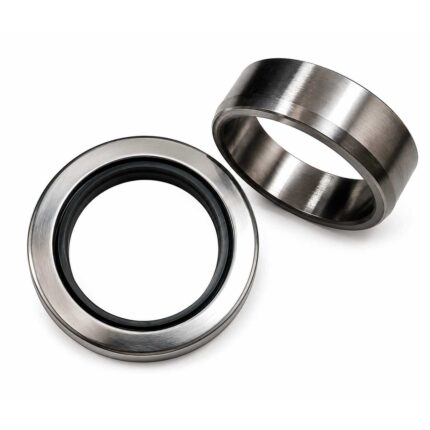
| Designation / code | BS036052GL |
| Acvatron item number | 20240505 |
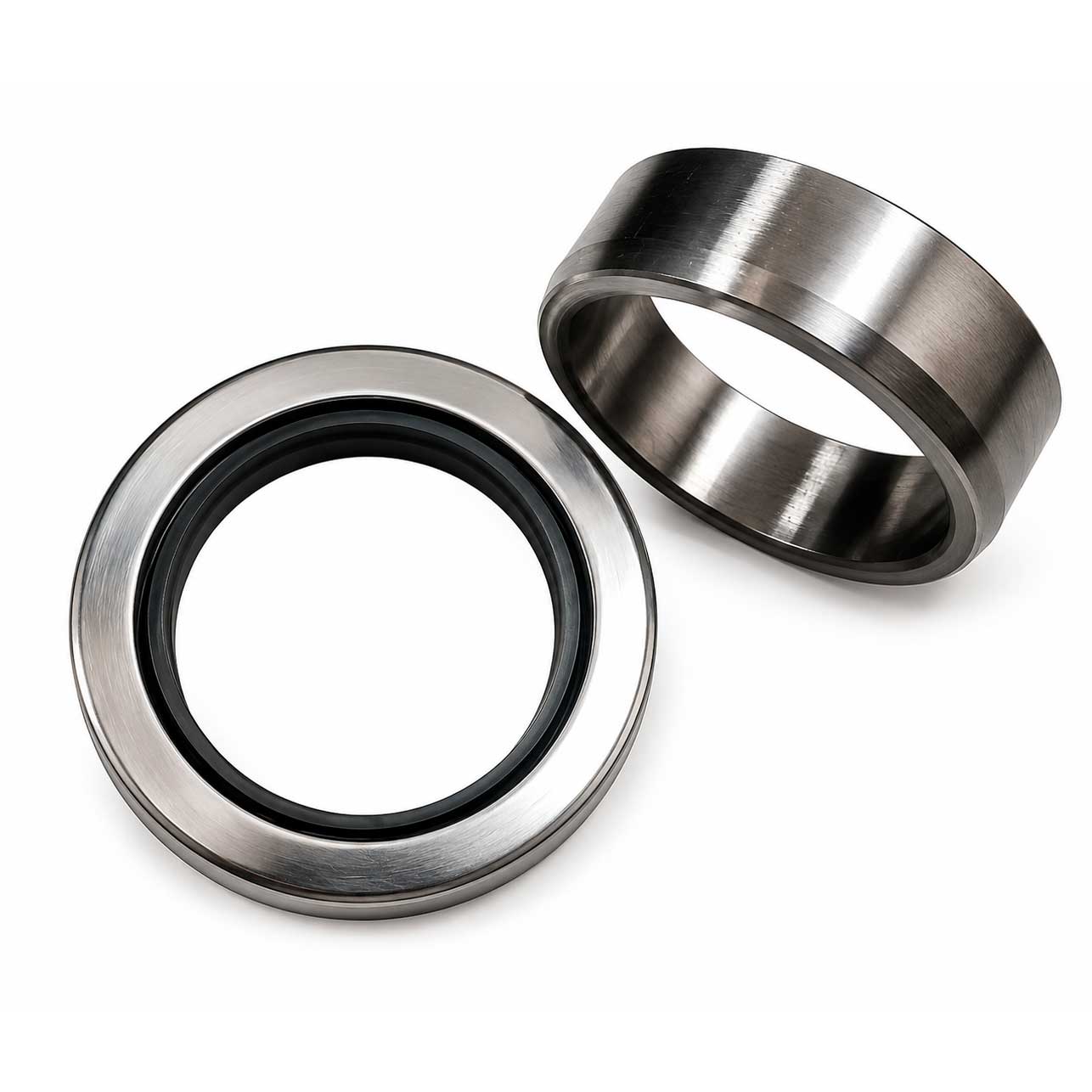
| Seal size (d×D×B) | 36×52×8 mm |
| Sleeve size (d×D×h) | 30×36×34.5 mm |
| Working lip material | PTFE (Teflon) |
| Casing | Steel |
| Design | Double lip (working lip + dust-protection lip/dust wiper) |
| Shaft rotation direction | Counterclockwise (CCW) |
| Permissible shaft surface speed | minimum 20–30 m/s |
| Resistance to compressor oil | up to +180…200 °C* |
| Installation method | Dry installation (no oiling of the working lip before press-fitting) |
| Typical application | Screw compressors (MZB, DENAIR, SCR, JAGUAR, Airstone, Quince, etc.) |
*According to several suppliers of similar PTFE seals in this class, the upper limit can reach up to +260 °C; the exact value for BS036052GL should be confirmed with the manufacturer before publishing.
Advantages and Strengths
- Exact match to rotation direction (CCW) — the counterclockwise design eliminates the accelerated wear of the working lip typical when a “mirrored” version of the seal is installed on the wrong shaft.
- Double-lip design with dust wiper — the additional dust-protection lip prevents abrasive particles and dirt from reaching the working lip, extending the service life of the primary oil seal.
- PTFE instead of rubber (NBR/Viton) — Teflon retains its elasticity and sealing properties at high temperatures, which is critical for the screw block, where rubber equivalents harden and lose their seal fit.
- Complete kit supply including sleeve — replacing the seal and support sleeve together eliminates recurring oil leaks caused by the groove already worn into the original sleeve.
- Item-numbered position (BS036052GL / 20240505) — simplifies reordering the same specific version without risk of confusing the size or rotation direction on the next purchase.
Application Areas
- Sealing the output shaft of an air compressor’s screw block on the drive side, rotating counterclockwise
- Scheduled replacement of the “seal + sleeve” kit during major overhaul of compact, small-capacity screw blocks
- Repair of compressor stations based on Chinese screw blocks (MZB, DENAIR, SCR, JAGUAR, Airstone, Quince)
How to Correctly Select a Seal
When selecting a seal for a specific screw block, geometry, sleeve condition, and rotation direction are critical:
- Dimensions (d × D × B): d — the seal’s inner diameter (36 mm, matching the sleeve’s outer diameter), D — the outer diameter for fitting into the housing (52 mm), B — the seal’s width (8 mm).
- Condition of the shaft sleeve: during long-term operation, the seal lip cuts a groove into the metal sleeve; replacing only the seal without replacing/polishing the sleeve will lead to a rapid recurrence of oil leakage.
- Shaft rotation direction: check your shaft’s rotation direction — for BS036052GL (item 20240505) this direction is counterclockwise (CCW); installing a “mirrored” seal will lead to rapid seal failure.
Installation:
- PTFE seals are installed dry — without oiling the working lip before press-fitting, unless the manufacturer states otherwise.
- Always use a technological conical mandrel to avoid damaging the thin PTFE lip against the edge of the shaft or the keyway.
- After installation, it’s recommended to wait before startup (up to 30–60 minutes) to allow the Teflon to mold itself to the sleeve surface.
Expert Opinion
Expert Opinion: Vitali Bolucevschi, Chief Engineer, Acvatron, 15 years in the field
“On compact sizes like 36×52×8, it’s important to check not only that the sleeve diameter matches the seal’s inner diameter (here it does — 36 mm to 36 mm), but also the height of the sleeve itself: 34.5 mm is an extended mounting length that needs to fit into the housing recess without hitting a shoulder. Before shipping, I always confirm the mounting recess depth with the client, not just the diameters. And, of course, the rotation direction — here it’s strictly counterclockwise.”
FAQ
What does the letter “GL” mean in the designation BS036052GL?
The exact meaning of this index is not disclosed by the manufacturer in open sources; such suffixes usually indicate the lip profile type or a specific production batch — this should be confirmed with the supplier.
What happens if a seal with the wrong rotation direction is installed?
The working lip will lose its sealing capability within a short operating time — the Teflon lip is engineered to work with a specific sliding direction on the shaft.
Does the seal need to be oiled before installation?
No, PTFE seals are installed dry unless the manufacturer states otherwise.