











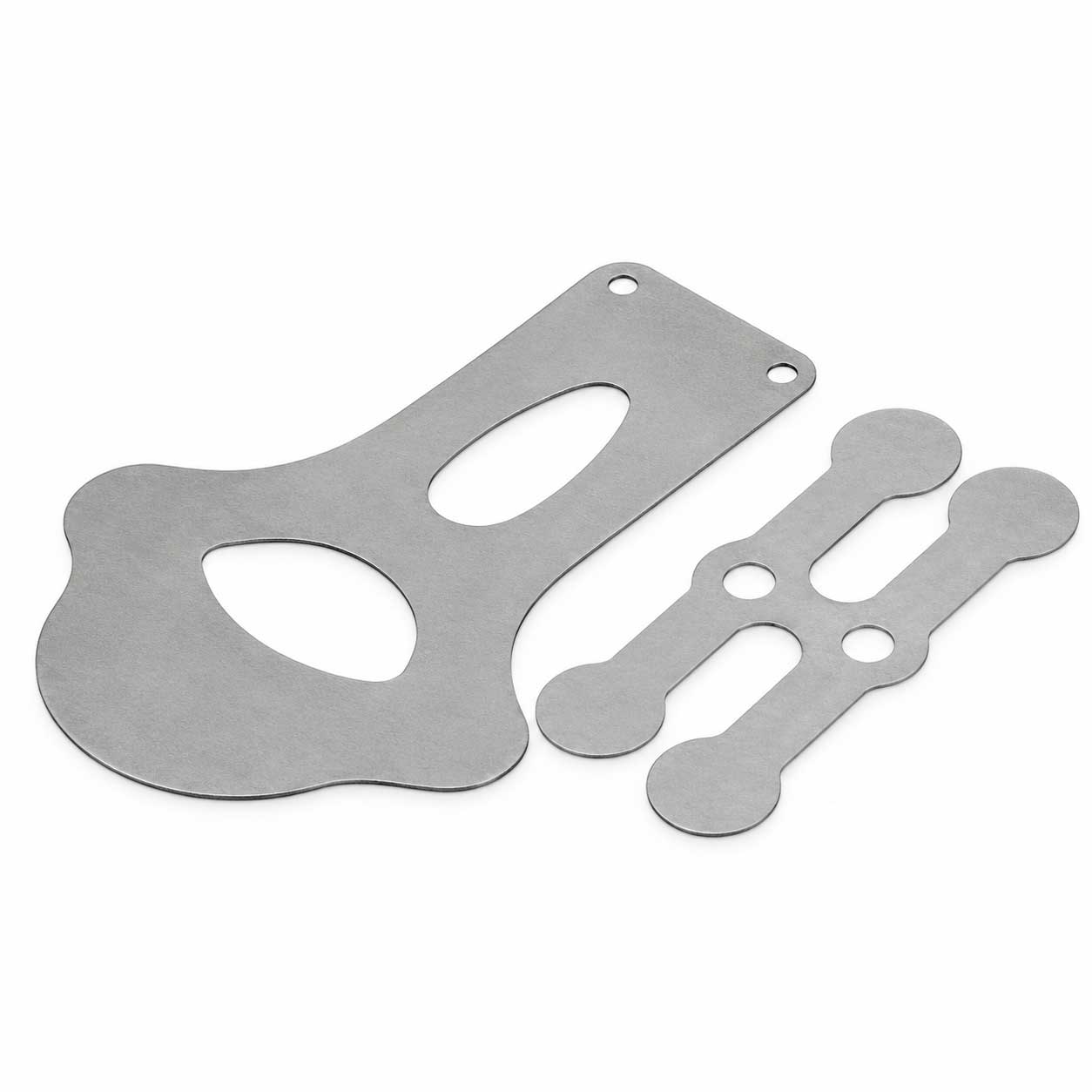
Valve Plates for 90 mm Cylinder Head, V-0.6 and W-0.9 Compressors (set of 2, intake and exhaust)
Valve plates are the working elements of the intake and exhaust valves in the cylinder head of a piston compressor. On the suction stroke, vacuum opens the intake plate and air enters the cylinder; on the compression stroke it is pressed against its seat and closes, while air pressure opens the exhaust plate and compressed air flows to the receiver. The plates open and close thousands of times a minute, so they wear, lose flatness and stop sealing tightly against the seat.
1. Purpose and operating principle
The set consists of two plates of different sizes: intake (the large one) and exhaust (the small one) — for a cylinder head with a 90 mm bore. It is used to restore the performance of V-0.6 and W-0.9 compressors when they take a long time to build pressure, fail to hold it or run hot.
2. Technical specifications
| Parameter | Value |
|---|---|
| Purpose | Valve plates for the cylinder head (intake and exhaust) |
| Set contents | 2 pcs: intake + exhaust |
| Cylinder diameter | 90 mm |
| Applicability | V-0.6, W-0.9 compressors |
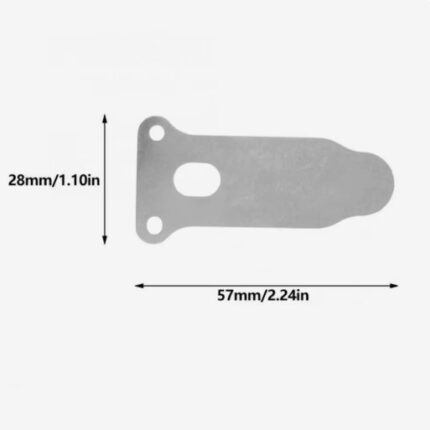
| Intake plate (large) | 116 × 71 mm (L × W) |
| Exhaust plate (small) | 71 × 35 mm (L × W) |
⚠️ Not confirmed, check with a manager or against a sample: material (probably steel, like the set for the 65 mm cylinder, but not confirmed for this set), thickness, steel grade, hardness and coating; the number, diameters and positions of the holes; set weight; the manufacturer’s part number. Applicability to the V-0.6 and W-0.9 is based on the 90 mm cylinder diameter; heads of these models can differ between manufacturers, so compare the plate dimensions with your old ones before ordering.
3. Design features
Compressor designation breakdown:
| Element | Meaning |
|---|---|
| V | Cylinder arrangement: V-type (usually two cylinders) ⚠️ |
| W | Cylinder arrangement: W-type (usually three cylinders) ⚠️ |
| 0.6 / 0.9 | Pump unit capacity, m³/min (per the usual marking) ⚠️ |
The set is intended for one cylinder head: it contains one intake and one exhaust plate. Two- and three-cylinder units need as many sets as they have cylinders ⚠️ (confirm for your unit).
Design solutions:
- Two plates of different sizes: the large one (116 × 71 mm) is the intake plate, the small one (71 × 35 mm) is the exhaust plate. Each has its own seat and they are not interchangeable.
- Large intake plate area — air enters the cylinder more freely on the suction stroke.
- Separate seats and locating features in the head — each plate sits strictly in its own place; note the orientation before disassembly ⚠️ (hole positions should be confirmed from a sample).
4. Installation recommendations
- Release the pressure and disconnect power. Before disassembly, fully vent the receiver and switch off the supply.
- Note the position of the parts. When removing the head, photograph how the plates and gasket lie and which way they face.
- Clean the seat and the head face of carbon, oil and gasket residue; there must be no deep scoring or pitting on the seat.
- Fit the plates in their own places. The large plate (116 × 71 mm) is the intake, the small one (71 × 35 mm) is the exhaust; do not swap them or fit them skewed, and do not bend them during installation — a bent plate does not seat properly.
- Replace the head gasket with a new one. An old gasket is a frequent cause of air leaks after repair.
- Tighten the head bolts in a crisscross pattern, evenly. Tightening torque — per the compressor manufacturer’s data ⚠️ (not confirmed). Do not overtighten: the head may warp.
- Check operation. After assembly, run the compressor and check the pressure build-up time and tightness (with the compressor stopped, watch for pressure drop); recheck bolt tightness after the first hours of operation.
- Replace both plates at once — the intake and exhaust plates wear under the same conditions.
5. Alternatives and comparison
There are no verified equivalent part numbers for this set, so no cross-reference list is given. Selection is made by cylinder diameter and plate dimensions:
| Parameter to check | What to verify |
|---|---|
| Cylinder diameter | 90 mm |
| Intake plate | 116 × 71 mm |
| Exhaust plate | 71 × 35 mm |
| Number of plates | Two per head: intake and exhaust |
Comparison with the set for the 65 mm cylinder (for V-0.25 and W-0.36):
| Parameter | 90 mm set (V-0.6, W-0.9) | 65 mm set (V-0.25, W-0.36) |
|---|---|---|
| Large plate | 116 × 71 mm (intake) | 77 × 38 mm |
| Small plate | 71 × 35 mm (exhaust) | 52 × 16 mm |
The sets are not interchangeable: the dimensions differ and each cylinder has its own seats. The best way to select the part is to bring or send a photo of the old plates with their dimensions, or the compressor model from the nameplate.
6. Common mistakes
- Replacing only one plate. The intake and exhaust plates work as a pair; if one is replaced, the other fails quickly and the fault returns.
- Swapped or turned-around plates. The compressor stops pumping or overheats; the large plate (116 × 71 mm) is the intake and the small one (71 × 35 mm) is the exhaust, and the orientation must also be noted before disassembly.
- Uncleaned seat and old gasket. Carbon and scoring prevent the plate from seating, air flows back into the cylinder, and output is not restored.
- Selecting by the “90 mm” size alone. Plates from different manufacturers differ in dimensions and holes; check 116 × 71 and 71 × 35 mm.
- Plate bent during installation. Any bend ruins the seal; the new part will not last.
- Overtightening or uneven tightening of head bolts. The head warps and the gasket leaks air.
- Running without a serviceable air filter. Abrasive dust wears the seat and plates several times faster.
7. Applications
- Repair and maintenance of V-0.6 and W-0.9 piston compressors with a 90 mm cylinder diameter.
- Restoring performance when the receiver fills slowly, pressure drops on the stopped compressor, or the head overheats.
- Workshops, car repair shops, garages and small production sites where the compressor is the main source of compressed air.
8. Expert opinion
“If a compressor has started taking a long time to build pressure or won’t hold it, and the piston group is fine, check the valve plates first. It is the most common cause of lost performance, and the repair is inexpensive. Replace both plates at once, clean the seat and fit a new head gasket. And be sure to photograph the position of the parts before disassembly: the large intake plate and the small exhaust plate each have their own place, and if you mix them up, the compressor simply won’t work.”
Vitali Boluchevski, Lead Engineer, Acvatron SRL, 18 years of experience
9. FAQ
1. How do I know the valve plates need replacing? Signs: the compressor takes a long time to build pressure, does not hold pressure with the motor stopped, the head overheats, output drops. Before replacing them, make sure the piston group and the air filter are in good condition.
2. How many sets do I need per compressor? One set (two plates) is intended for one cylinder head. Two- and three-cylinder units (V and W) need as many sets as they have cylinders ⚠️; confirm for your model.
3. Will the plates fit another compressor with a 90 mm cylinder? Possibly, but only after checking the dimensions: 116 × 71 mm (intake) and 71 × 35 mm (exhaust), and the hole positions. Send a manager a photo of your old plates.
4. Do I need to replace the head gasket? Yes, when removing the head, replace it with a new one. An old gasket is the main cause of air leaks after repair.
5. Which plate is the intake and which is the exhaust? The large one (116 × 71 mm) is the intake, the small one (71 × 35 mm) is the exhaust. Still, photograph the position and orientation of the plates in the head before disassembly.









Reviews
Clear filtersThere are no reviews yet.