










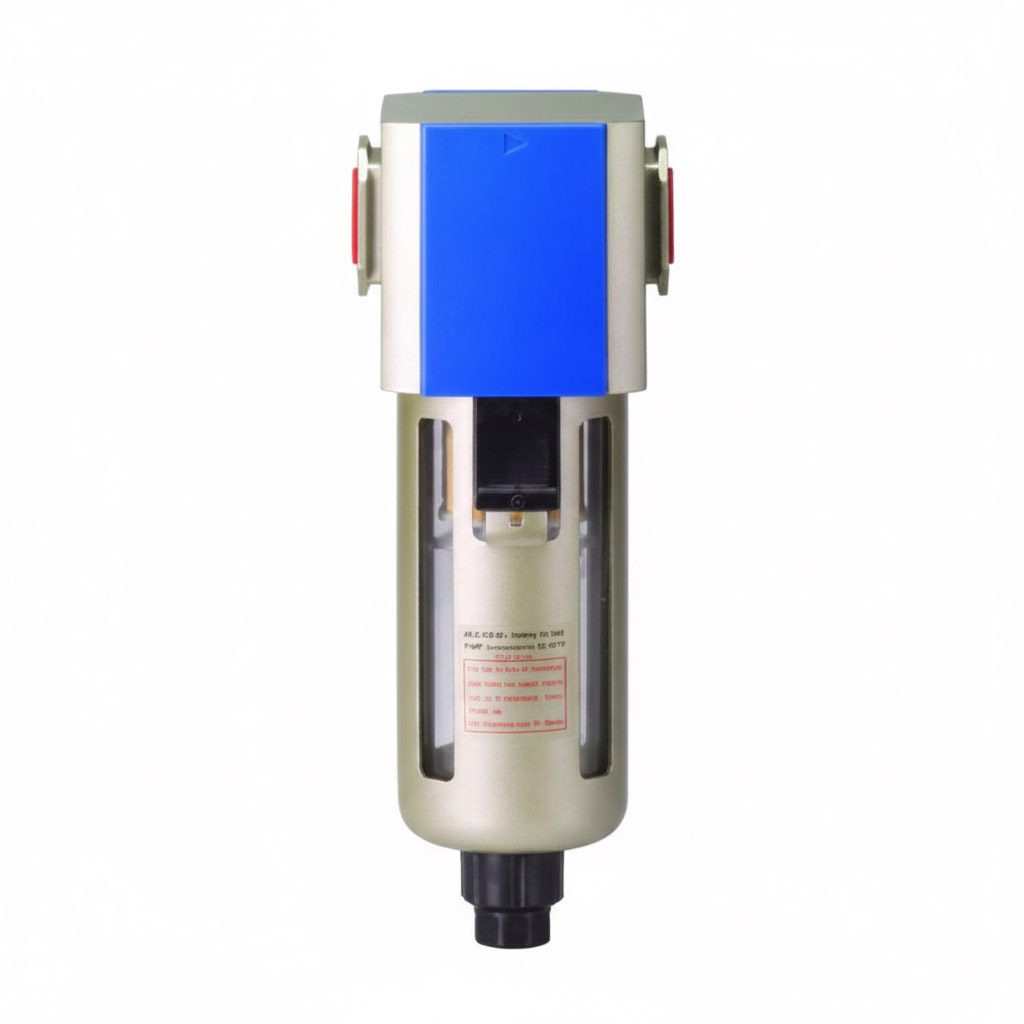

Station Water Separator Filter GFS300-15-M-C3-W-G (5 micron, 1/2″)
609,00 MDL
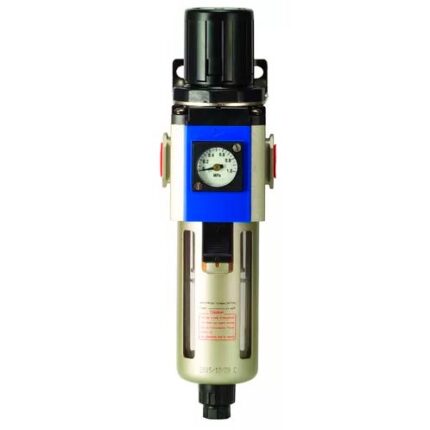
GFS300-15-M-C3-W-G is a station-mounted water separator filter, a basic stage of compressed air preparation. Manufacturer — SHPI (Taiwan).
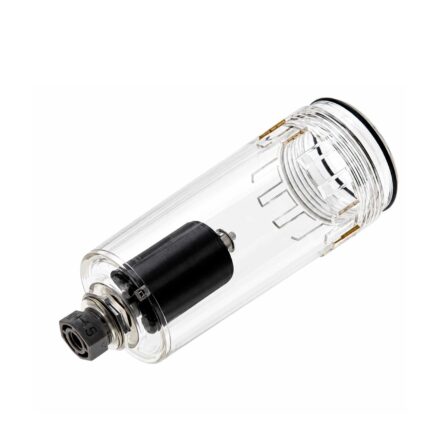
Compressed air entering the filter passes through a fiber filter element rated at 5 microns, which captures large particles and promotes separation of droplet moisture and condensate from the air stream. The separated condensate drains into a transparent polycarbonate bowl with a volume of 40 cm³ and is removed via a manual drain.
1. Purpose and Operating Principle
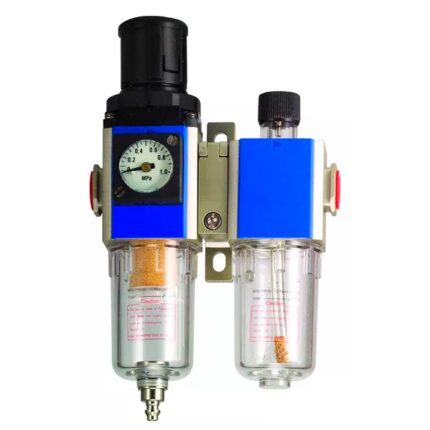
This is a basic, economical stage of pneumatic system protection — for tasks requiring a higher oil-cleanliness class (such as professional automotive painting or higher-class paint booths), this filter is combined with additional stages (oil filter, coalescing filter) or a complete FRL air preparation unit is used instead.
2. Technical Specifications
| Parameter | Value |
|---|---|
| Working medium | Air |
| Port size | 1/2″ |
| Thread | BSPP (G) |
| Working pressure range | 1.5–9.0 bar (0.15–0.9 MPa) |
| Maximum working pressure | 10.0 bar (1.0 MPa) |
| Test pressure | 15.0 bar (1.5 MPa) |
| Temperature range | +5 °C to +60 °C |
| Filtration grade | 5 microns (fiber element) |
| Drain type | Manual |
| Drain bowl volume | 40 cm³ |
| Weight | 360 g |
| Housing material | Aluminum alloy |
| Bowl material | Polycarbonate (PC) |
| Bowl guard | Steel (SPCC) |
| Other components (deflector, guide) | POM (polyoxymethylene) |
3. Design Features
Designation Breakdown — GFS300-15-M-C3-W-G
| Designation element | Meaning |
|---|---|
| GFS 300 | Filter series |
| 15 | Connection port size — 1/2″ |
| M | Drain type — manual |
| 3 | Gauge scale — bar |
| W | Filtration grade — 5 microns (5μ) |
| G | Thread type — BSPP |
Design Solutions
- Transparent polycarbonate bowl with a steel protective guard (SPCC) — allows visual monitoring of condensate level while retaining mechanical strength and protection against accidental impact
- Fiber filter element — a balance between filtration grade (5 microns) and minimal flow resistance
- POM deflector and guide components — create a swirling air flow inside the bowl for more effective droplet-moisture separation via centrifugal force
- Manual drain — requires periodic monitoring and condensate release by the operator (unlike the automatic drain found on higher-priced models in the series)
4. Installation Recommendations
- Install the filter strictly per the air flow direction indicated by the arrow on the housing.
- The BSPP (G) thread is parallel; it seals with a flat gasket at the thread face — PTFE tape is not required and is not recommended for this thread type.
- Mount the filter vertically (bowl facing down) — this is necessary for the drain to function correctly and for condensate to collect at the bottom of the bowl.
- Before first start-up, and periodically during operation, check the condensate level in the bowl and drain it manually, avoiding filling the bowl to the top level — an overfilled bowl stops separating moisture effectively.
- For professional painting and tasks requiring removal of oil vapor, install this filter as the first stage, supplementing it downstream with a finer-cleaning system (oil/coalescing filter).
5. Cross-References and Comparison
Selection by Pneumatic Tool Type
| System Type | Air Consumption | Compatibility with GFS300-15 | Note |
|---|---|---|---|
| LVLP (low volume) | 150–250 l/min | Ideal | Ample flow capacity margin |
| HVLP (high volume) | 350–450 l/min | Good | Suitable for most professional spray guns (Sata, Iwata) |
| Conventional (high pressure) | 400–600 l/min | At the limit | With a powerful spray gun, the filter operates at maximum, with possible pressure loss |
| 2 spray guns simultaneously | 700+ l/min | Not suitable | For two painters working at once, a filter from the 0078 series or higher is needed |
⚠️ Exact cross-reference part numbers from other filter manufacturers (SMC, Festo, Camozzi, Parker Legris, etc.) for this specific size have not been verified. Matching by parameters (1/2″, 5 microns, BSPP) is possible — send your system’s parameters and we’ll find the equivalent.
6. Common Mistakes
- Horizontal installation instead of vertical — disrupts drain function; condensate doesn’t drain into the bowl properly.
- Ignoring the manual drain — without regular condensate removal, the bowl overfills and separated moisture starts being carried back into the air stream.
- Using PTFE tape on the BSPP (G) thread — the parallel thread seals with a gasket at the face, not by tape wrapping; excess tape can enter the line and clog the filter element or drain.
- Relying on this filter as the sole stage for professional painting — 5-micron particle filtration and basic moisture separation don’t replace an oil/coalescing filter where oil-vapor-free air is critical.
- Using the filter on a system with air consumption exceeding its capacity — exceeding the range (e.g., two spray guns at once) pushes the filter to its limit, with possible pressure loss and reduced cleaning efficiency.
7. Application
- Small production facilities, auto repair shops, and tire service centers
- Carpentry and metalworking workshops
- Entry-level paint shops (as the first stage of air preparation)
- Businesses in the startup phase requiring an economical basic solution
- A temporary or backup solution when upgrading an existing pneumatic system
8. Expert Opinion
“For professional automotive painting, it’s critical that the air leaving the compressor meets not only basic requirements — dryness and the absence of large particles — but also a minimal content of oil and vapors. The GFS300-15 handles the first task well: it removes the bulk of moisture and particles at the 5-micron level, at a reasonable price. But for finish painting, where oil cleanliness is critical, this filter should be viewed as a first stage, not as a standalone solution — a properly selected multi-stage filtration system directly affects paint finish quality and reduces rejects.”
Vitali Boluchevski, Lead Engineer, Acvatron SRL, 18 years of experience
9. FAQ
❓ Do I need two separate filters — one for water and one for oil? The best systems combine multiple stages in one housing or in sequence: first separating the bulk of moisture and particles (as with the GFS300-15), then finer removal of oil vapor via a separate oil/coalescing filter.
❓ What ISO 8573 class is needed for automotive painting? Usually class 1-2 for oil and moisture ensures no coating defects. The basic GFS300-15 separator alone isn’t enough to achieve this class — an additional cleaning stage is required.
❓ How often should the filter element be replaced? Base it on the pressure drop across the filter and the cartridge’s visual condition — typically every 3–6 months under intensive use.
❓ Why must the filter be installed strictly vertically? The deflector and guide design relies on separated condensate draining down into the bowl under gravity and the centrifugal effect of the swirling flow. In horizontal installation, this mechanism doesn’t work correctly.
❓ Can this filter be used with two spray guns running at the same time? At a combined air consumption of 700 l/min or more, the GFS300-15 operates at the limit of its capacity — for this load, a filter with a larger size (e.g., from the 0078 series or higher) is needed.








Reviews
Clear filtersThere are no reviews yet.