










Technical Specifications
| Parameter | Value |
|---|---|
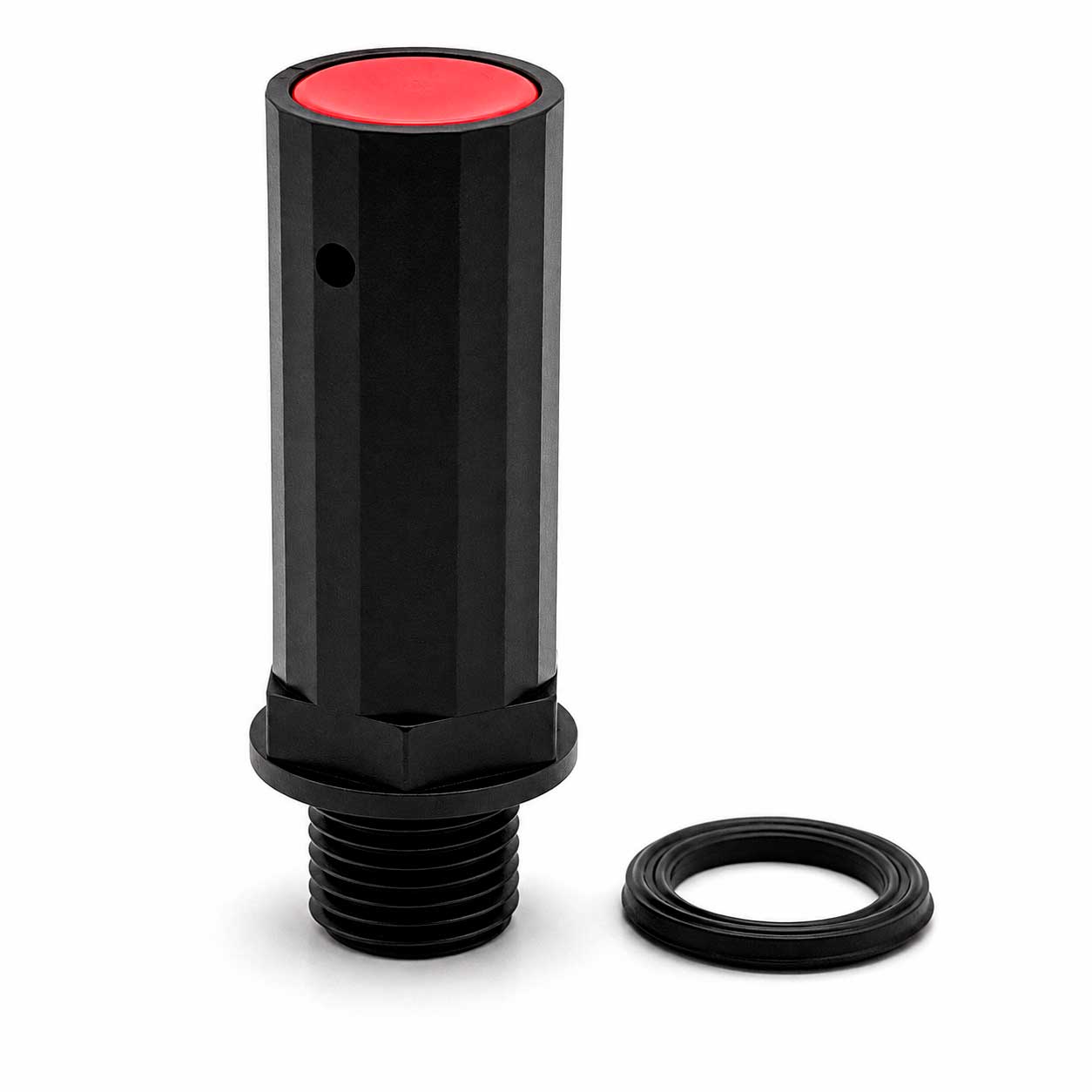
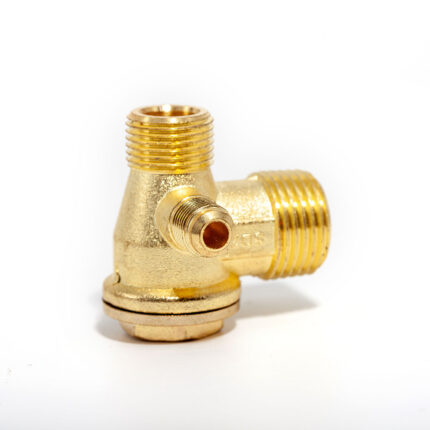
| Purpose | Vent (breather) valve for piston compressor |
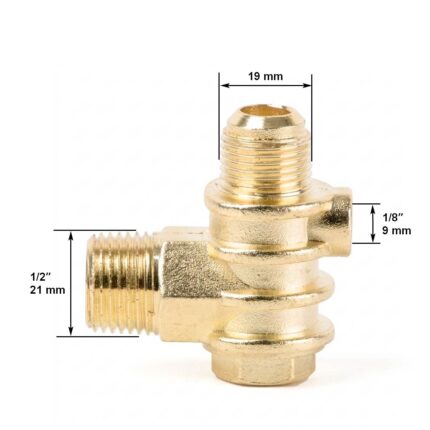
| Thread type | M16×1.5 (external metric) |
| Thread seating diameter, mm | 15.1 |
| Body diameter, mm | 23.0 |
| Overall length, mm | 59.0 |
| Threaded section height, mm | 10.0 |
| Original part number (Remeza) | 21166001 |
| Body material | Durable cast alloy, resistant to high crankcase temperatures |
| Operating temperature, °C | −10…+100 |
| Thread sealing | PTFE tape or fiber (paronite) gasket |
| Compatibility (piston blocks) | LH20-2, LB40-2, LB50, LB75, LT100 |
| Used on compressors | Aircast LB-50, LB-75 and equivalents (Remeza, CAT, General Force, Lider/Air Force) |
| Weight, g | ~35 |
💡 Expert tip: despite the sturdier M16×1.5 thread compared to compact R1/4″ household models, the 21166001 breather is still a wear part — for stations under heavy duty such as SB4/F-270 and SB4/F-500, keep a spare on hand to avoid unplanned downtime during servicing.
Design Features
The M16×1.5 thread is metric, cylindrical, and is used on the LH20-2 compressor head and the entire LB40-2/LB50/LB75 line, as well as on LT100. At 23 mm body diameter and 59 mm length, this breather is noticeably larger than the R1/4″ plastic breathers (44 mm) used on household compressors — a result of the larger crankcase volume and higher heat output of industrial piston units in this class. Inside the body sits a labyrinth with a filtering insert that traps oil mist and coarse dust, while the reverse airflow on cool-down is filtered against dust and dirt on intake. The 10 mm threaded section height ensures a secure, straight seating in the port without a risk of cross-threading during installation.
Installation Guidelines
- Stop the compressor and let the crankcase cool down (below +40 °C).
- Unscrew the old or worn breather with a suitably sized wrench (typically an open-end wrench on the body flats).
- Clean the M16×1.5 port thread of old sealant, carbon deposits, and oil residue.
- Apply 2–3 wraps of PTFE tape to the new breather’s thread, or use the original fiber gasket if the head design calls for one.
- Screw the breather in by hand until it seats, then tighten another 1/4–1/2 turn with a wrench — don’t over-tighten, or you risk damaging the crankcase thread.
- Start the compressor and check the seating area for oil seepage after 10–15 minutes of running under load.
Compatibility and Equivalents
The part with original number 21166001 fits Remeza/Aircast piston blocks LH20-2, LB40-2, LB50, LB75, LT100, and the compressor stations built on them: SB4/S-100, SB4/F-270, SB4/F-500, PKP LB 550-10-100/270, PKP LB 750-10-100/270/500, PKP W 1520-10-500T. The same breather is used on the CAT, General Force, and Lider (Air Force) brands, which build compressors on identical piston blocks.
⚠️ Important when selecting a replacement: don’t confuse this breather with the smaller-size models — R1/4″ (12.7 mm, 44 mm length) used on household compressors, or R3/8″ (15.5 mm) used on a different head family. The M16×1.5 thread is metric, while R1/4″ and R3/8″ are tapered inch threads; they are not physically interchangeable without an adapter.
Common Installation Mistakes
- Fitting a solid plug instead of a breather — raises crankcase pressure and pushes oil out through the crankshaft seals within the first hour of running.
- Confusing the M16×1.5 thread with R3/8″ or R1/4″ — the part won’t thread in fully or drops into the port.
- Ignoring a clogged filter — a blocked breather creates the same overpressure as a solid plug, with the same result — oil forced out through the seals.
- Over-tightening during installation — risks stripping the crankcase port thread itself, a far costlier repair than replacing the breather.
- Installing without a gasket/PTFE tape on a non-sealing seat — a gradual oil leak along the thread as the station vibrates.
Practical Applications
- SB4/F-270, SB4/F-500 compressor stations at auto shops and workshops — scheduled breather replacement at every service interval, roughly every 500–800 operating hours.
- Industrial Aircast LT100 compressors in production — higher load and temperature call for checking breather condition every 2–3 months.
- Woodworking and furniture-shop compressors — wood dust accelerates filter clogging; check airflow through the breather more frequently.
- Spare stock for continuous-duty compressor stations — kept on hand so a sudden failure doesn’t halt production.
Expert Opinion
Vitalie Boluchevschi, Chief Engineer, Acvatron SRL
“The 21166001 breather on M16×1.5 thread is a part most people don’t think about until it fails. Here in Moldova, where many SB4/F-270 and Aircast LB-75 stations run in dusty workshops, I tell clients to check the breather at every oil change — just blow through it. If you feel strong resistance or no air passes at all, it’s time to replace it. It’s a cheap part, but its failure pushes oil out through the crankshaft seals, and that repair costs a lot more.”
FAQ
Will this breather fit a screw compressor? No. Screw compressors use a breather with a check valve rated for 4–8 bar in a sealed oil circuit. This model is intended only for the LH20-2, LB40-2, LB50, LB75, and LT100 piston blocks, which run at atmospheric crankcase pressure.
How is this breather different from the 44 mm R1/4″ model? The thread differs: M16×1.5 (metric, cylindrical) versus R1/4″ (tapered, inch). This model is larger (23 mm diameter, 59 mm length) and built for the industrial LB40-2/LB50/LB75/LT100 piston blocks rather than compact household compressors.
Does the part fit CAT and General Force compressors? Yes — these brands use identical Remeza/Aircast piston blocks, so the 21166001 breather is fully compatible.
How often should the breather be replaced? The recommended interval is at every scheduled service (oil change), typically every 500–800 operating hours, or sooner if dust levels are high or clogging is evident.







Reviews
Clear filtersThere are no reviews yet.