










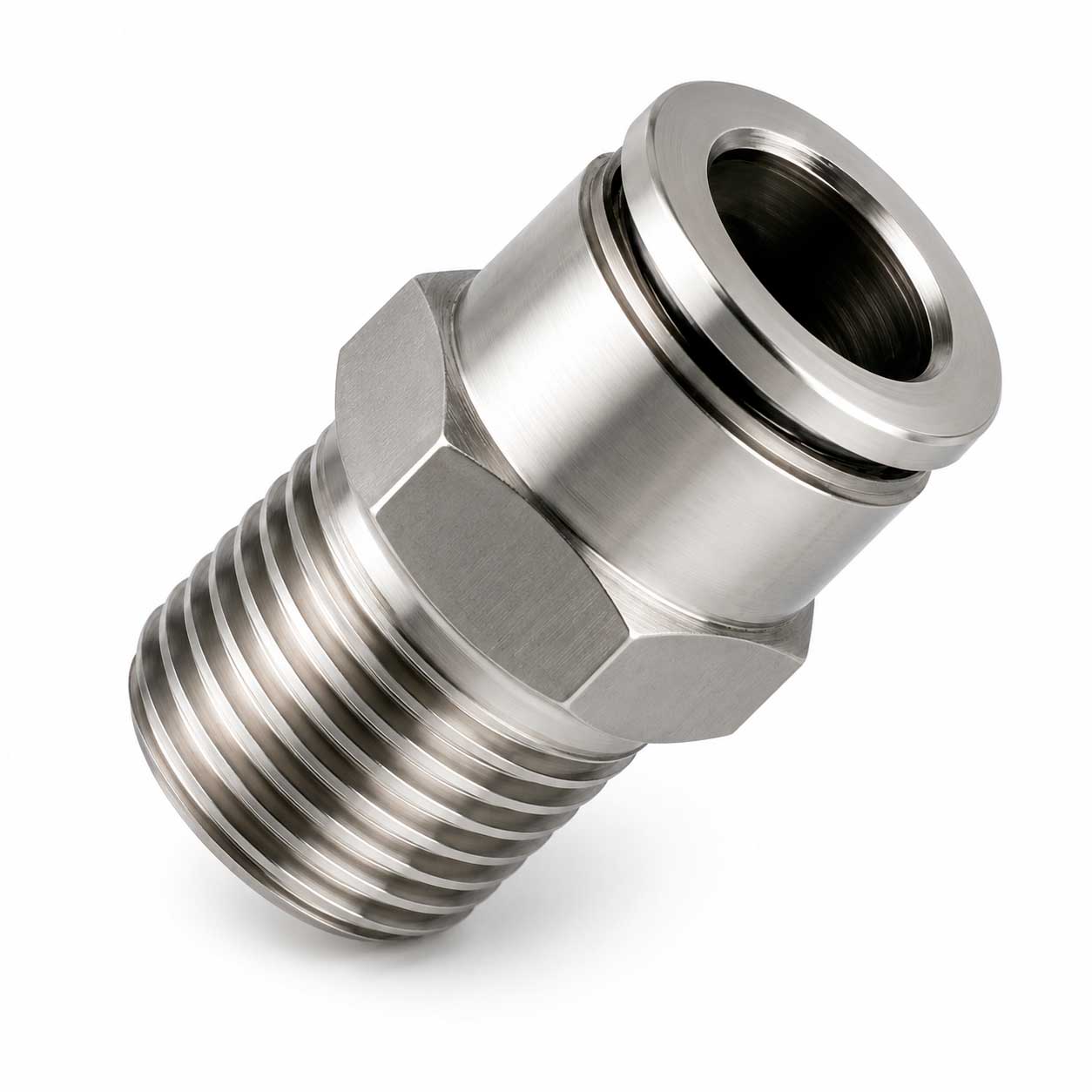
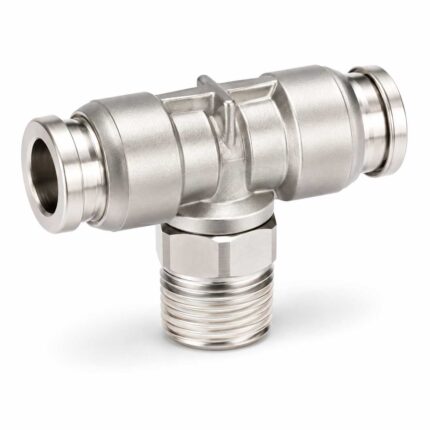
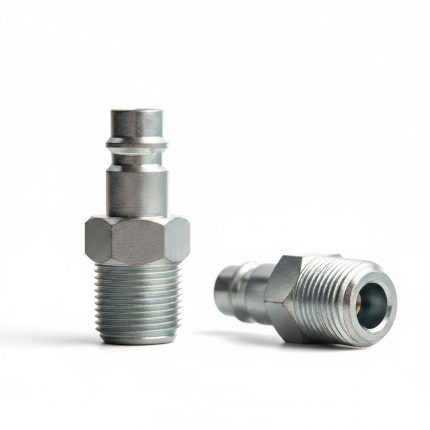
A push-in stud fitting is a quick-connect fitting for the airtight connection of a polymer or metal tube to pneumatic equipment. Working principle: a 6 mm tube is inserted into the collet clamp until it stops; when pulled, the tube is locked by a toothed gripper ring and sealed by an NBR O-ring. To disconnect, press the release ring (unlocking sleeve), the toothed ring opens, and the tube is removed without tools.
Article code breakdown XMPCS-06-02-316, character by character:
-
XMPCS — series of straight push-in stud fittings made of stainless steel (X = stainless, M = metal, PCS = straight push-in stud)
-
06 — outer diameter of the connected tube, 6 mm
-
02 — thread code R1/4″ (PT, male tapered pipe thread per ISO 7-1)
-
316 — stainless steel grade of the body, AISI 316 (Cr17Ni12Mo2)
The body is manufactured by precision turning from a solid AISI 316 blank with subsequent passivation. AISI 316 contains 2–3 % molybdenum, providing resistance to chloride corrosion, alkalis, and organic acids. The collet mechanism includes: body, toothed locking ring, NBR sealing ring, release sleeve. The R1/4″ thread provides self-sealing by taper; additional sealant is not required for the first 3–5 installations, afterwards — PTFE tape or anaerobic sealant. Weight of one piece — approx. 25 g. Dimensions: body length ~26 mm, hex key size ~13 mm.
| Parameter | Value |
|---|---|
| Fitting type | Straight push-in stud (I-type) |
| Connection 1 (tube), mm | 6 (outer diameter) |
| Connection 2 (thread) | R1/4″ (PT, male tapered) |
| Body material | Stainless steel AISI 316 |
| Collet mechanism material | AISI 316 |
| Sealing ring | NBR |
| Maximum working pressure, bar | 20 |
| Working pressure (recommended), bar | 0.5–10 |
| Working medium | Compressed air, vacuum, inert gases, water, coolant |
| Temperature range, °C | −60…+200 (with NBR seal up to +100) |
| Vacuum, mmHg | up to −750 (10 Torr) |
| Thread type | Tapered pipe thread R (ISO 7-1) |
| Thread sealing method | Self-sealing by taper (wedge effect) |
| Body length (L), mm | ~26 |
| Wrench size (SW), mm | ~13 |
| Weight, g | ~25 |
| Standard | ISO 4414, ISO 14743 |
| Body marking | XCPC 06-02 |
| Quantity per package | 1 pc. (or on request — 10/50/100 pcs.) |
| Service life at 6 bar, connection cycles | >5000 |
💡 Expert tip: Customers often confuse thread R1/4″ (PT, tapered) with G1/4″ (PF, parallel). The XCPC XMPCS-06-02-316 has a tapered thread R1/4″. If your valve or cylinder has an internal parallel thread G1/4″, the fitting will screw in but the seal will be unreliable. Check the thread type on the equipment nameplate: R = tapered (self-sealing), G = parallel (requires a sealing washer). If there is a mismatch, use an adapter or a fitting with a parallel thread from the XMPC-G series.
| Brand | Equivalent article | Series | Standard | Key parameter | Note |
|---|---|---|---|---|---|
| Festo | CRQS-6-1/4-316L | CRQS | ISO 14743 | Tube 6 mm, R1/4″, AISI 316L | Premium segment, price 300–400 % higher |
| SMC | KQG2S06-02S | KQG2 | ISO 14743 | Tube 6 mm, R1/4″, SUS316 | Full interchangeability by mounting dimensions and collet |
| Camozzi | X6512 6-1/4 | X6500 | — | Tube 6 mm, R1/4″, AISI 316 | Italian production, delivery time 4–6 weeks |
| Aignep | 50200 06 1/4 | 50200 | — | Tube 6 mm, R1/4″, stainless steel | Italian brand, similar collet geometry |
| NBPT | SSC 6mm — R1/4″ | SSC | — | Tube 6 mm, R1/4″, AISI 316 | Chinese production, collet profile matches XCPC |
⚠️ Note: XCPC XMPCS-06-02-316 fully complies with ISO 14743 and provides a working pressure of 20 bar with a strength reserve. The collet mechanism is dimensionally compatible with Festo CRQS and SMC KQG2 — when replacing equipment, XCPC fittings mount on the same tubes without line rework. The AISI 316 passivated body provides the same chemical resistance as European equivalents at a price 40–60 % lower than premium brands.
5 mandatory parameters for compatibility check:
-
Tube diameter by outer size — 6 mm (do not confuse with the hose inner diameter; polyurethane or nylon tube must have a tolerance of +0/−0.1 mm).
-
Thread type on the equipment — R1/4″ (tapered) or G1/4″ (parallel). XCPC XMPCS-06-02-316 is R1/4″ only.
-
Body material in the medium — AISI 316 withstands chlorides and food acids; AISI 304 rusts in salt fog within 2–3 months.
-
Medium temperature — at constant temperatures above +100 °C, the NBR seal in the collet degrades; replacement with Viton (FKM) or transition to metal-seal fittings is required.
-
Pulsation pressure — at shock pressures above 15 bar (water hammer), a 6 mm collet may “creep” out of the fitting. Use an additional hose clamp or switch to a crimp connection.
Food production and processing
-
Connection of pneumatic drives for dosing valves on water, milk, and juice bottling lines
-
Connection of pneumatic cylinders on packaging machines in washdown zones (AISI 316 does not corrode from alkaline cleaning solutions)
-
Vacuum packaging lines in environments with temperature fluctuations of +5…+90 °C
Chemical and pharmaceutical industry
-
Pneumatic control lines for valves in zones contacting acids, solvents, and disinfectants
-
Supply of inert gases (nitrogen, argon) to reactors; AISI 316 withstands ammonia environments
-
Vacuum drying and filtration systems (up to −750 mmHg)
Marine and coastal equipment
-
Pneumatics of fish processing vessels (salt fog, seawater spray)
-
Control of gate valves and actuators in ports; AISI 316 requires no painting and does not rust
-
Compressor stations outdoors with a temperature range of −40…+60 °C
Clean rooms and automation
-
Pneumatic lines in workshops with ISO 14644 requirements (stainless steel does not emit particles under friction)
-
Connection of pneumatic cylinders in assembly robots with frequent tube disassembly
-
Compressed air supply lines in medical and laboratory equipment
Selection / Replacement Algorithm
-
Determine the tube diameter by outer size. Measure the outer diameter of the polyurethane or nylon tube with calipers. For XMPCS-06-02-316 it must be strictly 6.0 mm (tolerance −0.1 mm). Tube 6×4 mm (wall 1 mm) is standard; tube 6×1 mm is inadmissible due to insufficient rigidity.
-
Check the thread type on the equipment. Unscrew the old fitting and measure the thread profile angle. R1/4″ — taper 1:16, angle 55°, pitch 1.337 mm; G1/4″ — cylinder, angle 55°, pitch 1.337 mm. If there is a sealing ring (copper, rubber) in the port — this is a G thread, requiring a fitting from the XMPC-G series, not XMPCS.
-
Assess medium aggressiveness. Standard pneumatics (+5…+60 °C, dry air) — brass fitting (MPC series) is sufficient. Presence of water, coolant, alkalis, food acids, salt fog — switch to AISI 316 (XMPCS series).
-
Check the temperature range. Up to +100 °C — NBR seal in the collet is standard. Above +100 °C or below −20 °C — order a fitting with FKM seal (Viton) or check compatibility with an Acvatron SRL engineer.
-
Calculate the quantity and types of fittings. For a line with 10 pneumatic cylinders you will need: 10 studs on cylinders, 10 on the valve, 5 straight connectors, 2 tees — 27 fittings total. Order +10 % for scrap and future service.
-
Check vacuum if required. XMPCS-06-02-316 holds vacuum up to −750 mmHg (10 Torr). For deep vacuum (<10 Torr) use fittings with additional collet sealing (Festo CRQS or SMC KQG2 series).
Why Acvatron SRL
Engineering selection, not “add to cart”
Acvatron SRL managers check your equipment by photos and drawings. In 5 minutes we determine: R or G thread, what tube is already installed, whether AISI 304 is enough or 316 is needed. A fitting selection mistake costs 2 hours of downtime — we do not let it happen.
Complete maintenance kit and consumables in stock
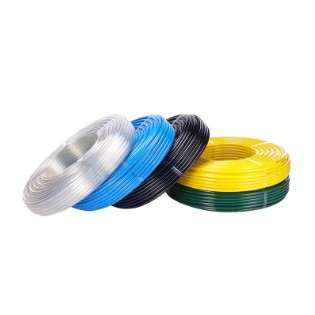
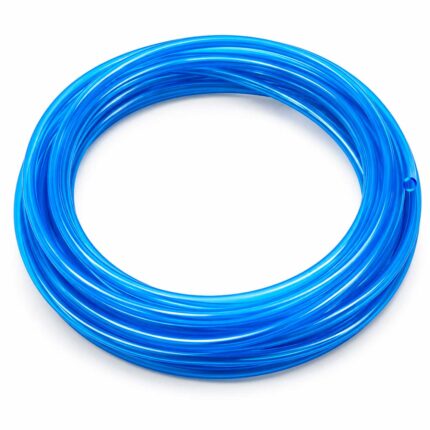
For XMPCS-06-02-316 studs we have in stock in Chișinău: PU 6×4 mm tube in 100 m coils, XMPTS-06-02-316 tees, XMPLS-06-02-316 elbows, collet plugs. Do not wait 3 weeks for delivery from China — assemble your line on the day of order.
Available at Chișinău warehouse
Stock item. Shipment on the day of payment for Chișinău, 1–2 days across Moldova. For legal entities — invoice, waybill, conformity certificate. Wholesale batches from 50 pcs. — special pricing.
After-sales technical support
The engineer call does not end after payment. We will advise how to cut the tube at exactly 90°, how to apply sealant to an R thread, how to check line tightness with soapy water. If the fitting leaks — we will analyze by photo and identify the cause.
Documents for legal entities
Invoice, waybill, XCPC manufacturer certificate indicating AISI 316 steel grade. We work with food processing plants, pharmaceutical enterprises, and government tenders. Payment by bank transfer, deferred payment for regular customers.
Expert Opinion
Vitali Bolucevschi, Chief Engineer at Acvatron SRL, 15 years in the industry“The main mistake when replacing a push-in fitting is ignoring the steel grade and thread type. A customer sees ‘stainless 6 mm × 1/4″‘ on AliExpress for 30 rubles, buys it, and a month later there are rusty leaks in the shop. Reason: the seller did not specify that it is AISI 304, not 316, and in the salt fog from the cleaning solution, 304 steel develops pitting corrosion in 3–4 weeks. The second mistake is confusing R and G. They ordered R1/4″, screwed it into a G1/4″ port, everything holds at the first 3 bar, but at 6 bar the line ‘fountains’. My advice: before buying, do three things. First — check the steel grade on the body with a magnifier: it should be stamped ‘316’ or ‘SUS316’. Second — measure the thread angle with a gauge: R is taper, G is parallel. Third — buy 1 piece for a test, check it at 10 bar for an hour. Only then order the batch.”
Handling Objections
“I will buy cheaper on a marketplace”
Push-in fittings from AliExpress and Ozon at 30–50 rubles are often marked “stainless”, but spectrometer inspection reveals AISI 201 or 430 — magnetic, non-corrosion-resistant alloys. The collet mechanism in them is made of nickel-plated brass, not steel, and falls apart on the first disassembly. A 40 % price difference turns into replacing the entire line within 2 months. At Acvatron SRL — fittings with verified AISI 316 grade, stock replacement of defective items, real specifications per manufacturer passport.
“The required size/article is not available”
If XMPCS-06-02-316 does not fit — we have the full XMPCS range in stock: tubes 4, 8, 10, 12 mm; threads R1/8″, R3/8″, R1/2″; elbows, tees, connectors, adapters. We also supply to order fittings with parallel thread G (XMPC-G series) and metric thread M (XMPC-M series). Delivery time for non-standard items — 10–14 days.
“I don’t know if it is compatible with my equipment”
Send a photo of the nameplate on the cylinder or valve — we will specify the thread type and tube diameter. If you have a brass fitting installed and want to switch to stainless — we will check whether galvanic coupling with the aluminum equipment body will occur (in pneumatics with dry air — not critical; in moisture — isolation is required). We will select a kit for your task.
The Problem You Have Already Faced
-
The fitting “sweats” and is covered with rust a month after installation — cause: a fitting made of AISI 304 or nickel-plated brass was purchased for an aggressive medium (alkaline cleaning solutions, salt fog); AISI 316 is required.
-
The tube pops out of the fitting at 8 bar pressure — cause: the tube has a diameter of 6.3 mm instead of 6.0 mm (Chinese hose with excessive tolerance) or the collet toothed ring is worn after 50 disassemblies.
-
The line leaks at the thread despite being tightened firmly — cause: the port has a parallel thread G1/4″, while the fitting has a tapered thread R1/4″; the taper does not seal in a cylinder.
-
The collet bites the tube, and during disassembly the tube breaks inside the fitting — cause: the tube is cut at an angle (not 90°) or has burrs; the collet grips the oblique cut, and when pulled the tube tears.
-
The fitting cracks at −10 °C outdoors — cause: a PBT polymer fitting was purchased instead of a metal one; when water in the tube freezes, the polymer becomes brittle.
The hidden cost of the wrong choice: one emergency shutdown of a bottling line due to a fitting leak costs more than the difference between a cheap “unknown grade stainless” fitting and a certified AISI 316 fitting with a warranty. Do not calculate the purchase price — calculate the cost of recurrence.
FAQ
❓ What is the difference between AISI 316 and AISI 304 in a fitting?
AISI 316 contains 2–3 % molybdenum, which provides resistance to chloride corrosion, alkalis, and organic acids. AISI 304 without molybdenum rusts in salt fog, cleaning solutions, and on contact with chlorine-based disinfectants. For standard dry pneumatics in a workshop — AISI 304 or brass is sufficient. For food, pharmaceutical, and marine equipment — only AISI 316.
❓ Can XMPCS-06-02-316 be used for water and vacuum?
Yes. The AISI 316 body withstands water, coolant, and vacuum up to −750 mmHg. The limitation is the NBR seal in the collet: on constant contact with hot water above +80 °C, NBR degrades. For hot water, order a fitting with FKM seal or use a crimp connection.
❓ How do I properly cut a tube before inserting it into the collet?
Polyurethane or nylon tube 6×4 mm is cut perpendicular to the axis with a special tube cutter. Scissors give an oblique cut — the tube does not insert fully, the collet grips the oblique surface, and at 6+ bar pressure the tube pops out or leaks. After cutting, check the cut with a magnifier: it must be flat, without burrs and dents.
❓ How many times can a tube be disconnected and reinstalled in the collet?
The standard XMPCS collet resource is at least 5000 connection/disconnection cycles at 6 bar and +20 °C. In practice, with daily disassembly the tube holds 1–2 years. Sign of wear: the tube wobbles in the fitting and comes out without pressing the release ring. Replace the fitting at the first signs of play — emergency tube ejection at 10 bar is hazardous to personnel.
❓ Why is there no sealing ring on an R thread?
Tapered thread R (PT) works on the principle of wedge self-sealing: when tightened, the outer taper of the fitting seals into the inner taper of the port. For the first 3–5 installations, tightness is ensured by machining precision. On reuse (repair, overhaul) it is recommended to apply PTFE tape or anaerobic sealant on the thread. Parallel thread G (PF) always requires a sealing ring.











Reviews
Clear filtersThere are no reviews yet.