









How to Properly Maintain the SB4/C LB30 Series Compressor

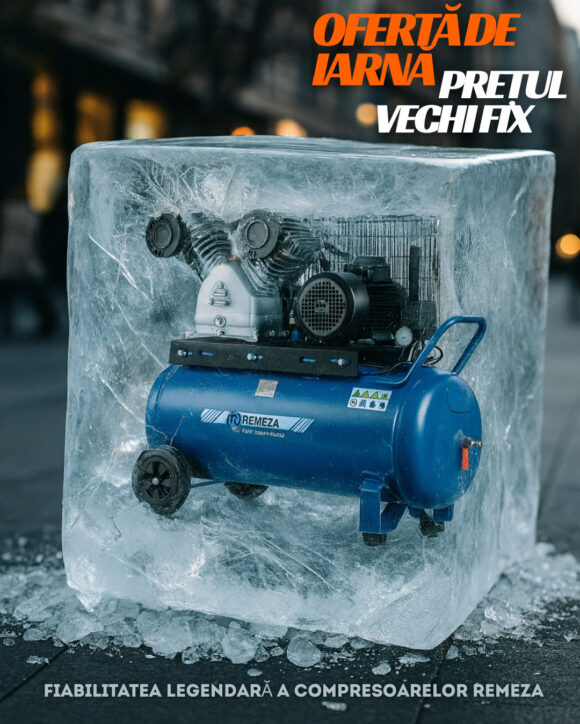
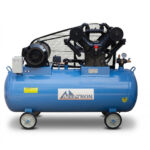
The piston compressor units of the SB4/C-50.LB30 / 90.LB30 / 100.LB30 / 200.LB30 series (and their A, V, AV modifications), are reliable equipment for generating compressed air, used in industry and car servicing. Like any equipment operating under pressure with moving parts, the compressor requires regular and correct technical maintenance. This directly affects the equipment’s service life, personnel safety, and warranty coverage.
In this article, we’ll go over what, how, and when to check and service on the compressor, according to the official operating manual.
General Rules Before Maintenance
Before performing any maintenance work, you must always:
- fully disconnect the compressor from the mains power supply;
- shut off the air supply to the pneumatic system;
- make sure there is no residual pressure in the receiver and the air line.
Some compressor components (cylinder head, cylinder block, air duct, electric motor cooling fins) can remain extremely hot right after shutdown — do not touch them until they have fully cooled down.
Daily Maintenance
Before starting each shift, perform the following checks:
- Oil level. The oil in the piston barrel crankcase must be within the red index on the sight glass. Top up if required. If the oil colour changes (whitening — indicates water contamination, darkening — indicates extreme overheating), replace the oil immediately, without waiting for the scheduled interval.
- Draining condensate from the receiver. Procedure: shut off the compressor → decompress the receiver to 2–3 bar → place a vessel under the condensate drain → loosen the screw and discharge the condensate → tighten the screw back. Dispose of the condensate in accordance with environmental protection regulations.
- Checking connection tightness in the air line. Check with the unit running and the receiver pressure at 5–7 bar — no hissing air leaks should be heard. Before tightening any connections, always decompress the receiver to atmospheric pressure level.
- Exterior check of the compressor. Inspect the power cable, safety relief valve, gage, and pressostat for damage; make sure there are no dents or cracks in the receiver, and that the grounding is securely mounted.
- Cleaning from dust and dirt. Wipe all exterior surfaces of the piston barrel and electric motor clean of dust daily — this improves cooling. Use only cotton or flaxen cloth.
Periodic Maintenance
First Hours of Operation
- After the first 8 and 50 hours of operation, check and, if required, tighten the piston barrel cylinder head bolts (to compensate for temperature shrinkage). Tightening torque:
| Thread | Min. torque | Max. torque |
|---|---|---|
| M6 | 9 Nm | 11 Nm |
| M8 | 22 Nm | 27 Nm |
| M10 | 45 Nm | 55 Nm |
| M12 | 76 Nm | 93 Nm |
Tightening should only be carried out after the piston barrel has cooled down to ambient temperature.
- After the first 50 hours — check the belt tension.
- After the first 100 hours — carry out the first oil change.
Every 100 Hours of Operation (or Once a Month)
- Check the air filter. Clean or replace the filtering element if required. A dirty filter reduces the compressor’s service life, increases power consumption, and may lead to failure of the suction, forcing, and reverse valves.
Every 300 Hours of Operation (or Once a Quarter)
- Oil change. Recommended oil types with a viscosity of 100 mm²/s at 40 °C: SHELL Corena S2 P 100, Mobil Rarus 427, TEXACO Compressor Oil EP VDL 100, LUKOIL Stabio 100. Drain the oil through the relief fitting at the bottom of the crankcase after it has cooled to 50–80 °C. Do not mix oils of different types and properties.
- Check belt tension. Belt deflection, under a force of 30–40 N applied perpendicular to the middle of the belt, should be 5–6 mm. Insufficient tension causes slipping, vibration, and pulley overheating; excessive tension increases bearing load and causes motor overheating. Adjust tension by shifting the electric motor after loosening the mounting bolts; the motor and piston barrel pulleys must be in a single plane.
- Check the holding strength of the piston barrel, electric motor, and base plate — tighten bolted connections if required.
Every 600 Hours (or Every Six Months)
- Replace the air filter (filtering element) — mandatory, even if the filter appears acceptable upon visual inspection.
- Visual inspection of electrical equipment — check the housings and components of the electric motor, pressostat, power cables, and terminal connections for damage.
Every 1200 Hours (or Once a Year)
- Reverse valve maintenance. Procedure: unscrew the hexagon head → remove the valve → clean the seat and the valve of dirt → reassemble in reverse order.
- Check and tighten terminal connections of power wires and control circuits — with a torque of 1.2 Nm. Carry out only after the electric motor has cooled down to ambient temperature.
Maintenance Interval Summary Table
| Task | Daily | First 8 h | First 50 h | First 100 h | Every 100 h / month | Every 300 h / quarter | Every 600 h / 6 months | Every 1200 h / year |
|---|---|---|---|---|---|---|---|---|
| Exterior check of compressor | ● | |||||||
| Oil level check | ● | |||||||
| Air duct connection tightness check | ● | |||||||
| Condensate discharge | ● | |||||||
| Cleaning from dust and dirt | ● | |||||||
| Cylinder head bolt tightening torque | ● | ● | ||||||
| Belt tension | ● | ● | ||||||
| Air filter check | ● | |||||||
| Oil change | ● | ● | ||||||
| Piston barrel / motor / base plate holding strength | ● | |||||||
| Air filter replacement | ● | |||||||
| Reverse valve maintenance | ● | |||||||
| Electrical equipment inspection | ● | |||||||
| Terminal connection tightening | ● |
Common Faults and Remedies
| Symptom | Probable Cause | Remedy |
|---|---|---|
| Reduced performance | Fouled air filter | Clean or replace the filtering element |
| Reduced performance | Air duct leakage | Locate the leak, tighten fittings, replace the pipe |
| Reduced performance | Belt slippage | Tighten and clean the belt |
| Continuous hissing noise when compressor shuts down | Worn reverse valve or foreign particles in the valve | Clean the seat and valve as per section 8.2.14 of the manual |
| Compressor shuts down during operation, motor overheats | Insufficient oil level | Check oil quality and level, top up |
| Motor protection triggers | Excessively long continuous operation (duty cycle > 60%), maximum pressure and consumption | Reduce compressor load, reduce air consumption, restart |
| Compressor stops during operation | Feed circuit fault | Check the feed circuit |
| Vibration, uneven motor operation, humming at startup | No voltage in one phase | Check the feed circuit |
| Excess oil in compressed air and receiver | Oil level in crankcase above normal | Bring the oil level down to normal |
If a fault cannot be resolved using the methods described, contact the manufacturer’s regional authorised agent or the seller.
Maintenance Record Keeping
All maintenance work performed must be logged in the Maintenance Registry (Appendix B of the manual, Form 1). A Maintenance Record Sheet (Form 2) may additionally be kept — it is not mandatory, but is useful for operational control and statistics of completed maintenance procedures.
Important: missing maintenance records, as well as the use of spare parts and materials not specified in the operating documentation, are grounds for denial of warranty repair. The warranty is also voided by unauthorised modification of the compressor’s electrical or air control circuit, tampering with factory guarantee seals, use of an improper feeder cable (voltage drop of more than 5% of the nominal value), and disassembly of units without written authorisation from the manufacturer or seller.
Conclusion
Regular technical maintenance of the SB4/C compressor comes down to a few simple but essential habits: daily checks of oil, condensate, and connection tightness, periodic oil and filter replacement, belt tension and bolt torque checks, and timely maintenance of the reverse valve and electrical connections. Following the schedule in the table above and keeping a maintenance log not only extends the compressor’s service life (rated service life before overhaul — 7,500 hours) but also preserves the right to warranty repair.