







How to Choose the Right Belt-Driven Air Compressor for Your Facility

The compressor is one of the key links in any production process: it powers pneumatic tools, machinery, and automation systems. Choosing the right compressor has a direct impact on operational efficiency, reliability, and long-term costs. Belt-driven air compressors remain one of the most popular choices — thanks to their adjustability, sturdy construction, and ability to operate in a wide range of environments.
What Is a Belt-Driven Air Compressor
In a belt-driven air compressor, energy is transferred from the electric motor to the compressor pump through a belt and pulley system. Unlike direct-drive systems, where the motor shaft is rigidly coupled to the compressor shaft, a belt drive lets the motor and the pump run at different speeds. This brings several practical advantages:
- Adjustability. Changing the pulley ratio lets you tune pressure and flow rate to match a specific job.
- Lower stress on components. The belt absorbs shocks and vibration, reducing wear on the motor and pump.
- Easy maintenance. Replacing the belt and adjusting tension are simple tasks that don’t require complex servicing and keep long-term maintenance costs down.
Assessing Your Facility’s Compressed Air Needs
Before choosing a model, it’s important to know exactly how much air your operation needs. Look at four factors:
- Flow rate (CFM/l/min). Add up the consumption of every tool and machine that will run at the same time.
- Operating pressure (PSI/bar). Identify the pressure range your applications require.
- Duty cycle. Will the compressor run continuously or intermittently? This affects pump selection and motor sizing.
- Air quality requirements. Applications like food processing or electronics manufacturing may call for clean or oil-free air.
An accurate assessment helps you choose a compressor that won’t be overloaded — and won’t waste energy running bigger than it needs to.
Advantages of Belt-Driven Compressors for Industrial Use
- Longevity. The belt absorbs part of the mechanical stress, extending the service life of the pump.
- Energy efficiency. By optimizing the ratio between motor speed and pump speed, belt-driven compressors can deliver energy savings compared with fixed-speed systems.
- Flexibility in motor selection. Belt drives are compatible with a range of motor types, including three-phase — useful when a facility’s electrical infrastructure has constraints.
- Lower noise and vibration. Belt-driven compressors typically run quieter and with less vibration than direct-drive models, making for a safer, more comfortable workplace.
These qualities make belt-driven compressors a good fit for manufacturing plants, workshops, and large industrial facilities.
Key Considerations When Choosing a Belt-Driven Air Compressor
Choosing the right compressor is about more than comparing flow rates on a spec sheet. Pay attention to:
- Pump type and cylinder configuration. Single-stage versus two-stage pumps affect efficiency and maximum pressure differently. Twin-cylinder designs, for example, deliver smoother airflow and higher reliability.
- Cooling system. Good heat dissipation prevents overheating, which reduces efficiency and accelerates wear.
- Motor compatibility. The motor’s power rating and phase type need to match your facility’s electrical setup.
- Maintenance accessibility. Easy access to components makes routine inspections and belt adjustments simpler.
- Build quality. Cast-iron or stainless-steel components extend the compressor’s service life, even in harsh operating conditions.
Installation and Space Requirements
A belt-driven air compressor needs enough space for ventilation and maintenance access. Proper installation ensures good airflow, cooling, and ease of operation. Also account for:
- Flooring and support. The compressor should sit on a stable, level surface to prevent vibration damage.
- Air piping. The piping network needs to match the compressor’s flow capacity and pressure rating.
- Safety. Adequate clearance around moving belts and pulleys reduces the risk of accidents during operation.
Maintenance Tips for Long-Term Performance
Routine maintenance is the foundation of stable, long-lasting performance for a belt-driven compressor:
- check and adjust belt tension regularly to prevent slippage and excessive wear;
- monitor oil levels and replace filters as needed;
- clean the cooling fins and make sure air can circulate freely around the unit;
- keep an eye on operating parameters — pressure, temperature, and vibration.
Following these practices extends the equipment’s service life and reduces the risk of unplanned downtime.
Applications Across Industries
Belt-driven air compressors are versatile and used across a wide range of industries:
- Manufacturing — powering assembly lines, pneumatic tools, and robotic systems.
- Auto repair shops — running lifts, impact wrenches, spray guns, and tire-inflation equipment.
- Construction — driving jackhammers, staplers, and other air-powered tools.
- Food and beverage processing — supplying clean, oil-free air for packaging and processing.
What Acvatron Offers
Acvatron’s catalog includes proven belt-driven models for a range of applications:
- AIRPOL (Poland) — belt-driven screw compressors with tank — built for steady industrial-duty loads;
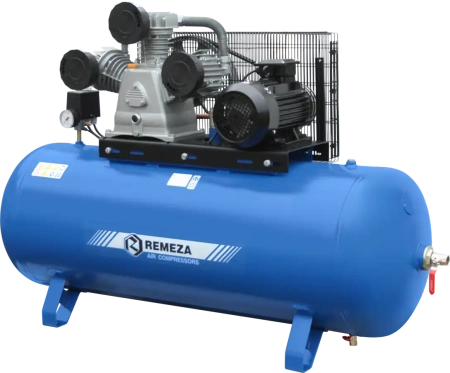
- REMEZA AirCast (Belarus) — belt-driven piston compressors — from 2.2 to 5.5 kW, suited to auto shops, workshops, and small production floors.
Our specialists in Chișinău can help you calculate the flow rate and pressure you need and pick the right model for the job.
📞 +373 (22) 503-580 · Message us on WhatsApp
Conclusion
Choosing the right belt-driven air compressor directly affects operational efficiency, equipment reliability, and long-term costs. By assessing air demand, required pressure, duty cycle, and site constraints, you can select a compressor that truly fits your facility’s needs. Investing in the right model, and following proper installation and maintenance practices, ensures consistent performance, reduces downtime, and maximizes your return on investment.