








Compressor in Moldova – Buy: All Types, Specifications and Applications

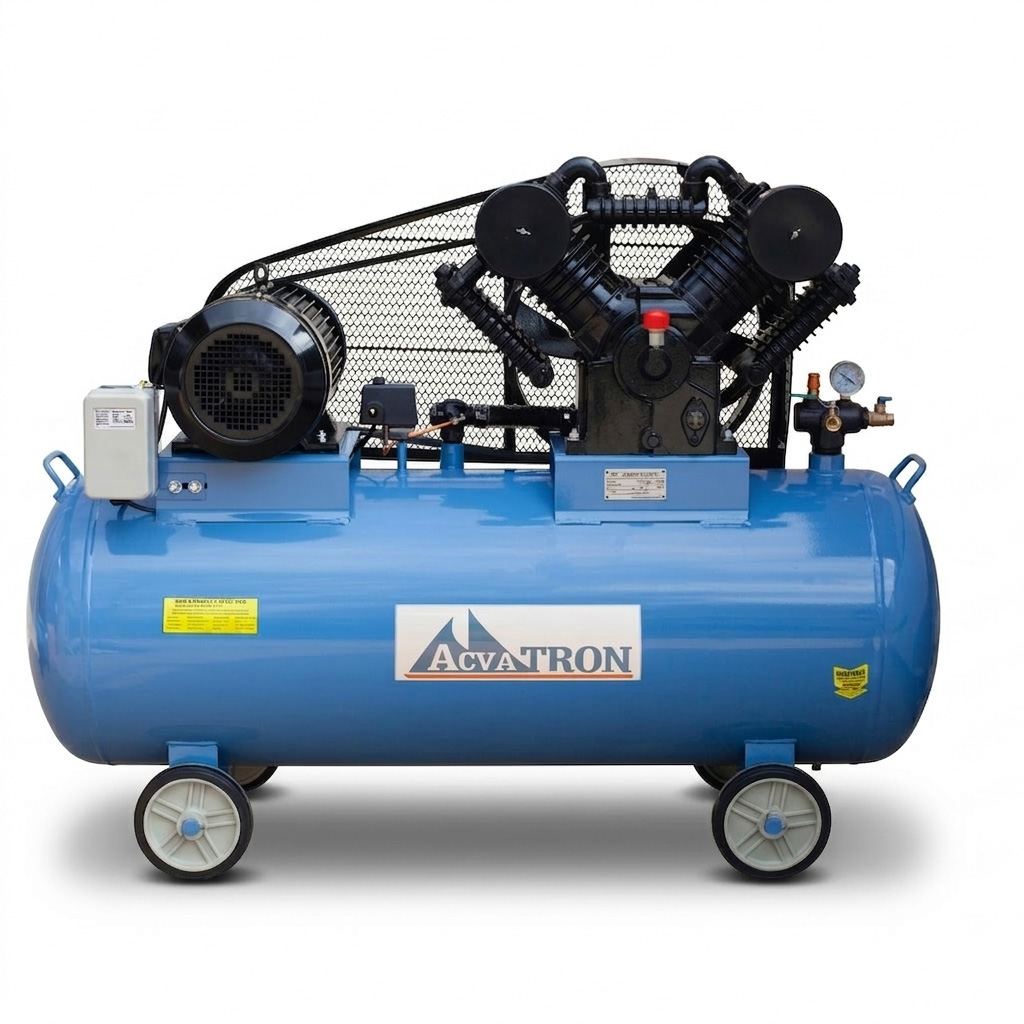
A compressor is a machine that compresses gas (primarily air) and delivers it to consumers at a pressure above atmospheric. It is used to power pneumatic tools, automate production processes, supply breathing air and fulfil a range of other industrial tasks. Acvatron has been supplying compressor equipment in Moldova with full service support — from selection according to technical requirements through to scheduled maintenance.
Types of Compressors: How to Choose the Right One
1. Piston compressor
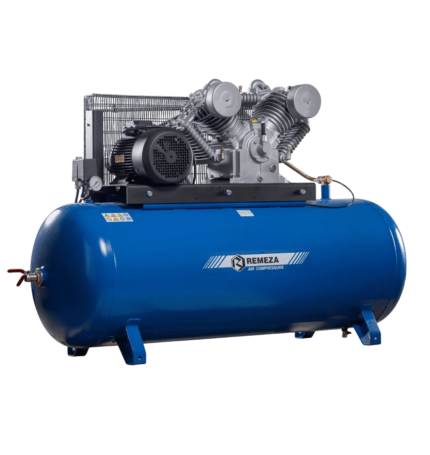
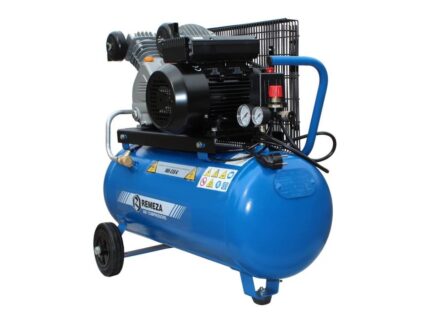
Reciprocating piston movement in a cylinder. Reliable, easy to maintain, not demanding on power quality. Optimal for intermittent loads: spray painting, tyre fitting, small workshops. Models: REMEZA AirCast, MZB FL/V/W series, Nardi.
→ More details: acvatron.md/en/piston-compressor-moldova/
2. Screw compressor
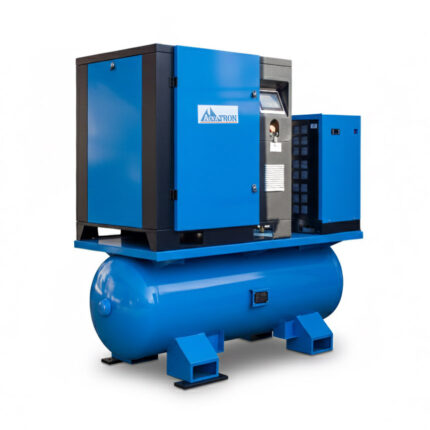
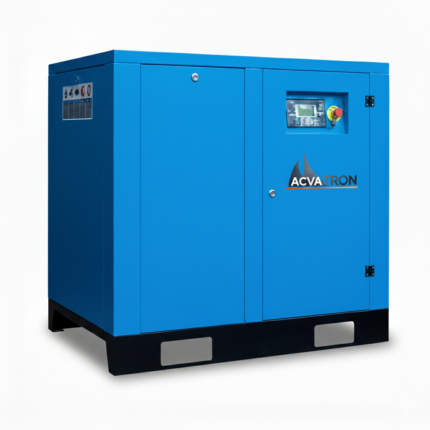
Continuous compression by a pair of screw rotors. Efficiency 15–30% higher than a piston unit during prolonged operation. Recommended when the duty cycle exceeds 60%. Brands: MZB, Airpol (Poland), ATMOS (Czech Republic).
→ More details: acvatron.md/en/screw-compressor-moldova/
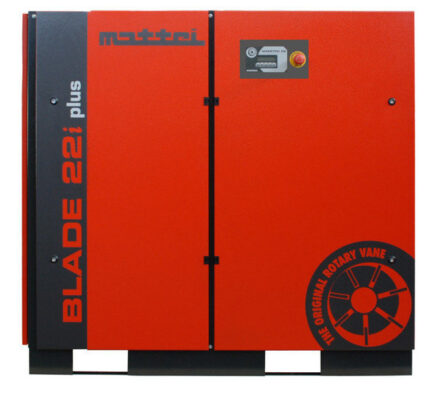
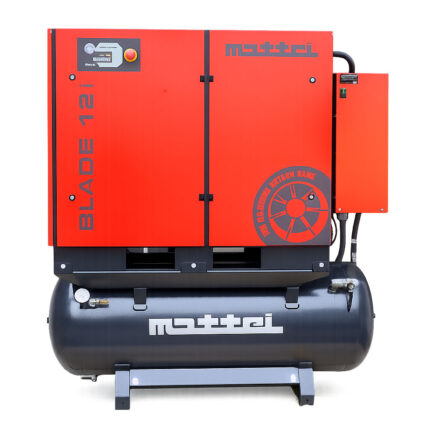
3. Rotary vane compressor Mattei
Italian technology with a rotor service life of 100,000+ hours without major overhaul. Noise level 5–8 dB lower than equivalent screw compressors. AC and BLADE series with heat recovery — up to 80% of electrical energy is returned to the heating system.
4. Oil-free compressor
Air purity class ISO 8573-1 Class 0. Essential in pharmaceuticals, food industry and medicine. Scroll Airpol and piston Nardi units — quiet operation, long service life with no oil changes.
→ More details: acvatron.md/en/oil-free-compressor-moldova/
5. High-pressure compressor (200–300 bar)
Multi-stage units by Nardi (Italy) and ALKIN (Turkey) for filling SCBA cylinders, scuba tanks and firefighting equipment. Certified to EN 12021:2014 for breathing air.
→ More details: acvatron.md/product-category/porshnevoj-kompressor/kompressory-vysokogo-davleniya-200-300-bar/
Technical Specifications of Compressors
| Parameter | Value range / description |
| Compressor type | Piston, screw, rotary vane, scroll, oil-free |
| Working pressure | From 6 bar (domestic) to 300 bar (high-pressure for diving/SCBA) |
| Drive power | 0.55 kW (domestic) — 315 kW (industrial screw) |
| Capacity | Up to 2 m³/min (piston) / 1–50+ m³/min (screw) |
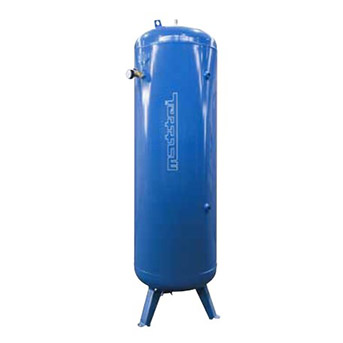
| Receiver (tank) | 50–2,000 l (optional); stabilises pressure, reduces cycling |
| Cooling system | Air-cooled or water-cooled |
| Drive type | Belt / direct / inverter (permanent magnets) |
| Air purity class | ISO 8573-1: Class 0 (oil-free) — Class 3 (oil-lubricated, standard filtration) |
| Noise level | 60–85 dB(A) depending on type and power |
| Temperature range | −5…+45 °C (standard); down to −20 °C for Arctic versions |
| Standards | CE, ISO 1217, ISO 8573-1, PED 2014/68/EU, GOST R 55187 |
Why Acvatron — 5 Key Advantages
1. Full cycle — from selection to after-sales service
Our engineers carry out a free technical audit of your compressed-air needs and calculate the optimal configuration. Acvatron handles installation, commissioning and periodic maintenance, reducing the Total Cost of Ownership (TCO) over a 5-year horizon.
2. Proven brands with European certification
Our portfolio contains only CE-marked equipment with documented conformity to PED 2014/68/EU. This is a mandatory requirement for operation in EU countries and a guarantee of safe use.
3. Inverter models — energy savings up to 35%
MZB and Airpol screw compressors with permanent-magnet variable-frequency drives match motor speed to the current load. With variable air consumption, the additional investment in the inverter pays back in 12–24 months.
4. Pressure range from 6 to 300 bar
A single supplier for every task: from a domestic garage to a professional dive centre and industrial production. No need to manage multiple contractors.
5. Spare-parts stock in Chisinau
Oil, filters, belts and replacement blocks for all key brands are held in stock. No downtime waiting for overseas deliveries. Warranty and post-warranty service — in-house workshop.
Fields of Application
- Manufacturing & metalworking — pneumatic tools, laser and plasma cutting, paint booths
- Construction — pneumatic drills, sandblasting, formwork equipment
- Automotive service & tyre fitting — tyre inflation, blowing out components, body painting
- Medicine & pharmaceuticals — oil-free air for medical devices, surgical instruments, ventilators
- Food industry — bulk product conveying, valve control, beverage bottling
- Diving, fire & rescue services — filling SCBA cylinders to 300 bar
- Woodworking — pneumatic nail guns, shaving extraction
- Agriculture — crop-protection spraying, pneumatic sorting equipment

Bolucevschi Vitali, mechanical engineer, 16 years in the compressor industry | Acvatron
«In the Moldovan market I see steady demand for screw compressors with inverter control: they pay back in 18–24 months purely from electricity savings. For small and medium-sized production, REMEZA or MZB piston units remain the optimal entry-level solution — low maintenance demands and good tolerance of power-supply interruptions. The most common selection mistake is underestimating the required capacity: always build in at least a 20% safety margin on airflow.»
Certificates and Compliance with Standards
- CE — conformity with European Union requirements
- PED 2014/68/EU — Pressure Equipment Directive
- ISO 1217 — methods for measuring compressor performance
- ISO 8573-1 — compressed air purity (moisture, oil, particles)
- EN 12021:2014 — quality of breathing air in cylinders
- GOST R 55187 — air compressors, general technical requirements
How to Choose a Compressor — Step-by-Step Guide
- Calculate the total airflow of all consumers (l/min or m³/min) and add a 20% safety margin.
- Determine the required working pressure: most tasks — 7–10 bar; laser cutting — 12–16 bar; breathing air — 200–300 bar.
- Assess the duty cycle: if the compressor runs for more than 60% of the time — choose a screw unit; below 40% — a piston unit is more cost-effective.
- Decide on air treatment: do you need a dryer, fine filter or activated-carbon adsorber?
- Request a free quotation from an Acvatron engineer.
Frequently Asked Questions — FAQ
What is the difference between a screw and a piston compressor?
A screw compressor operates continuously, offers higher efficiency during prolonged loading and is quieter. A piston compressor costs less to buy and maintain, and is best suited to intermittent air consumption. The economic crossover point for switching to a screw unit is a duty cycle of around 60% or more.
Is a dryer necessary for a compressor?
Yes, in most industrial applications. Compressed air contains condensate that damages pneumatic tools, contaminates paint and causes pipeline corrosion. A refrigeration dryer (MZB, Omega Air) reduces the pressure dew point to +3 °C; an adsorption dryer takes it to −40 °C and below.
How quickly is a compressor delivered across Moldova?
Stock items are dispatched within 1–3 working days to any location in Moldova. Made-to-order equipment — 2–4 weeks depending on the manufacturer. Acvatron delivers using its own transport and through partner logistics companies.
Buy a Compressor in Moldova — Contact Acvatron
| Get a free consultation
☎ +373 22 503580📧 acvatron@gmail.com📍 MD-2032, Chisinau, str. Sarmizegetusa 12, office 129💬 WhatsApp: wa.me/37369605720 | Viber: +373 69 605720 |