











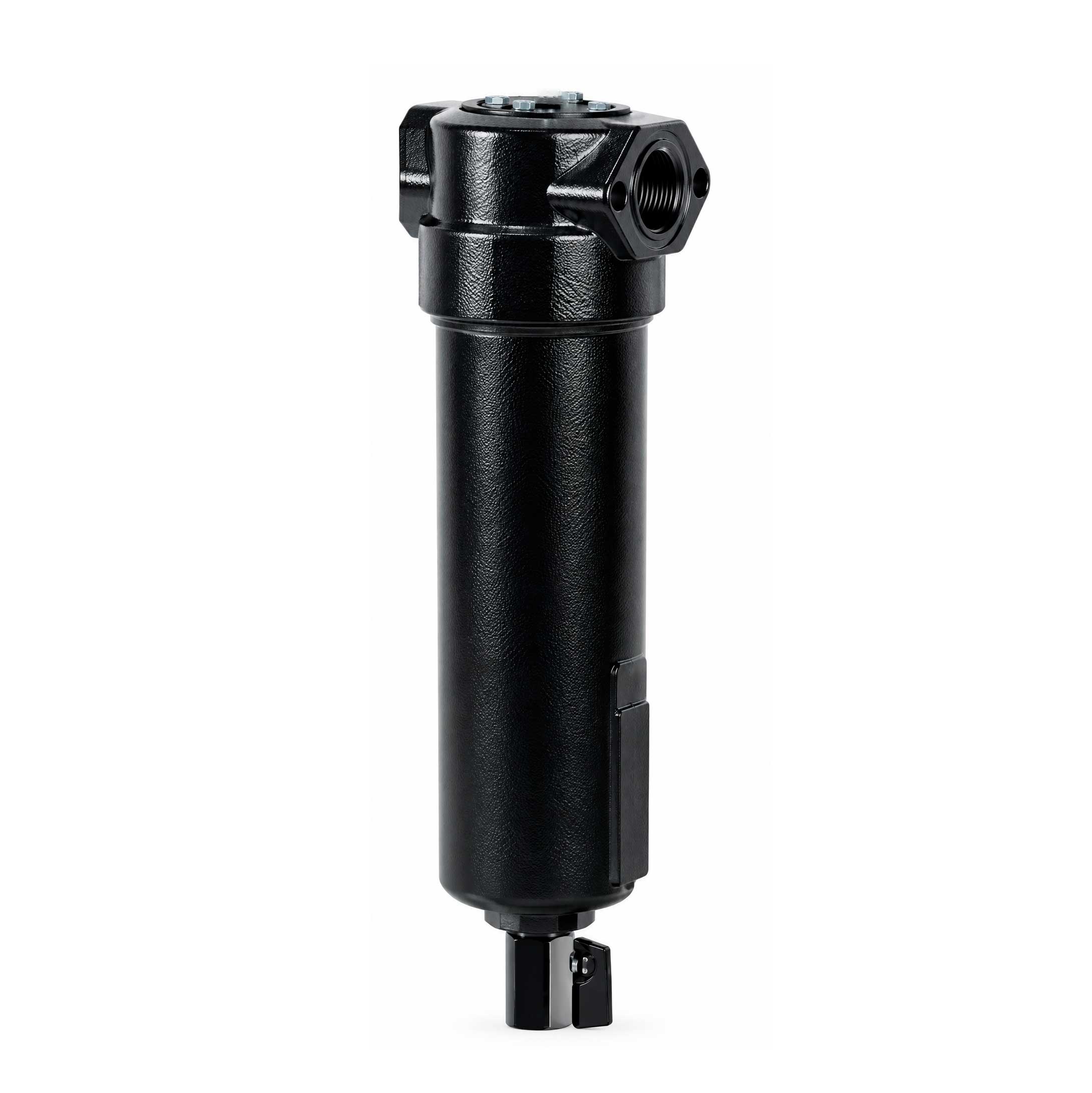

Vacuum Pump Protection Filter Omega Air P-VAC 0306, 1″, 41.9 Nm³/h
3.500,00 MDL
The P-VAC 0306 is a filter installed on the suction line of a vacuum pump to protect it from solid particles, dust, and liquid droplets. When such contaminants enter the pump, they accelerate wear and cause breakdowns, which is why the filter is fitted upstream of the pump inlet.
1. Purpose and Operating Principle
The P-VAC series offers two filtration stages, selected by the replaceable element in the same housing:
- VACP — coarse prefilter (3 µm, acrylic fibres and cellulose): removes most of the liquid and large solid particles.
- VACM — high-efficiency microfilter (0.1 µm, borosilicate microfibres): removes very fine contaminants that can damage the pump.
2. Technical Specifications
| Parameter | Value |
|---|---|
| Model | Omega Air P-VAC 0306 |
| Manufacturer | Omega Air d.o.o. (Ljubljana, Slovenia) |
| Purpose | Vacuum pump protection on the suction side |
| Connection | 1″ (BSP) |
| Capacity (free air at atmospheric pressure) | 41.9 Nm³/h (24.7 scfm) |
| Working pressure | 20–2000 mbar (abs.) |
| Working temperature range | +1.5 to +65 °C |
| VACP element (prefilter) | Code 22075 VACP, 3 µm, acrylic fibres and cellulose |
| VACM element (microfilter) | Code 22075 VACM, 0.1 µm, borosilicate microfibres |
| Pressure drop on a new, dry element | VACP — 10 mbar, VACM — 30 mbar |
| Standard housing colour | RAL 7021 |
⚠️ Unconfirmed parameters (the two catalogue editions differ or give no data — confirm with the sales manager / current datasheet before publishing):
- Dimensions and weight: height A — 361–363 mm and dimension B — 125 mm match, but dimensions C (32 or 37 mm), D (120 or 250 mm), and weight (2.0 or 2.5 kg) differ between catalogue editions.
- Thread type of the 1″ connection (parallel G or tapered R) — sources state only “BSP”.
- Which element (VACP or VACM) is fitted in the housing as supplied, and whether both variants are sold separately.
- Housing material and drain type.
- Element replacement threshold by pressure drop — not given by the manufacturer in open data.
3. Design Features
Model code breakdown:
| Fragment | Meaning |
|---|---|
| P-VAC | Omega Air series — vacuum pump protection filters (Pump-VAC) |
| 0306 | Size: 1″ connection, 41.9 Nm³/h capacity |
Design solutions:
- Two filtration stages in the same housing size — coarse (VACP) and fine (VACM): the choice depends on what contaminants enter the suction line.
- Replaceable elements 22075 VACP / 22075 VACM — when clogged, the element is replaced, not the whole filter.
- Operating range starting from 20 mbar (abs.) — the filter is designed for deep vacuum.
Comparison with neighbouring models in the series (catalogue data):
| Model | Connection | Capacity | Elements |
|---|---|---|---|
| P-VAC 0186 | 1″ | 24.8 Nm³/h | 12075 VACP / VACM |
| P-VAC 0306 (this model) | 1″ | 41.9 Nm³/h | 22075 VACP / VACM |
| P-VAC 0476 | 1½″ | 63.8 Nm³/h | 32075 VACP / VACM |
4. Installation Recommendations
- Install the filter on the suction line, directly before the vacuum pump inlet, following the flow direction arrow on the housing.
- The 1″ connection is listed in sources as BSP — clarify the thread type before installation: parallel (G) is sealed with a flat gasket, no PTFE tape; tapered (R) — with PTFE tape.
- On the vacuum side, any leak draws unfiltered air past the filter — check threaded joints especially carefully.
- As a general rule for line filters, mount vertically so that collected liquid stays at the bottom of the housing.
- Select the size by capacity at the actual suction pressure, not by pipe diameter alone: the nominal 41.9 Nm³/h is stated at atmospheric pressure, and at deep vacuum it must be recalculated using the catalogue’s C1/C2 correction factor table (C1 equals the absolute pressure in bar, C2 is its reciprocal).
- Monitor the pressure drop across the filter: a new, dry element gives 10 mbar (VACP) and 30 mbar (VACM), and a noticeable rise above these values indicates a clogged element.
- Do not exceed the +65 °C working temperature — the catalogue limit.
5. Alternatives and Comparison
There are no verified cross-reference part numbers for other brands’ filters in open sources, so no specific codes are given. When choosing a substitute, match:
- connection size (1″) and thread type;
- capacity at your absolute suction pressure;
- filtration grade (3 µm or 0.1 µm) and element type;
- allowable temperature range (up to +65 °C).
For medical vacuum systems, the same manufacturer’s M-VAC series is used rather than P-VAC: in the catalogue it is offered in the same size range (including size 0306: 1″, 41.9 Nm³/h) and is intended to remove bacterial contamination.
6. Common Mistakes
- Installing a P-VAC in a medical vacuum system — the M-VAC series is intended for such applications.
- Selecting the filter by pipe diameter alone, without recalculating capacity at the working absolute pressure — the filter ends up under- or over-loaded.
- Installing it anywhere other than the suction side, or against the flow direction.
- A leaking threaded joint on the vacuum line — unfiltered air is drawn in past the filter.
- Using the fine VACM microfilter under heavy liquid and coarse dust loads without a preliminary stage — rapid element clogging.
- Operating above +65 °C — exceeding the rated limit.
- Not monitoring pressure drop — the element is replaced too late and the pump runs under extra load.
7. Application
Protecting vacuum pumps on the suction side in industrial equipment: for example, vacuum clamping tables and suction cups, packaging and forming lines, laboratory and process vacuum systems. The filter is not intended for medical vacuum systems — the M-VAC series is used for those.
8. Expert Opinion
“A vacuum pump most often fails not from age but because dust and condensate reach its inlet. So it’s important not just to fit a filter, but to choose the right stage — VACP or VACM — and size it by capacity at the real vacuum level. And one more reminder: P-VAC is pump protection for industrial systems, while for medical use you need the M-VAC series,” notes Vitali Boluchevski, Lead Engineer, Acvatron SRL, 18 years of experience.
9. FAQ
Can P-VAC be used in a medical vacuum system? No. The P-VAC series is intended for protecting vacuum pumps in industrial systems; for medical vacuum equipment the manufacturer makes a separate series, M-VAC.
What’s the difference between VACP and VACM elements? VACP is a coarse prefilter (3 µm, acrylic fibres and cellulose) that removes liquid and large particles. VACM is a microfilter (0.1 µm, borosilicate microfibres) that removes very fine contaminants. The pressure drop on a new, dry element is 10 and 30 mbar respectively.
Is 41.9 Nm³/h enough for my pump? This capacity is stated for free air at atmospheric pressure. When working at deep vacuum, it must be recalculated using the C1/C2 correction factor table in the manufacturer’s catalogue, so it’s best to select the size by the real absolute suction pressure.
What temperature and pressure range does the filter have? Temperature — +1.5 to +65 °C, working pressure — 20 to 2000 mbar (abs.).
Where is the filter installed? On the suction line, directly before the vacuum pump, following the flow direction.








Reviews
Clear filtersThere are no reviews yet.